


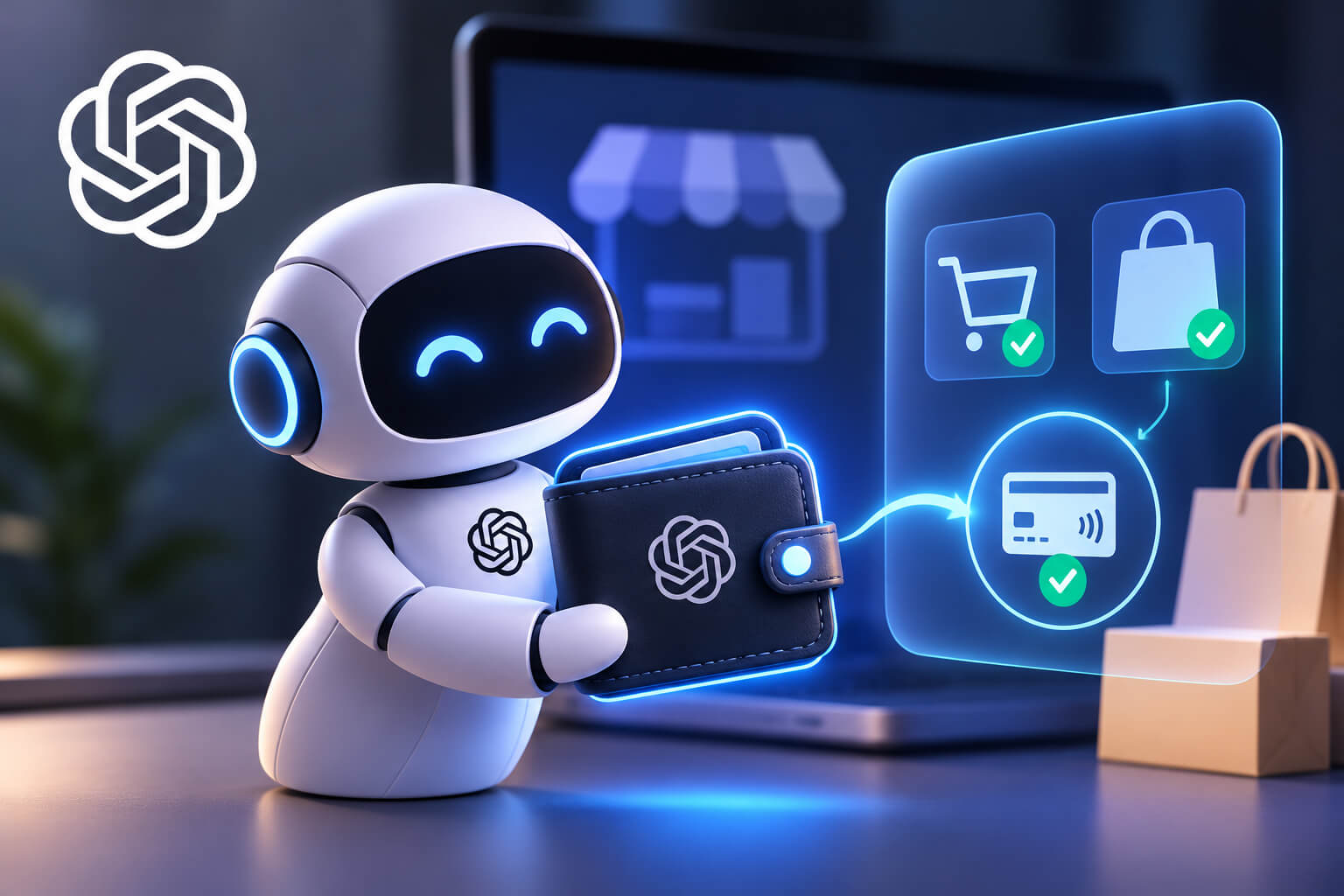
OpenAI is pushing ChatGPT further into online shopping with the introduction of ChatGPT Wallet, a payment feature designed to let AI agents complete purchases on behalf of users.
Announced on November 13, 2026, the feature brings artificial intelligence closer to handling everyday financial transactions. Instead of simply recommending products or comparing prices, AI agents can now assist with checkout and payment while keeping sensitive card information protected.
The service involves major payment networks, including Visa, Mastercard and American Express. However, OpenAI isn’t giving AI agents unlimited spending authority. Users must still review and approve transactions before payments go through.
The launch marks another step in the development of agentic AI, where intelligent assistants move beyond answering questions and begin completing practical tasks.
ChatGPT Wallet Brings AI Agents Into Online Shopping
Online shopping usually involves several steps, even when an AI assistant helps users find what they need. Customers still have to visit merchant websites, enter payment information and complete checkout themselves. ChatGPT Wallet aims to simplify that process by allowing AI agents to handle more of the purchasing journey.
The feature works with OpenAI’s dots, personal AI agents designed to carry out tasks on behalf of users. These agents can navigate supported shopping websites, identify products and prepare transactions based on customer instructions. Once the purchase is ready, the user reviews the order and authorizes payment.
This changes the role of ChatGPT in e-commerce. Rather than stopping at product recommendations, AI assistants can participate directly in the transaction process. For consumers, that could mean spending less time moving between websites and filling out checkout forms.
Visa, Mastercard and American Express Support Secure AI Payments
Security remains a major concern whenever artificial intelligence interacts with financial information. OpenAI is addressing that issue through partnerships with Visa, Mastercard and American Express, using payment tokenization to protect customers’ card credentials.
Instead of exposing actual credit or debit card numbers to an AI agent, ChatGPT Wallet relies on substitute payment credentials. These tokens allow transactions to proceed without giving the agent direct access to sensitive card information.
The approach also allows merchants to process payments through familiar financial infrastructure. Businesses don’t necessarily need to replace their existing checkout systems to support AI-assisted purchases, although some may need to make technical adjustments.
For consumers, the system is intended to preserve eligible card benefits and payment protections while reducing the amount of financial information accessible during an AI-driven transaction.
Users Must Approve Every Purchase Before Payment
Despite the growing capabilities of autonomous AI agents, OpenAI is keeping customers involved in the final payment decision. ChatGPT Wallet requires users to review and authorize purchases before an agent can complete checkout.
The approval process includes transaction details such as the selected products, payment amount and card being used. Customers then confirm the purchase through an authentication method, which may include fingerprint or facial recognition.
This safeguard matters because AI agents can still make mistakes. An assistant might misunderstand a shopping request, select the wrong product variation or encounter unexpected charges during checkout. Requiring authorization gives users an opportunity to identify those issues before money changes hands.
OpenAI’s approach suggests that AI-powered payments will initially focus on assisted transactions rather than completely independent spending. The agent handles much of the work, but the customer remains responsible for approving the purchase.
ChatGPT Wallet Begins With a Limited US Rollout
ChatGPT Wallet isn’t immediately available to everyone. OpenAI is introducing the feature through a limited rollout for eligible adult ChatGPT Pro subscribers in the United States who have supported US-issued payment cards.
The restricted release allows the company to evaluate how AI agents perform during real purchasing situations. Online payment systems involve fraud detection, merchant verification and security checks that weren’t necessarily designed for autonomous software completing transactions.
Some shopping websites also restrict automated activity, creating another challenge for AI agents attempting to navigate checkout pages. OpenAI is working with payment providers and merchants to improve compatibility and reduce unnecessary transaction failures.
The company has also introduced guidance for commerce partners to help businesses prepare their websites for AI-assisted shopping. Wider availability will likely depend on how effectively the technology performs during its initial deployment.
OpenAI Plans to Give AI Agents More Purchasing Flexibility
ChatGPT Wallet currently requires approval for individual purchases, but OpenAI is exploring ways to make AI-assisted shopping more autonomous.
Future capabilities could allow customers to establish purchasing rules in advance, giving agents permission to complete certain transactions without requesting authorization every time. Those rules might involve spending limits, approved product categories or specific purchasing conditions.
An AI assistant could eventually handle routine purchases such as household supplies or recurring essentials while operating within boundaries established by the customer. That would reduce repetitive checkout tasks without necessarily removing financial oversight.
Such functionality remains a future possibility rather than part of the initial release. OpenAI will need to address questions surrounding authorization, payment disputes and accountability before expanding how independently its agents can spend money.
AI-Powered Payments Could Reshape the E-Commerce Industry
ChatGPT Wallet introduces a new possibility for online retailers: customers may increasingly arrive at checkout through AI agents rather than traditional browsing sessions.
That shift could influence how businesses present products, manage inventory information and structure their websites. If AI agents become responsible for comparing options and preparing purchases, accurate product data and accessible checkout systems may become even more important.
Retailers could also face new challenges distinguishing legitimate AI-assisted purchases from suspicious automated activity. Payment processors, fraud prevention companies and merchants will need to adapt their systems as agent-driven transactions become more common.
Digital marketing could change as well. Businesses have spent years optimizing websites for search engines and human visitors. The growth of AI shopping assistants may create additional pressure to make product information easier for automated systems to understand and evaluate.
The technology is still developing, and widespread adoption isn’t guaranteed. Consumers will need confidence that AI agents can follow instructions accurately, while merchants will need assurance that transactions remain secure and legitimate.
ChatGPT Wallet Signals a Bigger Shift Toward Agentic AI
OpenAI’s introduction of ChatGPT Wallet reflects a broader change in how artificial intelligence is being used. AI assistants are gradually moving from generating answers and suggestions toward carrying out tasks that have direct consequences in the real world.
Shopping is a particularly important test because it combines decision-making, personal preferences, financial information and security requirements. A system that can successfully manage those elements could open the door to more sophisticated AI-driven services.
For now, ChatGPT Wallet keeps users in control of payments while allowing AI agents to handle more of the purchasing process. Whether the feature becomes a mainstream shopping tool will depend on reliability, merchant support and consumer trust.
One thing is becoming increasingly clear: the next phase of AI isn’t just about helping people decide what to do. It’s about helping them get things done.
Sources
- Reuters: OpenAI Launches ChatGPT Wallet, Letting AI Agents Pay for Purchases
- OpenAI: Introducing ChatGPT Wallet
- OpenAI Help Center: Making Purchases With ChatGPT Wallet
- TechCrunch: ChatGPT’s New Wallet Lets AI Agents Shop and Check Out for You
