


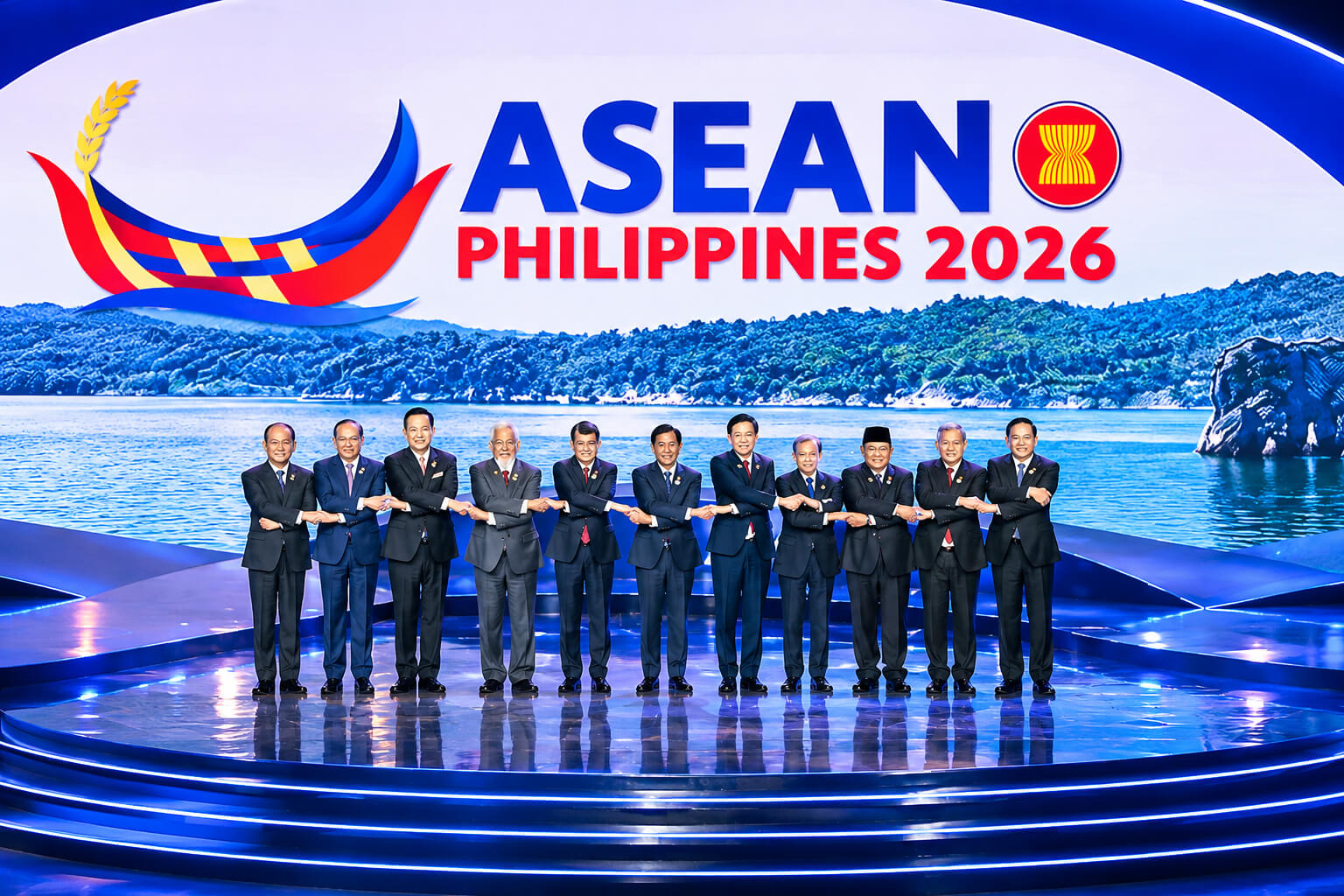
ASEAN leaders have placed artificial intelligence at the center of a regional effort to help micro, small, and medium enterprises (MSMEs) compete in an increasingly digital economy.
At the 49th ASEAN Summit in Manila, Philippines, on November 15, 2026, the regional bloc adopted the ASEAN Leaders’ Declaration on AI-Powered MSME Growth, outlining a shared vision for making AI technology more affordable, accessible, and practical for smaller businesses across Southeast Asia.
The initiative supports the Philippines’ ASEAN 2026 Chairmanship theme, “Navigating Our Future, Together,” and recognizes that many smaller enterprises still struggle to adopt AI despite its growing potential to improve productivity, efficiency, and innovation.
ASEAN Pushes AI Adoption Beyond Large Enterprises
Artificial intelligence is becoming an important part of business operations, but access to the technology remains uneven across Southeast Asia. While larger corporations can invest in advanced AI systems, many MSMEs face limited technical expertise, inadequate digital infrastructure, and financial constraints that make adoption difficult.
ASEAN’s declaration seeks to narrow this gap by encouraging member states to explore flexible and voluntary approaches to assessing AI readiness among smaller businesses. These assessments could help identify weaknesses in digital capabilities, infrastructure, and access to affordable solutions. Rather than imposing a uniform regional model, the initiative recognizes that ASEAN economies have different levels of technological development and that national strategies must reflect local business conditions.
Public-Private Partnerships to Make AI More Affordable
Making AI accessible to smaller enterprises will require cooperation between governments and the private sector. ASEAN is encouraging partnerships involving technology companies, startups, universities, research institutions, incubators, and accelerators to develop affordable AI tools, cloud services, and training opportunities specifically designed for MSMEs.
These partnerships could give small businesses access to technologies that would otherwise require substantial investment. Retailers could use AI-powered systems to improve inventory management, while service providers could automate routine administrative tasks or customer inquiries. The declaration also highlights the importance of strengthening reliable internet connectivity and digital infrastructure, recognizing that affordable AI software will have limited impact in communities where businesses still struggle with basic digital access.
AI Literacy and Digital Skills Become Regional Priorities
ASEAN is placing particular emphasis on AI literacy as a foundation for sustainable technology adoption. The declaration encourages member states to develop training initiatives that help entrepreneurs understand how AI works, recognize its limitations, and evaluate the risks associated with automated decision-making.
The focus extends beyond basic familiarity with AI applications. Business owners are expected to develop the skills needed to use these technologies critically while maintaining accountability for decisions supported by AI systems. ASEAN also supports regional and national awareness campaigns that consider local languages and varying levels of digital readiness. Such initiatives could help entrepreneurs understand where AI can genuinely improve their operations without encouraging unnecessary dependence on automation.
Women-Led and Rural Businesses Included in ASEAN’s AI Strategy
The declaration identifies women-led enterprises and businesses operating in rural or remote communities as important beneficiaries of ASEAN’s AI growth initiative. These groups often encounter additional barriers to digital transformation, including limited connectivity, fewer technical training opportunities, and restricted access to affordable technology services.
ASEAN is encouraging member states and relevant stakeholders to ensure that AI support programs reach underserved business communities rather than concentrating resources in major economic centers. Expanding access to training, digital platforms, and technical assistance could help smaller enterprises participate more actively in the digital economy. The declaration does not establish specific funding commitments for these groups, but it emphasizes that AI-powered economic growth should benefit businesses regardless of their location, size, or existing technological capabilities.
Responsible AI Governance and Data Protection Take Center Stage
As more businesses begin integrating AI into daily operations, ASEAN is also emphasizing the importance of responsible technology use. The declaration encourages voluntary AI governance measures aligned with national laws, regulations, and policies, particularly in areas involving transparency, accountability, cybersecurity, intellectual property rights, and personal data protection.
The regional initiative builds on existing ASEAN frameworks, including the ASEAN Guide on AI Governance and Ethics, the Expanded ASEAN Guide on AI Governance and Ethics – Generative AI (2025), and the ASEAN Responsible AI Roadmap (2025–2030). These frameworks provide guidance for managing AI-related risks while supporting innovation. ASEAN also recognizes the challenges surrounding cross-border data transfers and encourages member states to ensure that data sharing takes place for clearly defined purposes, with appropriate safeguards and access controls. The declaration does not introduce a unified regional AI law, instead allowing countries to strengthen governance according to their respective legal frameworks.
Philippines to Coordinate ASEAN’s AI-Powered MSME Action Plan
The Philippines will serve as the lead proponent in coordinating progress reporting for the ASEAN AI-Powered MSME Growth Action Plan, working alongside other ASEAN member states and the ASEAN Secretariat. The initiative also assigns coordination and information-sharing responsibilities to the ASEAN Digital Ministers’ Meeting, supported by the ASEAN Digital Senior Officials’ Meeting and the Working Group on AI Governance.
National governments are encouraged to engage relevant MSME agencies, technology stakeholders, and private-sector organizations in implementing the declaration. ASEAN also supports the appropriate use of AI and digital technologies to improve public service delivery for smaller businesses, provided these initiatives comply with domestic laws and regulations. While the declaration establishes a regional direction, it does not specify binding adoption targets, dedicated funding allocations, or a uniform implementation schedule, leaving much of the practical execution to individual member states.
ASEAN Sees AI as a Driver of Inclusive Economic Growth
ASEAN’s declaration reflects a growing recognition that artificial intelligence could become an important tool for strengthening the competitiveness of smaller businesses. By addressing barriers related to affordability, technical expertise, infrastructure, and governance, the regional bloc hopes to create conditions where MSMEs can adopt AI without facing the same financial and operational challenges as larger enterprises.
The success of the initiative will depend heavily on how member states translate regional commitments into practical programs. Differences in digital infrastructure, regulatory environments, and business capabilities could influence the pace of adoption across Southeast Asia. For entrepreneurs, the most meaningful progress may come through accessible training, affordable AI applications, and stronger support from governments and technology providers. ASEAN’s broader ambition is to ensure that AI-driven economic opportunities extend beyond established technology companies and reach the smaller enterprises that form a substantial part of the region’s economy.
Sources
- ASEAN Leaders’ Declaration on AI-Powered MSME Growth — 49th ASEAN Summit, Manila, Philippines, November 15, 2026. Primary declaration
- ASEAN Official Website — Regional cooperation, policy declarations, and digital transformation initiatives.
https://asean.org/ - ASEAN Guide on AI Governance and Ethics — Regional guidance on responsible artificial intelligence.
https://asean.org/book/asean-guide-on-ai-governance-and-ethics/ - ASEAN Philippines 2026 — Philippine ASEAN Chairmanship information and summit updates.
https://asean2026.gov.ph/
