


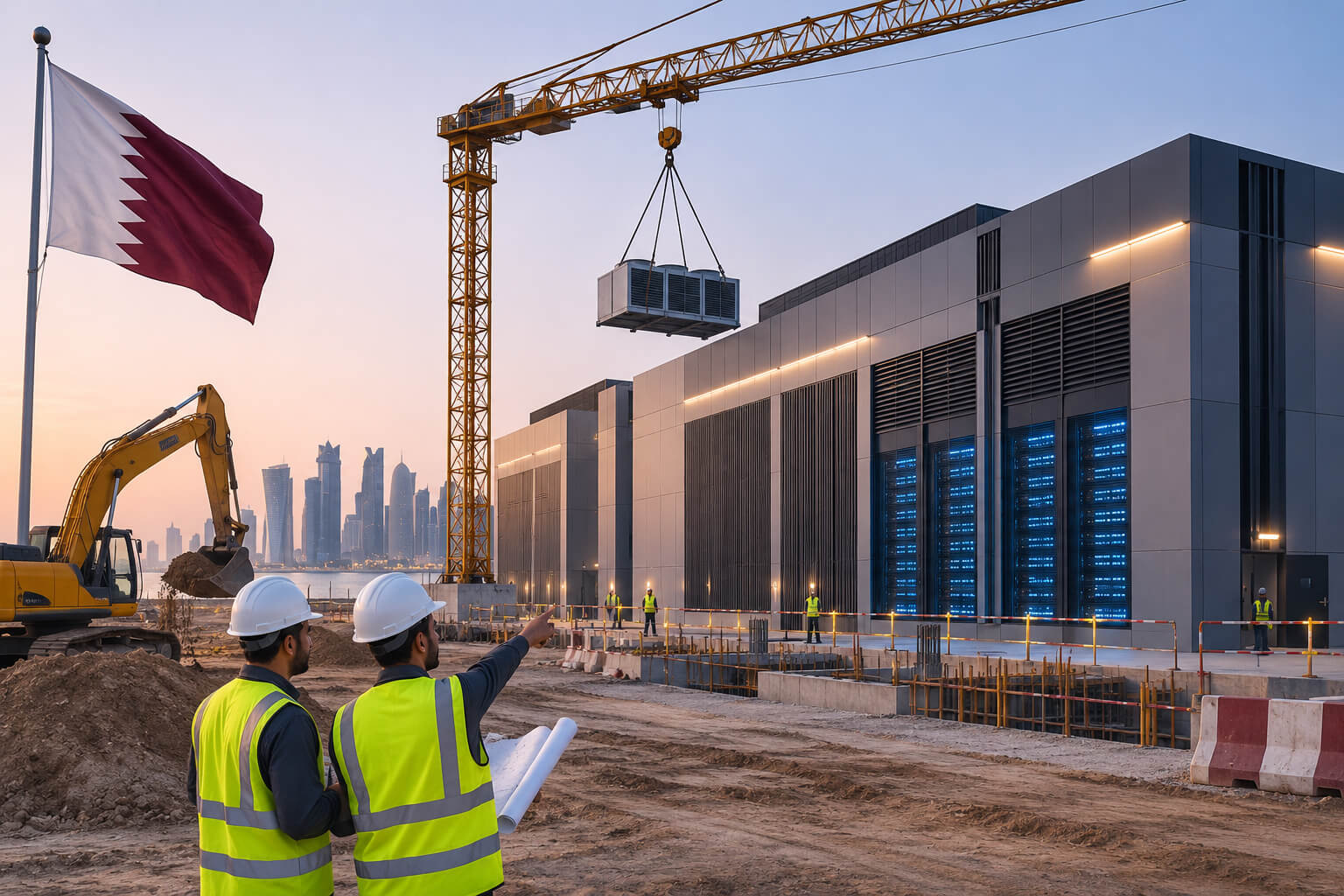
Syntys has broken ground on a new 20-megawatt AI-ready data center in Qatar, expanding the country’s capacity to support artificial intelligence, cloud computing and increasingly demanding enterprise workloads.
The Ooredoo-backed data center operator is developing the facility as demand grows for infrastructure capable of handling powerful GPUs, high-density computing and large-scale AI applications.
The project marks another step in Qatar’s push to strengthen its digital infrastructure. As businesses across the Middle East invest more heavily in AI, the need for reliable computing capacity is becoming difficult to ignore.
Syntys Expands Its Data Center Footprint in Qatar
The new 20MW development will expand Syntys’ existing infrastructure in Qatar, where the company has been building a stronger presence in the regional data center market.
Rather than establishing an entirely separate operation, Syntys is developing the facility on an existing campus. This approach allows the company to take advantage of established connectivity, power infrastructure and operational resources while preparing for larger computing deployments.
The expansion follows the company’s acquisition of Q Data QFZ, which added two Tier III-compliant facilities with a combined 12.5MW of hyperscale capacity. Of that total, 5MW was already operational, while another 7.5MW was under development.
With four data center campuses across Qatar, Syntys is positioning itself to serve enterprises, cloud providers and organizations that require secure domestic hosting environments.
New 20MW Facility Built for AI and High-Performance Computing
AI is changing what businesses expect from data centers. Conventional computing infrastructure can struggle with the electricity requirements, cooling demands and hardware density associated with advanced AI workloads.
Syntys is designing its new Qatar facility to accommodate these requirements, including high-density GPU deployments and high-performance computing applications. The development is intended to support different rack configurations, allowing customers to deploy infrastructure based on their specific computing needs.
The facility is also expected to meet Tier III requirements and operate as a carrier-neutral data center, giving customers more flexibility in selecting connectivity providers.
Cooling and power efficiency will be particularly important. AI servers can consume substantially more electricity than traditional enterprise systems, placing greater pressure on data center operators to maintain stable performance.
Syntys already supports AI infrastructure through Ooredoo’s sovereign AI cloud, which uses NVIDIA Hopper GPUs. The new development extends that experience into a larger facility designed for growing enterprise demand.
Qatar’s Growing AI Demand Drives Infrastructure Investment
Qatar’s investment in AI infrastructure comes as organizations across the Middle East move beyond experimentation and begin integrating artificial intelligence into daily operations.
Banks, telecommunications providers, government agencies and other businesses increasingly rely on AI systems to process information, automate tasks and improve digital services. Those applications need dependable computing environments, particularly when they involve sensitive data or large-scale processing.
Syntys Chief Executive Officer Sunita Bottse has pointed to increasing demand for larger and more diverse computing deployments in Qatar. Customers are looking for infrastructure that can support both conventional enterprise applications and more demanding AI workloads.
The market opportunity extends beyond Qatar. Across the Middle East, governments and technology companies are investing in cloud infrastructure, AI computing capacity and data centers to support long-term digital transformation.
For operators such as Syntys, the challenge is no longer simply providing server space. It is delivering infrastructure capable of keeping pace with rapidly changing computing requirements.
Ooredoo Strengthens Its Role in the Middle East AI Infrastructure Market
Syntys operates as a dedicated data center business backed by Ooredoo Group, allowing it to focus on infrastructure development while benefiting from the telecommunications company’s regional presence.
The business emerged in 2025 following the separation of Ooredoo’s data center operations into a specialized infrastructure company. The move reflected growing demand for dedicated facilities serving hyperscalers, cloud platforms and enterprise customers.
Ooredoo had previously secured a QAR 2 billion financing agreement with QNB, Doha Bank and Masraf Al Rayan to support data center expansion across the region.
The latest groundbreaking ceremony brought together representatives from major technology companies, including Microsoft and Google, alongside Ooredoo executives and Qatari officials.
Their participation highlights the importance of data center investment to Qatar’s technology sector, although it does not necessarily indicate that those companies have committed to using the new facility.
Qatar’s Digital Agenda 2030 Supports AI Infrastructure Expansion
The Syntys project aligns with Qatar’s broader ambition to develop a digitally advanced economy under its Digital Agenda 2030.
The national strategy places considerable emphasis on digital infrastructure, innovation and the adoption of emerging technologies across public and private sectors.
Expanding domestic data center capacity could help organizations keep sensitive information within Qatar while accessing computing resources needed for AI-powered services.
This is particularly relevant for industries where data residency, security and regulatory compliance influence technology decisions.
The availability of multiple data center campuses also gives businesses more options for disaster recovery and operational continuity. Instead of depending on a single facility, organizations can distribute critical applications across separate locations.
For Qatar, those capabilities could strengthen its appeal as a destination for cloud services, enterprise technology investment and AI development.
Syntys Targets More Than 120MW of Regional Data Center Capacity by 2030
The Qatar development forms part of Syntys’ wider expansion strategy across the Middle East and North Africa.
The company is targeting more than 120MW of data center capacity by 2030, reflecting its expectations for continued growth in cloud services and AI infrastructure demand.
Achieving that target will require substantial investment in power systems, cooling technology, connectivity and operational capabilities. Data center construction also depends on securing equipment and delivering facilities that meet customers’ technical requirements.
Demand may be growing, but the market is becoming increasingly competitive as telecommunications companies, infrastructure investors and international technology providers expand their regional operations.
Syntys is betting that its existing campuses, regional relationships and experience supporting AI workloads will help it compete for that business.
What the New Syntys Data Center Means for Qatar’s AI Future
The groundbreaking of Syntys’ 20MW facility signals another step in Qatar’s effort to build the physical infrastructure behind its AI ambitions.
The country’s technology strategy depends on more than software development and investment announcements. AI applications need computing power, reliable electricity, high-speed connectivity and facilities capable of supporting demanding hardware.
The new development could help meet those requirements while giving enterprises additional options for hosting AI and cloud workloads within Qatar.
Still, construction is only the beginning. The project’s longer-term impact will depend on when the facility becomes operational, how much capacity customers use and whether demand continues to justify further expansion.
For Syntys, the opportunity is clear. AI adoption is creating a larger market for specialized computing infrastructure, and the company wants to be ready as that demand accelerates.
