


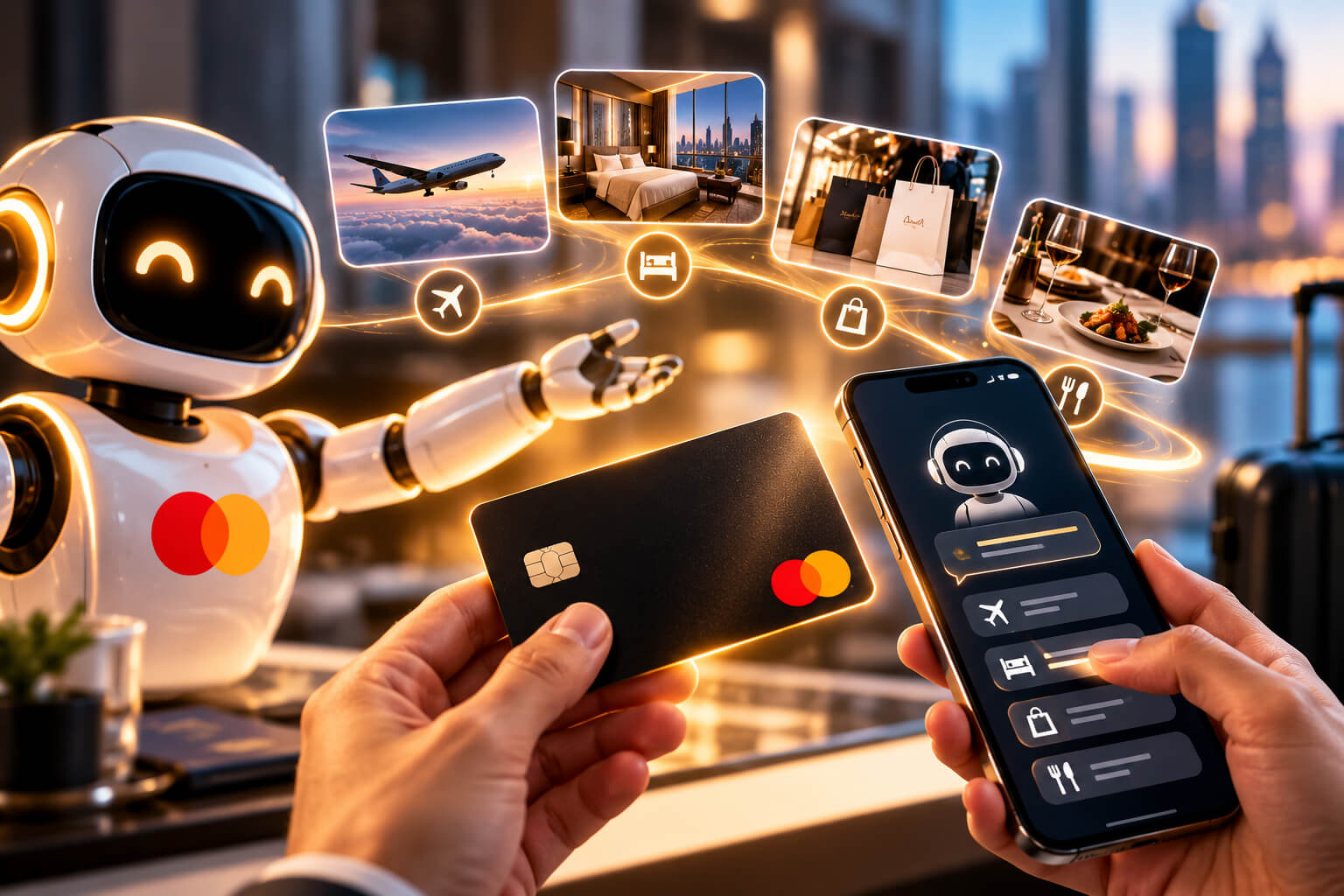
Mastercard is looking at how artificial intelligence could solve a surprisingly common problem: consumers forgetting about valuable benefits attached to their credit cards.
Many cardholders have access to travel insurance, airport lounge privileges, dining discounts, cashback offers and shopping rewards. Yet a significant portion of these perks can go unnoticed, often because consumers don’t know where to look or simply forget they’re available.
The Mastercard AI Assistant concept aims to make discovering those benefits easier by helping consumers identify relevant offers without navigating multiple banking applications or complicated rewards programmes.
For Mastercard, the opportunity extends beyond helping people save money. It reflects a broader shift in financial services, where AI could become a more active part of everyday spending decisions.
Mastercard AI Assistant Could Make Forgotten Card Benefits Easier to Discover
Credit card rewards programmes have grown increasingly complicated. A single card might include travel protection, hotel discounts, entertainment offers and exclusive shopping privileges, each with its own conditions and eligibility requirements.
Keeping track of everything can feel like another task consumers don’t have time for.
Mastercard is exploring how AI-powered assistance could simplify that process by making card benefits easier to identify and understand. Instead of searching through lengthy benefit descriptions, consumers could receive information that relates directly to their needs.
Someone preparing for an international trip, for example, might discover that an existing card includes airport lounge access or travel-related protection. Another consumer planning a major purchase could learn about an eligible shopping offer.
The attraction is convenience. People wouldn’t necessarily need to become experts in their credit card rewards programmes to get more value from them.
AI-Powered Recommendations Could Change How Consumers Use Credit Cards
Most consumers choose which credit card to use based on habit, available credit or familiar rewards. Some prioritise cashback, while others prefer travel points or discounts from particular retailers.
Artificial intelligence could make those choices more informed.
An AI assistant with access to appropriate card-benefit information could help consumers compare available advantages before making a purchase. That might mean identifying a relevant discount, highlighting a travel benefit or explaining which rewards apply to a particular transaction.
This approach could also influence how banks and payment providers communicate with customers.
Rather than relying entirely on promotional emails and rewards portals, financial institutions could make useful benefits easier to discover at the moment consumers need them.
The technology would still need accurate information about eligibility, expiration dates and participating merchants. Without that, personalised recommendations could create confusion instead of solving it.
Mastercard Sees a Bigger Opportunity in Agentic AI Commerce
Mastercard’s interest in intelligent card assistance fits into its wider strategy around agentic commerce, an emerging model in which AI systems help consumers research products, evaluate options and carry out authorised shopping activities.
The company has been developing payment capabilities intended to support AI-assisted transactions while maintaining security and consumer oversight.
This could eventually change how people interact with digital payments.
Instead of manually comparing several payment options during checkout, consumers might receive recommendations from an AI assistant that considers their preferences and available benefits.
For payment networks, the implications are substantial. Credit card rewards could become part of the shopping decision much earlier, rather than something consumers remember only after completing a purchase.
Still, recommending a card benefit and independently completing a transaction are very different responsibilities. Mastercard’s broader approach to agentic commerce recognises the importance of permissions, transparency and consumer control.
Personalisation Could Give Banks Another Way to Engage Customers
Banks spend heavily on loyalty programmes because rewards can influence customer retention and spending behaviour. But offering attractive benefits doesn’t guarantee customers will use them.
An AI-powered assistant could help close that gap.
When consumers discover benefits they previously overlooked, they may see greater value in cards they already own. This creates an opportunity for financial institutions to improve engagement without constantly expanding their rewards programmes.
Personalisation could also make those programmes more relevant.
A frequent traveller may care about airport services and hotel benefits. Someone who regularly shops online might prefer cashback opportunities or purchase protection. Other consumers may value dining, entertainment or everyday retail discounts.
AI could help organise these options around individual needs rather than presenting everyone with the same lengthy catalogue of offers.
The challenge will be making recommendations genuinely useful. Consumers are unlikely to appreciate an assistant that simply turns every available benefit into another promotional message.
Consumer Trust Remains Essential for AI-Powered Financial Assistance
AI-powered financial services raise questions about privacy, reliability and control.
Consumers may be comfortable allowing an assistant to explain credit card benefits, but giving that same technology permission to make purchasing decisions requires a different level of trust.
Financial institutions must also consider how AI systems handle sensitive information and whether their recommendations accurately reflect cardholder eligibility.
A benefit that appears attractive but cannot actually be redeemed could damage confidence in the service.
Clear explanations will matter just as much as intelligent recommendations. Consumers need to understand why a particular benefit is relevant, what conditions apply and whether they must take additional steps to use it.
Mastercard’s broader work on agentic commerce places emphasis on secure payments and authorised interactions. Those principles will become increasingly important as AI assistants move closer to everyday financial transactions.
Mastercard’s AI Strategy Highlights the Future of Credit Card Rewards
Credit card companies have spent years competing through loyalty points, premium travel privileges and exclusive merchant partnerships. Artificial intelligence introduces another possibility: making existing benefits easier to access rather than simply adding more of them.
For consumers, that could be a welcome change.
A rewards programme offers little practical value when cardholders cannot remember what it includes. AI-powered assistance could help bridge the gap between benefits advertised by financial institutions and benefits consumers actually use.
Mastercard’s exploration of intelligent assistance also reflects a wider transformation in digital banking and payments. Financial technology is moving toward experiences that respond more directly to individual needs, with less manual searching and comparison.
The success of these tools will depend on accurate recommendations, clear permissions and whether consumers find them genuinely helpful.
For now, the idea points to a simple possibility: the next useful AI feature in banking might not involve a complicated financial transaction.
It might just remind someone that their credit card already comes with a benefit worth using.
Sources
- PYMNTS – Mastercard AI Assistant Helps Consumers Discover Unused Card Perks
- PYMNTS – Banks Use AI to Make Credit Card Rewards More Personal
- PYMNTS – Mastercard Bets Shoppers Will Trust AI Agents One Purchase at a Time
- PYMNTS – Mastercard Wants to Teach AI Agents How to Spend
- PYMNTS – Mastercard: AI and Personalized Offers Drive the Future of Brands and Banks
