


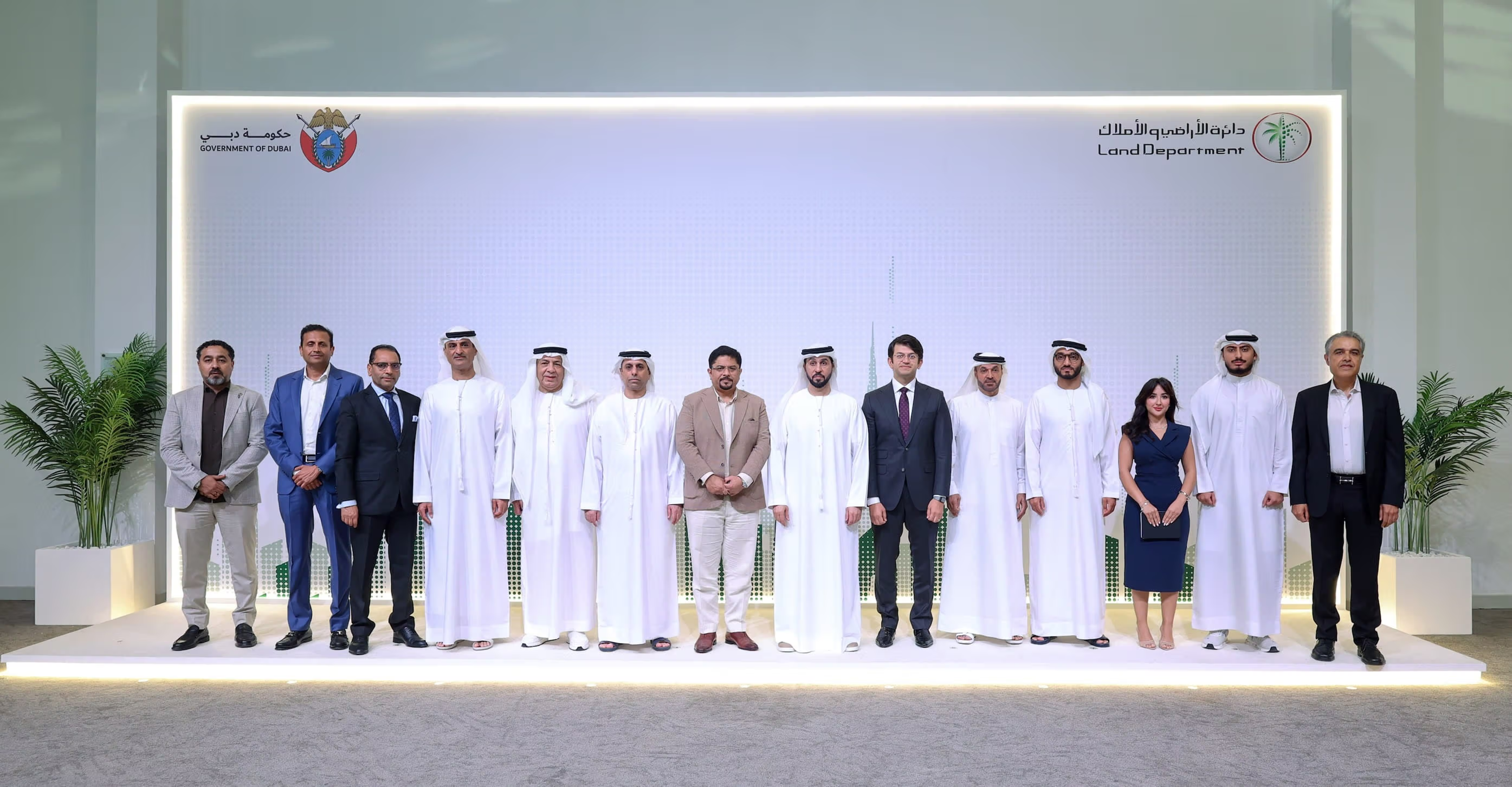
Dubai’s property sector is getting another layer of automation.
The Dubai Land Department (DLD) has launched a new Initial Registration platform, bringing project registration, property transaction registration and escrow account management into a more connected digital system.
Artificial intelligence sits at the centre of the platform. It can read documents, extract relevant information and populate required fields automatically. For developers, that means less repetitive paperwork and fewer manual steps. It also signals something bigger across Dubai’s property ecosystem, where brokers, agencies, marketers and real estate creators increasingly depend on faster digital workflows behind the scenes.
Dubai Pushes More of the Property Process Online
The Dubai Land Department designed the Initial Registration platform to bring several parts of the real estate development process into a single digital environment. Developers can manage project registration, property transactions and escrow-related activity without repeatedly entering the same information across different systems. The platform also provides a clearer view of property portfolios and project activity, making it easier for companies to manage multiple developments while reducing duplicated work between developers, banks and government departments.
That matters beyond administration. Dubai’s property sector moves quickly, especially when new projects reach the market. Developers often promote launches through Instagram, TikTok, YouTube, property portals and influencer partnerships while projects are still under construction. A more efficient registration process can help the wider commercial ecosystem operate with cleaner information and fewer delays as projects move from registration to marketing and sales.
AI Reads Passports, Emirates IDs and Sales Contracts
One of the more practical parts of the platform is its ability to process documents automatically. The Dubai Land Department says the system can read Emirates IDs, passports and sales contracts, extract the required information and place it directly into the appropriate fields. Instead of repeatedly copying names, identification numbers and transaction details into different forms, developers can allow the platform to handle much of that routine work.
The system can also process standard transactions automatically when they meet the required business rules. Transactions that satisfy the necessary conditions may move through approval with less manual intervention. Users are guided through a short set of questions to determine the correct procedure, and if information is missing, they can add it without abandoning the transaction and starting again. It is a relatively simple change, but it could remove a lot of friction from everyday property registration.
Project 360 Gives Developers a Broader View
The platform also introduces a feature called Project 360, which gives developers a consolidated view of their projects. Instead of checking separate systems for unit information, escrow records, financial details and project status, developers can access those elements from one place. Project 360 also includes early warning indicators designed to highlight potential problems before they become more difficult to resolve.
This centralised approach could become increasingly valuable as real estate companies rely more heavily on digital marketing and content production. Sales teams, social media managers, video creators and agencies all need access to accurate project information. The Initial Registration platform is not built as a creator tool, but it supports the infrastructure that sits behind the content creators and marketers eventually use when promoting new developments.
Developers Can Manage Multiple Companies From One Account
The Dubai Land Department has also made the platform easier for larger developers that operate more than one company or project. A single account can oversee several businesses and monitor multiple developments, reducing the need to move between different accounts or disconnected platforms.
Companies can also assign different levels of access to employees. One user might be responsible for submitting transactions, while another reviews or approves them. That gives developers more control over internal processes and can help prevent unnecessary access to sensitive project information. The platform was introduced in stages, with user testing and training designed to improve accuracy before wider adoption.
Dubai’s Real Estate AI Push Fits a Bigger Government Strategy
The Initial Registration platform arrives during a much broader government push toward artificial intelligence and automation. The UAE has been expanding the use of Agentic AI across government operations, while Dubai has continued encouraging public and private organisations to use AI to improve services and productivity.
DLD’s platform shows what that shift can look like in everyday practice. The system does not rely on flashy demonstrations or futuristic concepts. Instead, AI reads contracts, extracts information, checks requirements and helps move transactions through connected workflows. Much of the value comes from removing repetitive administrative steps that previously required people to enter or verify information manually.
What This Means for Dubai’s Property Creators and Marketers
Dubai has built a highly visible real estate content ecosystem. Brokers regularly produce villa tours on YouTube, agents explain payment plans through TikTok and Instagram, and developers work with creators and influencers during major property launches. Social media has become one of the most important ways that new projects reach local and international buyers.
The Initial Registration platform operates much further back in the property process, but improvements at that level can still affect the marketing side of the industry. Faster processing, better organised data and clearer project information can help developers operate more efficiently. That can eventually influence how quickly campaigns launch, how accurately properties are promoted and how easily marketing teams access project details.
As government property systems become more automated, developers may also face greater pressure to modernise their own sales and marketing operations. Creators working with property companies could see faster campaign cycles, more structured briefing materials and growing expectations for content that can keep pace with Dubai’s increasingly digital property market.
AI Is Becoming Part of Dubai’s Property Infrastructure
The Dubai Land Department’s Initial Registration platform is another example of AI becoming part of the infrastructure supporting the emirate’s real estate industry. Instead of using artificial intelligence purely as a customer-facing feature, DLD is applying it to document processing, data entry, transaction management, project monitoring and communication between organisations.
The platform also supports wider objectives under the Dubai Real Estate Strategy 2033 and the Dubai Economic Agenda D33, both of which aim to strengthen the emirate’s competitiveness and support long-term economic growth. As Dubai continues attracting developers, investors and international buyers, property systems will need to handle growing transaction volumes without adding unnecessary administrative complexity.
Dubai’s property market already moves quickly on the marketing side. With platforms such as Initial Registration, the infrastructure behind those campaigns is becoming faster as well.
Sources
Dubai Media Office, “Dubai Land Department launches initial registration to boost real estate efficiency,” September 3, 2026.
https://www.mediaoffice.ae/en/news/2026/september/03-09/dubai-land-department-launches-initial-registration-to-boost-real-estate-efficiency
Dubai Land Department, “Dubai Land Department launches ‘Initial Registration’; A smarter journey for developers and greater efficiency for the real estate sector,” September 3, 2026.
https://dubailand.gov.ae/en/news-media/dubai-land-department-launches-initial-registration-a-smarter-journey-for-developers-and-greater-efficiency-for-the-real-estate-sector/
