


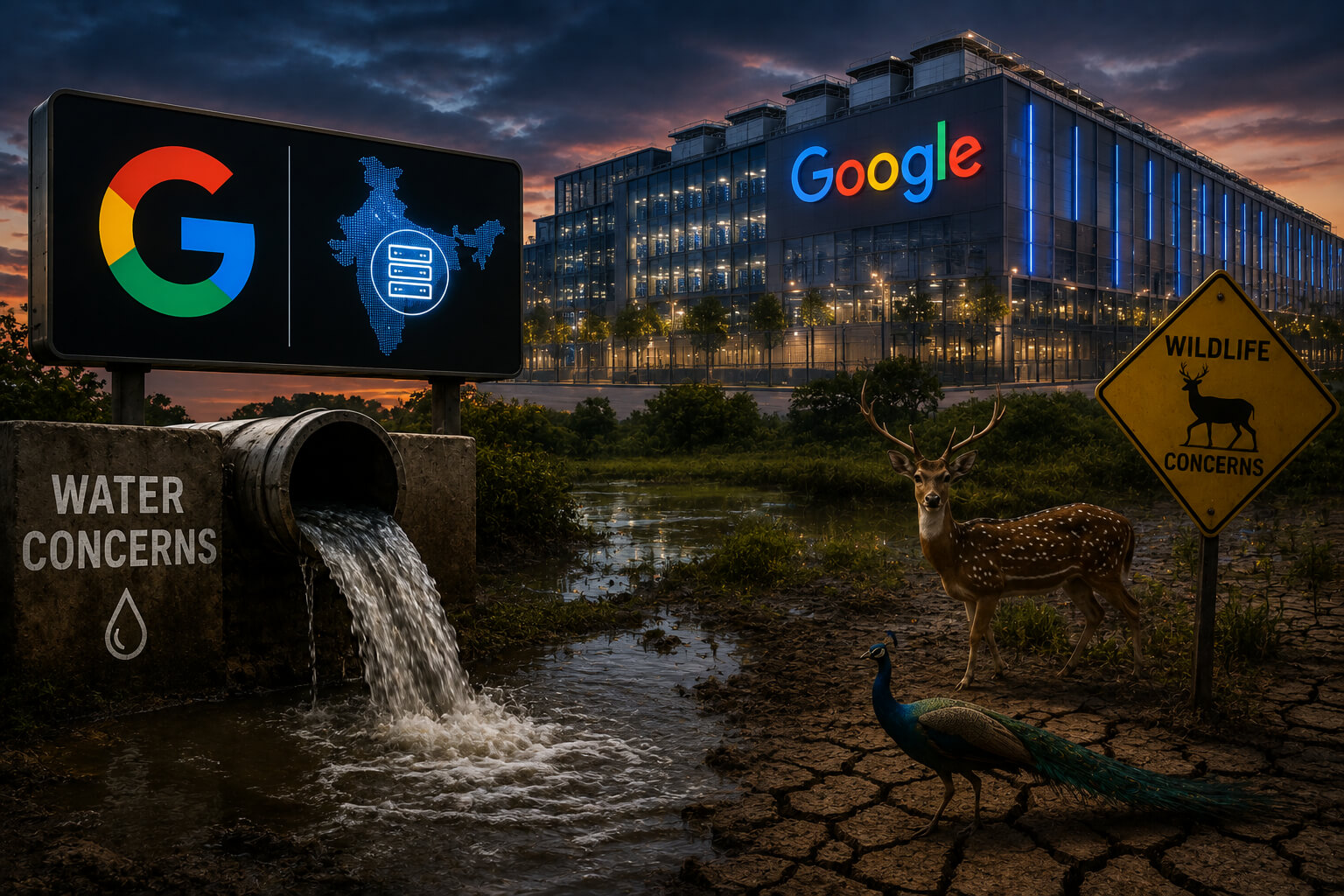
Google’s push to expand its AI infrastructure in India has hit an unexpected obstacle. It’s not about chips, GPUs, or electricity this time. The debate is centered on water, wildlife, and whether one of the world’s biggest technology companies can build massive AI infrastructure without putting local ecosystems at risk.
The proposed project, valued at roughly $1.5 billion, has become one of India’s most closely watched technology developments as environmental groups and regulators examine its potential impact.
AI Growth Meets Environmental Reality
Building modern AI data centers isn’t as simple as putting up another warehouse full of servers. These facilities require enormous amounts of electricity and, depending on their cooling systems, significant volumes of water to keep hardware operating safely.
That has placed Google’s project under the microscope.
Concerns raised around the development include water consumption in nearby communities and the possible effect on local wildlife habitats. Environmental assessments are now playing a bigger role than many expected when the project was first announced.
Why Water Has Become a Bigger AI Story
AI companies are racing to add more computing capacity across the world. Microsoft, Amazon, Meta, OpenAI partners, and Google are all investing billions into new infrastructure.
What often gets overlooked is that data centers don’t only consume electricity.
Cooling thousands of AI servers can require substantial water resources, particularly in regions where temperatures remain high throughout much of the year. In areas already facing pressure on water supplies, new facilities frequently trigger questions from residents, environmental organizations, and local governments.
That’s exactly what appears to be happening with Google’s India data center project.
Wildlife Questions Add Another Layer
Water isn’t the only issue.
Reports indicate that the proposed site has also attracted attention because of potential impacts on nearby wildlife and surrounding ecosystems. Environmental experts are examining whether construction and long-term operations could affect biodiversity in the area.
These reviews don’t necessarily stop projects from moving forward. Still, they can delay approvals, require design changes, or introduce stricter environmental safeguards before construction begins.
A Challenge Facing the Entire AI Industry
Google isn’t alone.
As AI demand keeps climbing, companies are searching for locations capable of supporting enormous data centers. The ideal site needs reliable electricity, strong network connectivity, available land, and enough water for cooling. Finding all four without creating environmental conflicts is becoming increasingly difficult.
That challenge is expected to grow as governments demand greater transparency around the environmental footprint of AI infrastructure.
For technology companies, future success may depend not only on building faster AI systems but also on proving they can expand responsibly.
The Bigger Picture
The AI race is no longer measured only by who has the most powerful models.
Infrastructure has become the next battleground, and with it comes greater public scrutiny. Projects that once focused almost entirely on technical performance are now being judged by environmental impact as well.
Google’s India data center could become an important test case for how the industry balances rapid AI expansion with the realities of sustainability.
