


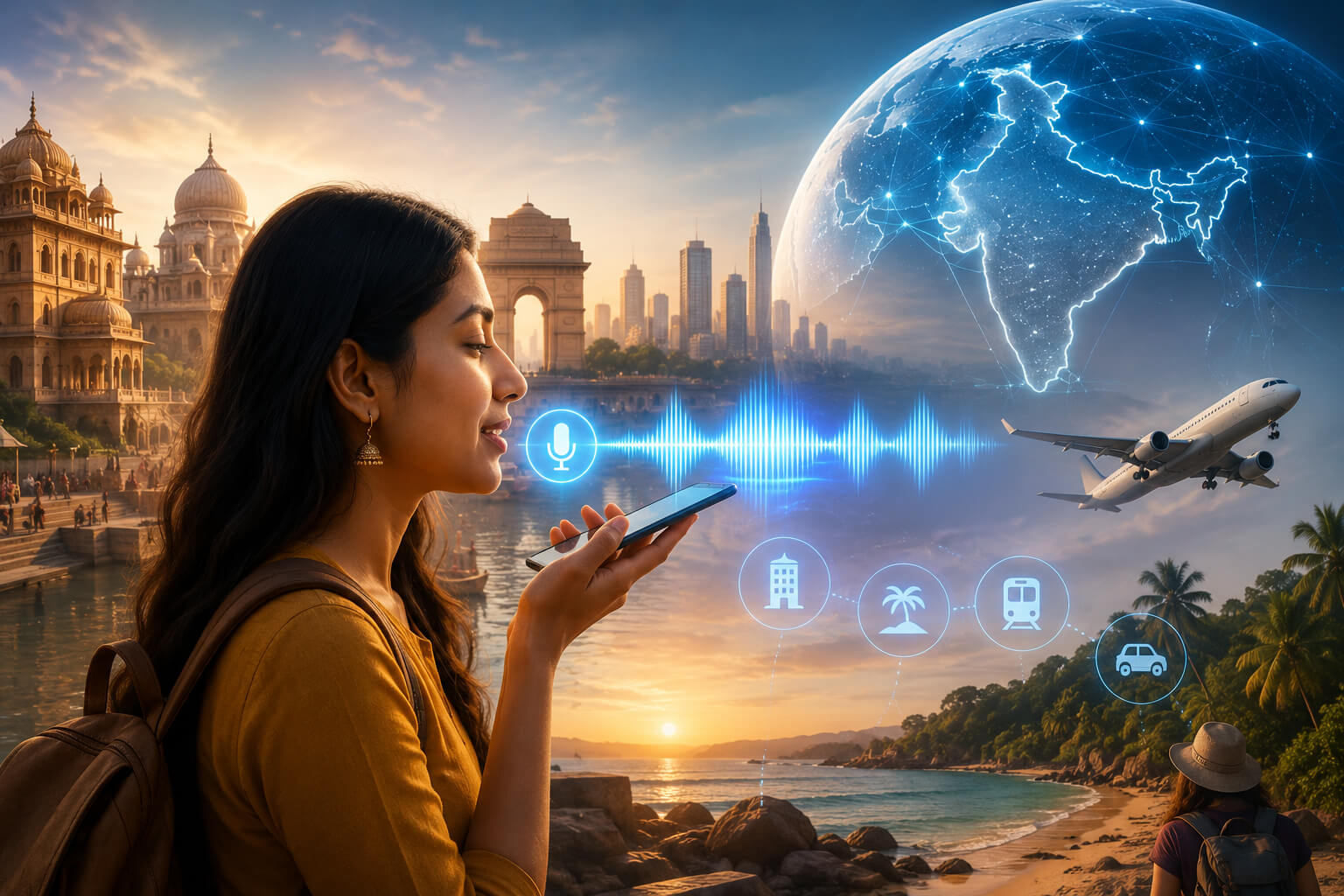
India is fast becoming the world’s proving ground for voice-first AI travel apps, changing the way millions of users discover, book and experience travel online. Skift says that India’s unique blend of linguistic diversity, mobile-first internet adoption and growing AI ecosystem are setting the stage for the next generation of travel tech.
The emergence of generative AI and conversational interfaces is revolutionizing travel platforms across the globe, but India is one-of-its-kind with the seamless integration of voice into the daily digital routine.
Why India Is an Ideal Market for Voice-First Travel Tech
There are many reasons India has become a voice-first nation, in contrast to Western markets where typing is the primary mode of digital engagement:
- Large multilingual population
- Rapid adoption of smartphones
- Expanding internet access in rural regions
- Reduced dependence on desktop computing
- Rising popularity of AI assistants
Voice technology is democratizing travel booking for millions of users in India by removing literacy and language barriers. In fact, Skift reports that India presents a “combination of literacy gaps, linguistic diversity, and voice-first consumer behavior,” along with a quickly developing AI ecosystem.
As a result, this shift creates a huge opportunity for travel startups and AI companies. Moreover, companies building conversational booking experiences can reach users who may struggle with text-based platforms. Therefore, voice-first AI could become a major driver of travel access and digital booking growth in India.
AI’s Role in Changing How Travelers Search and Book Trips
Traditional travel apps mostly rely on text-based search and filtering. Voice-first AI changes that completely.
Instead of typing:
“Cheap flights from Delhi to Dubai next weekend”
Users can simply ask:
“Find me the cheapest Dubai trip for next weekend.”
Modern AI systems can understand accents, regional languages, mixed-language conversations, and conversational intent in real time.
India’s fast-growing AI ecosystem is fuelling this transition. New multilingual AI assistants, like Sarvam AI’s “Indus”, are focusing on voice interaction and support for Indian languages.
“This tech trend will affect the future of global travel booking experiences.”
Travel Companies Are Betting on Conversational AI
Travel platforms are increasingly embedding AI agents and conversational user interfaces into their products.
Skift recently highlighted how AI agents are the “travel’s new audience” and how they are changing the way consumers are interacting with booking platforms.
You could soon book flights, get hotel recommendations, plan your itinerary, get customer support, find help with local travel, and get personalized travel deals.
For emerging markets like India, voice-first AI is a more natural and scalable approach than traditional app interfaces.
India’s AI Boom Is Driving Innovation
India’s travel industry is already undergoing a massive digital transformation, and executives describe the market as a “once-in-a-generation” opportunity.
Meanwhile, AI startups, cloud vendors and travel companies are investing heavily in:
- Multilingual AI models
- Speech recognition systems
- Real-time translation
- Conversational commerce
- Voice cloning and synthetic speech
Recent AI research in Indic languages and speech technology is helping improve the quality and accuracy of voice interactions for Indian users.
The intersection of travel demand and AI innovation makes India a major player in the global landscape of conversational travel technology in the future.
The Future of Travel May Be Spoken, Not Typed
As generative AI becomes more advanced, voice-first interfaces are expected to become mainstream across the travel industry.
India’s unique digital landscape is giving companies the ideal environment to experiment, iterate, and scale these technologies faster than many other markets.
For travel startups, AI developers, and global tech companies, India is no longer just a growth market — it is becoming the blueprint for the future of voice-first travel experiences.
The next billion travelers may not type their bookings at all. They may simply speak them.
For more Breaking AI news visit: https://breakingai.news
