


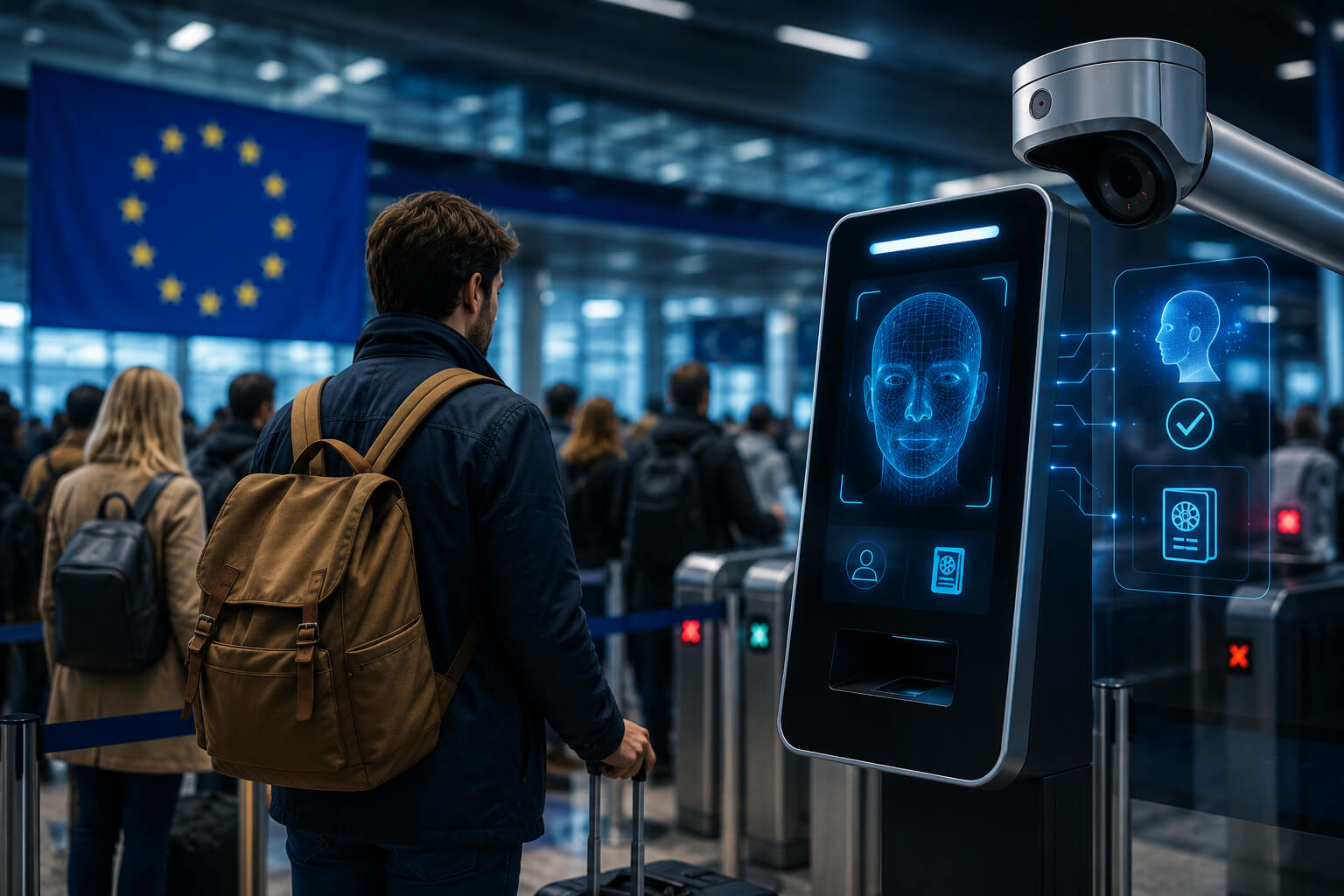
U.S. travelers headed for Europe this summer may encounter major headaches as the European Union rolls out its new AI-driven Entry/Exit System (EES). The digital border control effort aims to modernize immigration processing with biometric technology and artificial intelligence, but experts caution it could also bring long airport lines, delayed departures and border gridlock during peak travel season.
The new system is automated digital registration instead of stamping passports. Travelers entering participating European countries will now be required to provide facial scans, fingerprints, and passport information during their first visit under the system.
What Is Europe’s AI Border System?
The European Union’s Entry/Exit System (EES) is a new digital border management system that seeks to enhance security and track the movements of non-EU visitors entering the Schengen Area. Border officials will use AI-powered biometric verification to track entries and exits in real-time, replacing the manual stamping of passports.
It aims to:
- Identify people who overstay their visas
- Enhance border security
- Prevent identity theft
- Automate the checks on travellers
- Keep a digital record of movement across the EU’s borders
The system was fully operational in April 2026 after years of delays and a phased rollout.
Why US Travelers May Experience Delays
While the technology hopes to bring quicker border crossings in the future, the initial rollout stage has already resulted in major disruptions at several European airports and border crossings. Reports from France, Italy, Greece and Switzerland describe travelers waiting hours in immigration lines due to technical failures and overloaded systems.
The biggest bottleneck is first-time registrations, travel experts say, because travelers must complete biometric enrollment before being cleared. Airports with heavy summer traffic could see severe congestion, particularly during holidays and weekends.
According to reports, some travelers have already missed flights because of processing delays tied to the new system.
Which Countries Are Using the New Border System?
The EES will cover most of the Schengen Zone, such as:
- France
- Spain
- Italy
- Germany
- Greece
- Netherlands
- Portugal
- Switzerland
Non-EU travelers, including US citizens, will have to go through biometric checks when entering participating countries for short stays.
But some countries have temporarily eased or delayed full enforcement owing to operational difficulties. For instance, Greece has reportedly eased some checks after long lines at airports hit tourism traffic.
AI is transforming travel across the globe
The European AI border project is a piece of a larger global movement towards automated and biometric travel systems. Governments and airports are investing more resources into AI-powered verification technologies to improve security and reduce manual processing.
Future travel systems could depend even more on:
- Facial recognition
- Behavioral analysis
- AI-based risk detection
- Automated border gates
- Digital travel authorizations
Industry analysts predict these technologies will one day deliver “frictionless travel” experiences, but the challenges to get there are still considerable today.
ETIAS Is Coming Soon Too
Alongside the EES system, the European Union is also preparing to launch ETIAS, a new travel authorization mandate for visa-exempt visitors, including Americans. ETIAS is expected to launch in late 2026 and will require travelers to apply online in advance of visiting Europe.
The authorization will function similarly to the US ESTA program and is expected to cost around €20.
Tips for Travelers Visiting Europe This Summer
Travel experts recommend travelers prepare for longer wait times and arrive at airports earlier than usual. Some additional recommendations include:
- Double-check passport validity
- Expect fingerprint and facial scans
- Allow extra airport processing time
- Monitor airline updates for delays
- Use pre-registration apps where available
Several EU agencies are also testing mobile apps that may allow travelers to pre-submit information before arrival to reduce border delays.
Final Thoughts
Europe’s AI-powered border system represents one of the biggest changes to international travel in years. The technology is designed to improve security and update border control, but the transition period could bring some serious headaches for tourists traveling during the busy summer season.
If you’re an American heading to Europe on vacation, you may need to do some planning and be patient as airports and border authorities adjust to the new digital system.
For more Breaking AI news visit: https://breakingai.news
