

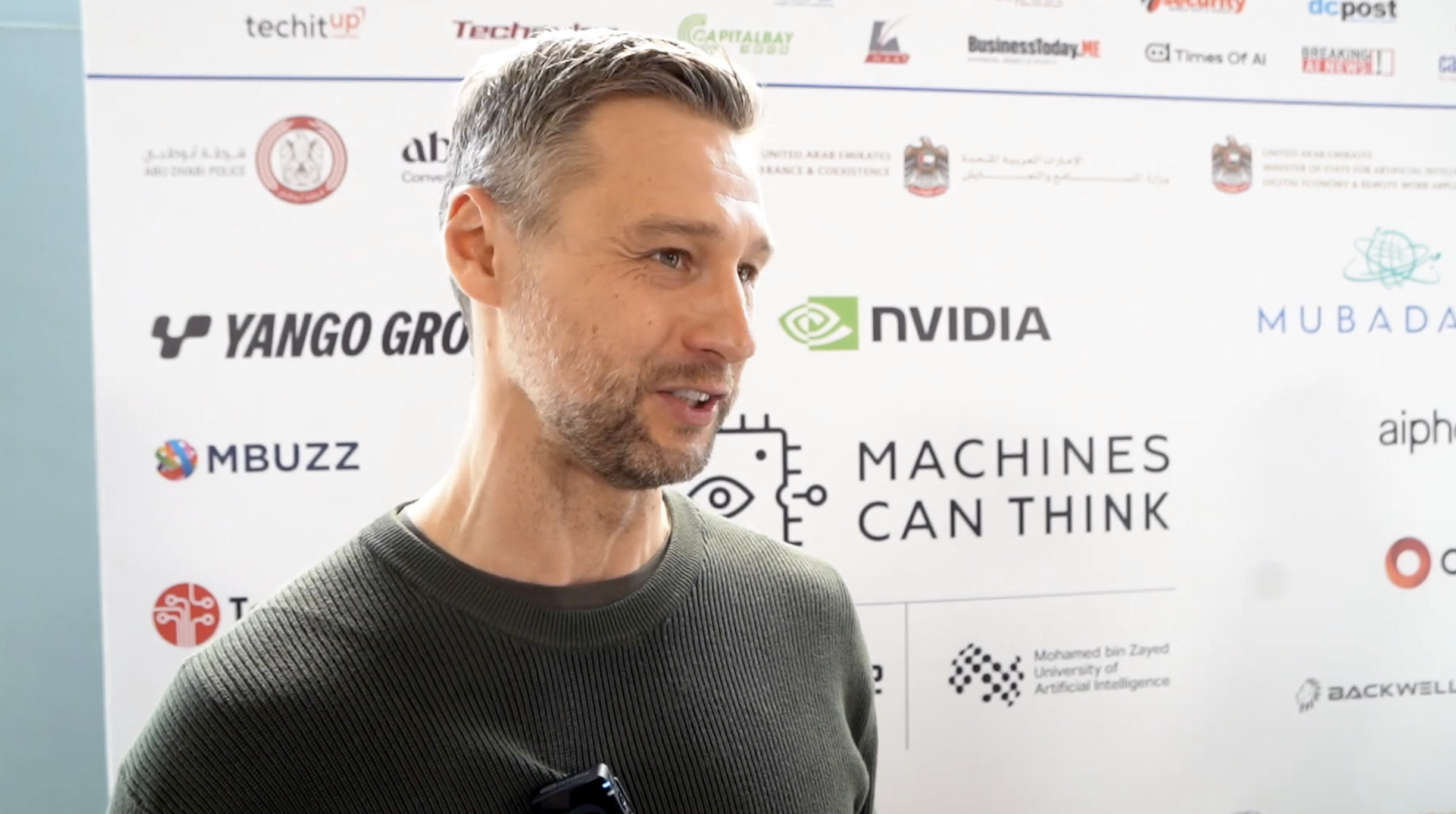
Abu Dhabi, UAE – Andrey Doronichev, CEO and Founder of Optic (formerly Bioptik), shared how artificial intelligence is reshaping the pharmaceutical industry during the Machines Can Think Summit 2026. Doronichev spoke in an interview with Justin Cooke, outlining the company’s vision for an AI-native operating system for pharma.
Optic is an AI-native pharmaceutical platform headquartered in San Francisco, with a growing subsidiary and research presence in Dubai. The company applies artificial intelligence across the full pharmaceutical value chain, from molecular discovery to clinical trials, regulatory processes, and commercialization.
“When people talk about AI in pharma, they usually focus only on drug discovery,” Doronichev said. “But discovery represents just a small fraction of the overall industry.”
Doronichev explained that while AI breakthroughs such as protein structure prediction captured public attention, most value in the global pharmaceutical market lies beyond discovery. Clinical trials, regulatory affairs, manufacturing, and go-to-market execution represent the majority of cost, time, and complexity.
Optic addresses this gap by building a fully AI-native operating system for pharma. Over the past two years, the company has trained AI models to synthesize molecules, manage pipelines, and deploy agentic workflows that support decision-making across the business of drug development.
“We built AI agents that don’t just discover molecules,” Doronichev said. “They help run the business of pharma.”
The platform currently supports more than 30 molecules in active pipelines and has secured early partnerships with both large pharmaceutical companies and emerging biotech firms. Optic’s AI-generated compounds have been patented and published in peer-reviewed scientific journals, validating the scientific foundation of the platform.
Doronichev highlighted the UAE as a strategic location for expansion. The region offers strong digital infrastructure, growing compute capacity, and increasing momentum in AI adoption. While global competition for AI talent remains intense, events such as Machines Can Think help attract researchers, investors, and partners to the ecosystem.
“For AI to succeed, you need data, compute, and talent,” he said. “The UAE is moving quickly on all three.”
Looking ahead, Doronichev cautioned against overhyping near-term artificial general intelligence. Instead, he expects the greatest impact over the next five to ten years to come from AI-native platforms that amplify human expertise.
“The biggest value won’t come from AI replacing people,” he said. “It will come from AI supercharging human teams.”
These systems improve decision speed, reduce cost, and increase the quality of judgment across complex workflows. In healthcare, this translates to faster development timelines and greater access to medicines that may never reach patients under traditional models.
“Our mission is simple,” Doronichev said. “To make life-changing medicine available faster and more affordably to patients who need it.”
The interview reflected key themes of the Machines Can Think Summit 2026, AI for science, agentic systems, real-world deployment, and the transformation of complex global industries through intelligent platforms.
Media Contact
Breaking AI News – https://breakingai.news/
contact@breakingai.news
Interview conducted by Justin Cooke at Machines Can Think Summit 2026