

Close Menu
    • Home
    • Events
    • Videos
      • Machine Can Think Summit 2026
      • Step Dubai Conference 2026
    • Technology & Innovation
    • Business & Marketing
    • Trends & Insights
    • Industry Applications
    • Tutorials & Guides
    What's Hot
    AI Travel Technology News

    Webjet AI Travel App Launches for Smarter Flight and Hotel Search

    By Art RyanMay 12, 20260

    Australian online travel company Webjet is taking a deep dive into AI-powered travel with the…

    Dubai AI-Powered Smart Bus Station: A New Era in Transport

    May 12, 2026

    Tesla Vision AI May Deploy Airbags Before Crashes

    May 12, 2026

    AI-Powered Hackers Targeting Zero-Day Exploits 2026

    May 12, 2026
    Facebook X (Twitter) Instagram
    Facebook X (Twitter) Instagram
    Breaking AI News
    Wednesday, May 13
    • Home
    • Events
    • Videos
      • Machine Can Think Summit 2026
      • Step Dubai Conference 2026
    • Technology & Innovation

      Webjet AI Travel App Launches for Smarter Flight and Hotel Search

      May 12, 2026

      Dubai AI-Powered Smart Bus Station: A New Era in Transport

      May 12, 2026

      Tesla Vision AI May Deploy Airbags Before Crashes

      May 12, 2026

      eviivo and DirectBooker Bring Hotels to ChatGPT and Claude

      May 11, 2026

      AI-Powered Robodog Guides Transform Travel in Singapore

      May 11, 2026
    • Business & Marketing

      QNA Upgrades AI News Service to Multi-Lingual Services

      May 11, 2026

      Big Tech Burns Cash on $725B AI Infrastructure Race

      May 11, 2026

      Alibaba to Bring Qwen AI to Taobao for Smarter Online Shopping

      May 10, 2026

      UAE Among World’s Top AI Powerhouses in 2026

      May 9, 2026

      RingCentral AI Receptionist Integration with Major Platforms

      May 9, 2026
    • Trends & Insights

      AI-Powered Hackers Targeting Zero-Day Exploits 2026

      May 12, 2026

      QNA Upgrades AI News Service to Multi-Lingual Services

      May 11, 2026

      AI Travel Trends Transform Experiential Tourism

      May 11, 2026

      Dubai Launches AI Government Scholarships for Future Leaders

      May 10, 2026

      China AI Boom Could Shape the Future of Artificial Intelligence

      May 10, 2026
    • Industry Applications

      Dubai AI-Powered Smart Bus Station: A New Era in Transport

      May 12, 2026

      Tesla Vision AI May Deploy Airbags Before Crashes

      May 12, 2026

      AI App Detect Drunk Drivers Using Speech Analysis

      May 11, 2026

      ASEAN Leaders Call for Stronger Regional Health Cooperation

      May 10, 2026

      Airbnb AI Assistant Now Resolves One-Third of Support Inquiries

      May 9, 2026
    • Tutorials & Guides

      How AI Is Revolutionizing the Future of Travel 2026 with Wellness and Sustainability

      April 19, 2026

      University of Wollongong in Dubai AI initiative boosts future-ready education

      March 31, 2026

      Microsoft AI upgrades Copilot Cowork unveiled for early access users

      March 31, 2026

      Starcloud $11 billion valuation signals AI space race surge

      March 31, 2026

      Flexible AI Factories Power the Future of Energy Grids

      March 30, 2026
    Breaking AI News
    Home » New AI tool boosts accuracy of child abuse detection in hospitals
    Technology & Innovation

    New AI tool boosts accuracy of child abuse detection in hospitals

    Art RyanBy Art RyanJuly 6, 2025No Comments5 Mins Read
    Facebook Twitter Pinterest LinkedIn Tumblr Email
    Share
    Facebook Twitter LinkedIn Pinterest Email

    Artificial intelligence is changing how doctors detect child abuse in hospital emergency rooms. New research shows that AI tools can better identify when a child has been physically harmed. These tools look beyond basic hospital records and help doctors get a clearer picture of what’s really happening.

    The study focused on physical abuse seen in children under age 10, especially those younger than 2. Doctors often miss signs of abuse because they rely too much on codes entered in medical records. These codes often don’t tell the full story. In fact, the study found that depending only on abuse codes led to misdiagnosis in about 8.5% of cases.

    Farah Brink, MD, a child abuse pediatrician, explains how this new method could help doctors respond faster and more accurately. “Our AI approach offers a clearer look at trends in child abuse, which helps providers more appropriately treat abuse and improve child safety,” she said. Brink also teaches at Ohio State University and works at a children’s hospital known for treating young patients in crisis.

    What the AI Model Does Differently

    Doctors and hospitals often use a system called ICD-10-CM to classify injuries and illnesses. But this system doesn’t always catch signs of physical abuse, especially in busy emergency departments. Many injury codes are general. They don’t always show whether the injury happened by accident or on purpose.

    To solve this problem, researchers trained a machine learning model to analyze a wider range of data. They looked at more than 3,300 emergency room visits across seven children’s hospitals between February 2021 and December 2022. The study included only children younger than 10 who had been evaluated for abuse by a child abuse pediatrician. Nearly 75% of those children were younger than 2, and over half were younger than 1.

    Instead of looking only at whether a case was labeled as abuse in the records, the AI model also examined injury codes. It used a type of analysis called LASSO logistic regression. This helped predict whether the injury was caused by abuse, even when the hospital did not label it that way.

    Better Accuracy, Fewer Mistakes

    The study’s findings highlight how much more accurate AI can be. In 43% of all hospital visits analyzed, doctors had added at least one abuse-specific code. But when researchers compared the abuse codes to what child abuse experts had concluded, they found a big gap.

    In cases where abuse-specific codes were used, the actual rate of confirmed abuse was 63.4%. But many cases without these codes also turned out to involve abuse—12.7% of them, to be exact. This shows that codes alone can miss real abuse.

    Across all seven hospitals, estimates based only on abuse codes were off by as much as 14.3%. On average, they missed the true rate by 8.5%. When the AI model was used instead, the errors dropped sharply. The new method had an average mistake rate of just 1.8%.
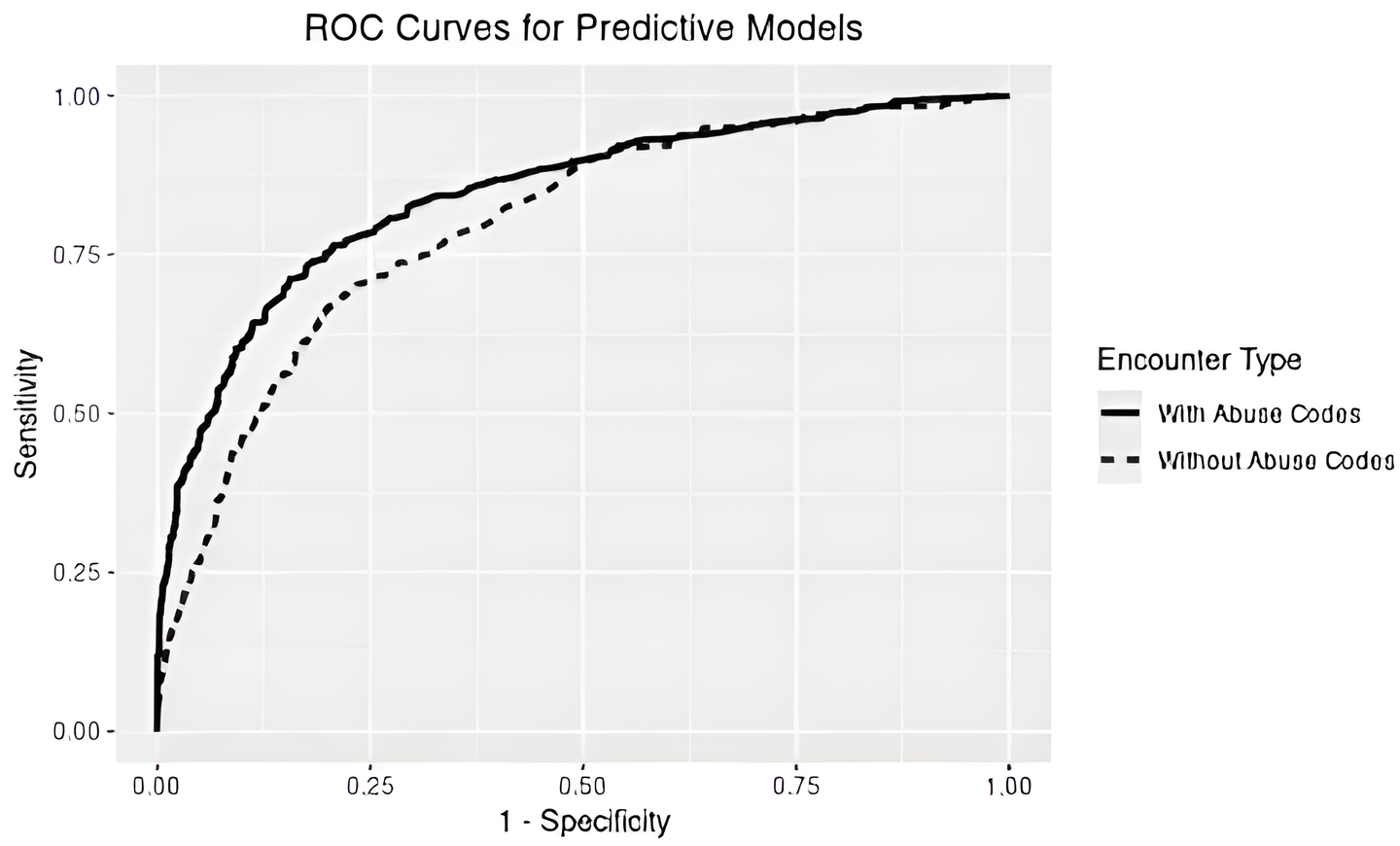
    ROC curves for predictive models.
    ROC curves for predictive models. (CREDIT: Farah Brink, et al.)

    In six of the seven hospitals, the AI model gave more accurate results than using abuse codes alone. At one hospital, the error rate increased slightly, but only by 0.6%. This shows that the model works well across different locations and patient groups.

    Why This Matters for Children

    Quick and accurate identification of abuse is essential. The earlier doctors can spot patterns of physical harm, the sooner they can step in and protect children. Right now, emergency rooms are fast-paced places where doctors have little time to investigate each injury deeply. That’s why better tools are needed to support their decisions.

    By giving doctors stronger data, AI can help them recognize abuse even in children who don’t come in with obvious signs. This is especially important for babies and toddlers who can’t talk or explain what happened to them.

    “AI-powered tools hold tremendous potential to revolutionize how researchers understand and work with data on sensitive issues, including child abuse,” said Dr. Brink.

    Building a Smarter Safety Net

    The researchers used records from a trusted network of child abuse experts, called CAPNET. They focused on cases rated 5 to 7 on a 7-point abuse likelihood scale. These ratings came from trained specialists who carefully studied each child’s injury, behavior, and medical history. These expert decisions were then used as the “truth” to compare against the AI model and the hospital codes.

    By linking emergency room visits with expert evaluations, the researchers could test how well each method performed. They found that when hospitals relied only on administrative codes, they often overestimated abuse in some places and underestimated it in others. The AI model gave results much closer to the expert opinion.
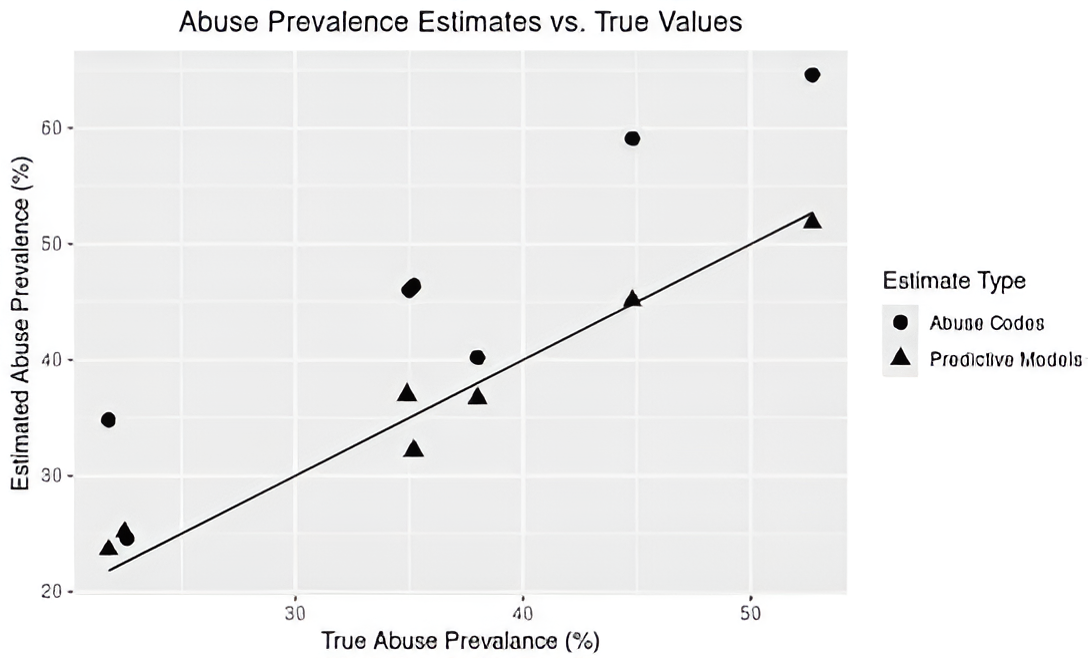
    Abuse prevalence estimates vs. true values.
    Abuse prevalence estimates vs. true values. (CREDIT: Farah Brink, et al.)

    This matters because decisions based on flawed data can have real consequences. Children may be returned to unsafe homes, or families may be unfairly accused. Tools like this AI model can reduce those risks by offering a clearer, evidence-based view.

    With better estimates of how often abuse occurs, hospitals and public health officials can also plan better. They can see where help is needed most and design programs that prevent harm before it happens.

    Looking Forward

    This study is just the beginning. The researchers plan to keep improving their model with more data from other hospitals. They also hope to use similar tools to spot other forms of child maltreatment, such as neglect or emotional abuse.

    For now, the findings show that smart technology can play a powerful role in child safety. It can support doctors in making better decisions, even in the most stressful situations. As more hospitals start using these tools, children will have a better chance of getting the care and protection they need.

    Source: https://www.thebrighterside.news/

    Share. Facebook Twitter Pinterest LinkedIn Tumblr Email
    Art Ryan

    Related Posts

    Webjet AI Travel App Launches for Smarter Flight and Hotel Search

    May 12, 2026

    Dubai AI-Powered Smart Bus Station: A New Era in Transport

    May 12, 2026

    Tesla Vision AI May Deploy Airbags Before Crashes

    May 12, 2026

    Comments are closed.

    Latest News

    Webjet AI Travel App Launches for Smarter Flight and Hotel Search

    May 12, 2026

    Dubai AI-Powered Smart Bus Station: A New Era in Transport

    May 12, 2026

    Tesla Vision AI May Deploy Airbags Before Crashes

    May 12, 2026

    AI-Powered Hackers Targeting Zero-Day Exploits 2026

    May 12, 2026
    Facebook X (Twitter) Pinterest Vimeo WhatsApp TikTok Instagram LinkedIn YouTube Spotify Reddit Snapchat Threads

    AI University

    • Global Universities
    • Universities in Africa
    • Universities in Asia
    • Universities in Europe
    • Universities in Latin America
    • Universities in Middle East
    • Universities in North America
    • Universities in Oceania

    AI Tools & Apps Directory

    • AI Productivity Tools
    • AI Coding Tools
    • AI Voice Tools
    • AI Video Tools
    • AI Image Generators
    • AI Writing Tools

    Info

    • Home
    • About Us
    • AI Organizations & Associations
    • Contact Us
    • Cookie Policy
    • Copyright Policy
    • Disclaimer
    • Editorial Policy
    • Terms and Conditions

    Subscribe to Updates

    Get the latest creative news from FooBar about art, design and business.

    © 2026 Breaking AI News.
    • Privacy Policy

    Type above and press Enter to search. Press Esc to cancel.

    Sign Up

    Want to stay ahead In Artificial Intelligence?

     Sign up now and get exclusive breaking AI news and special updates—FREE!