


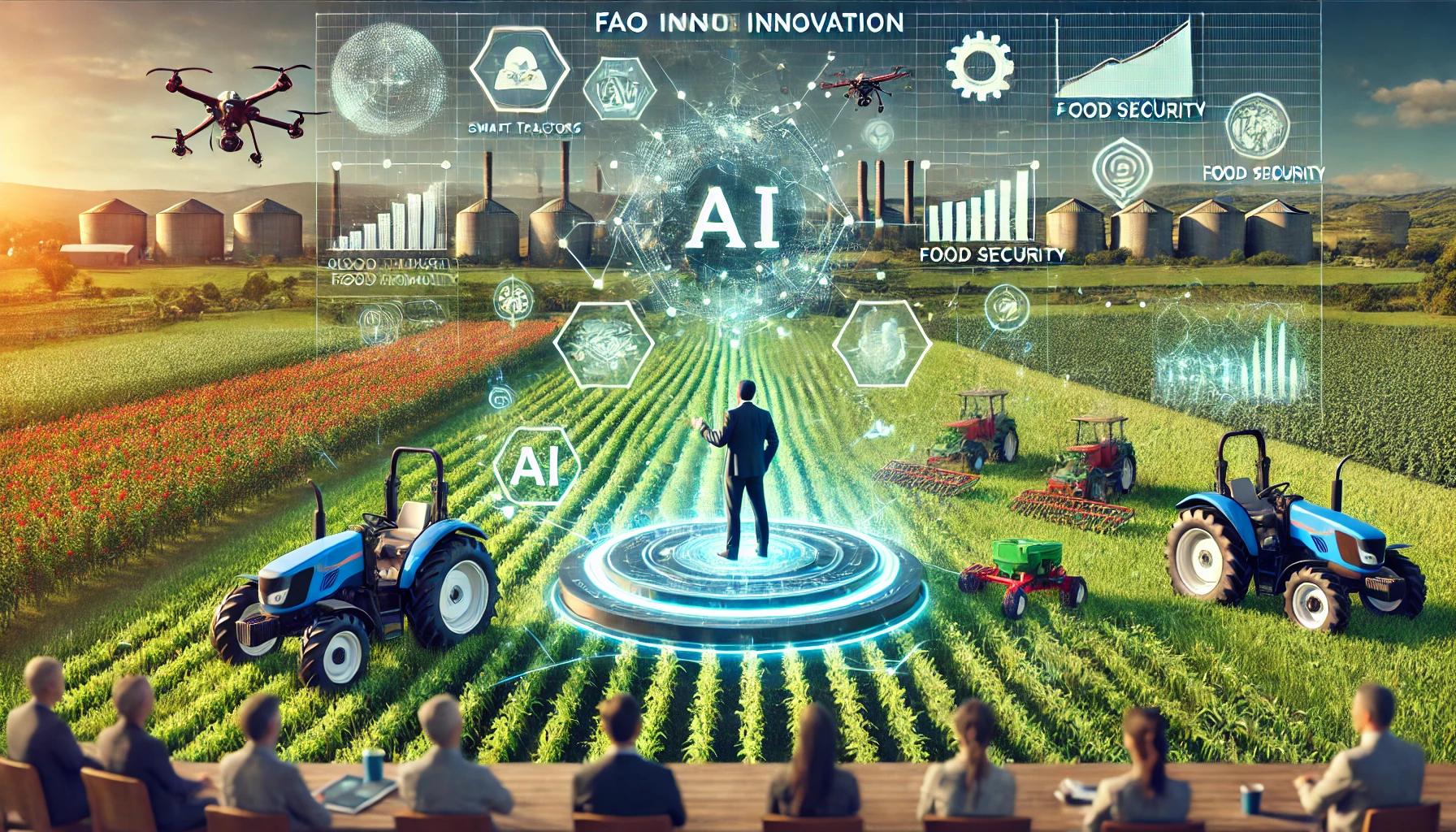
The world faces unprecedented challenges: a growing population, increasing climate extremes, and dwindling natural resources. Feeding the planet sustainably requires a shift, a move away from “business as usual” to embrace innovative solutions that can transform our agrifood systems. This transformation demands not only technological breakthroughs, but also a renewed commitment to collaboration and a willingness to rethink how we produce, distribute, and consume food. At the heart of this effort lies the critical need for strengthened multilateralism, ensuring that the benefits of innovation are shared equitably across the globe.
But what does “innovation” truly mean in the context of agriculture and food security? How can emerging technologies like artificial intelligence be harnessed responsibly to address these global challenges? And what role can international organizations, governments, and even individual citizens play in shaping a more sustainable and food-secure future?
To explore these crucial questions, FAO Newsroom spoke with Vincent Martin, Director of the FAO Office of Innovation. Martin outlines FAO’s vision for innovation, highlights projects underway, and emphasizes the urgent need for collective action to build resilient and equitable agrifood systems.
Let’s talk about innovation at FAO. What does that really mean, in practical terms?
Vincent Martin: Innovation, simply put, is about doing things differently-and doing different things. For me, it’s also about translating science into market opportunities and bringing it into the field. The goal is to harness the power of science and innovation to transform agrifood systems and deliver solutions directly to farmers and those who need them most-helping people build better lives and make a living from agriculture.
https://googleads.g.doubleclick.net/pagead/ads?gdpr=0&client=ca-pub-4000288052572090&output=html&h=200&slotname=9540773243&adk=1487445462&adf=1364897200&pi=t.ma~as.9540773243&w=840&abgtt=6&fwrn=4&lmt=1743591093&rafmt=11&format=840×200&url=https%3A%2F%2Fwww.miragenews.com%2Fai-revolutionizes-farming-fao-innovation-chief-1437428%2F&fwrattr=true&wgl=1&uach=WyJXaW5kb3dzIiwiMTUuMC4wIiwieDg2IiwiIiwiMTM0LjAuNjk5OC4xNzgiLG51bGwsMCxudWxsLCI2NCIsW1siQ2hyb21pdW0iLCIxMzQuMC42OTk4LjE3OCJdLFsiTm90OkEtQnJhbmQiLCIyNC4wLjAuMCJdLFsiR29vZ2xlIENocm9tZSIsIjEzNC4wLjY5OTguMTc4Il1dLDBd&dt=1743591172100&bpp=8&bdt=8470&idt=5203&shv=r20250401&mjsv=m202503270101&ptt=9&saldr=aa&abxe=1&cookie=ID%3D9968e91a97a1a2bf%3AT%3D1739781961%3ART%3D1743591177%3AS%3DALNI_Ma-43O_pABaYmH8HygCgFAS3_Q4-w&gpic=UID%3D0000103e75f9ddc1%3AT%3D1739781961%3ART%3D1743591177%3AS%3DALNI_Mb2X379_ulnWudm8xpnwBzn6-Qy8g&eo_id_str=ID%3Da8956c7c56b79e75%3AT%3D1739781961%3ART%3D1743591177%3AS%3DAA-AfjaOoEKPM3arLGHyLIUQ6uZG&prev_fmts=0x0%2C450x280%2C300x600%2C300x226&nras=1&correlator=2396204485441&frm=20&pv=1&rplot=4&u_tz=60&u_his=1&u_h=1080&u_w=1920&u_ah=1080&u_aw=1920&u_cd=24&u_sd=1&dmc=8&adx=703&ady=980&biw=1905&bih=959&scr_x=0&scr_y=0&eid=95355972%2C95355974%2C31091241%2C31091334%2C95354562%2C95356500%2C95356504%2C95356788%2C95356927&oid=2&pvsid=4385345359054080&tmod=877011085&uas=0&nvt=1&ref=https%3A%2F%2Fwww.google.co.uk%2F&fc=1920&brdim=0%2C0%2C0%2C0%2C1920%2C-360%2C0%2C0%2C1920%2C959&vis=1&rsz=o%7Co%7CoeEbr%7C&abl=NS&pfx=0&fu=128&bc=31&bz=0&td=1&tdf=2&psd=W251bGwsbnVsbCxudWxsLDNd&nt=1&ifi=3&uci=a!3&btvi=1&fsb=1&dtd=M
In short, it’s about scaling impact and ensuring innovation reaches the last mile.
It’s important to recognize that innovation is not a luxury-it must become the norm. Why? Because we are facing exponential, complex, and interconnected challenges: climate change, biodiversity loss, pandemics, economic and financial crises, and growing global demands. Yet, too often, we respond with linear solutions that fail to match the scale and complexity of these problems.
In other words, we are acting like firefighters-always reacting, rarely anticipating. We’re behind the curve when we need to be ahead of it.
To truly meet the challenges of the 21st century, we must move from linear thinking to holistic, forward-looking, and innovative approaches.
Innovation is essential. It’s also about staying relevant-closing the gap between what we are doing now and what we should be doing to keep pace with rapid change and transformation.
So, how does FAO apply this concept of innovation, specifically to agrifood systems?
In 2022, we launched our Science and Innovation Strategy and established the Office of Innovation. The goal was to define what innovation means for transforming agrifood systems-finding ways to feed a growing population without depleting natural resources. This requires a new vision: doing different things and doing things differently.
https://googleads.g.doubleclick.net/pagead/ads?gdpr=0&client=ca-pub-4000288052572090&output=html&h=200&slotname=9540773243&adk=1487445462&adf=1388671859&pi=t.ma~as.9540773243&w=840&abgtt=6&fwrn=4&lmt=1743591093&rafmt=11&format=840×200&url=https%3A%2F%2Fwww.miragenews.com%2Fai-revolutionizes-farming-fao-innovation-chief-1437428%2F&fwrattr=true&wgl=1&uach=WyJXaW5kb3dzIiwiMTUuMC4wIiwieDg2IiwiIiwiMTM0LjAuNjk5OC4xNzgiLG51bGwsMCxudWxsLCI2NCIsW1siQ2hyb21pdW0iLCIxMzQuMC42OTk4LjE3OCJdLFsiTm90OkEtQnJhbmQiLCIyNC4wLjAuMCJdLFsiR29vZ2xlIENocm9tZSIsIjEzNC4wLjY5OTguMTc4Il1dLDBd&dt=1743591172108&bpp=7&bdt=8478&idt=5729&shv=r20250401&mjsv=m202503270101&ptt=9&saldr=aa&abxe=1&cookie=ID%3D9968e91a97a1a2bf%3AT%3D1739781961%3ART%3D1743591177%3AS%3DALNI_Ma-43O_pABaYmH8HygCgFAS3_Q4-w&gpic=UID%3D0000103e75f9ddc1%3AT%3D1739781961%3ART%3D1743591177%3AS%3DALNI_Mb2X379_ulnWudm8xpnwBzn6-Qy8g&eo_id_str=ID%3Da8956c7c56b79e75%3AT%3D1739781961%3ART%3D1743591177%3AS%3DAA-AfjaOoEKPM3arLGHyLIUQ6uZG&prev_fmts=0x0%2C450x280%2C300x600%2C300x226%2C840x200&nras=1&correlator=2396204485441&frm=20&pv=1&rplot=4&u_tz=60&u_his=1&u_h=1080&u_w=1920&u_ah=1080&u_aw=1920&u_cd=24&u_sd=1&dmc=8&adx=703&ady=1738&biw=1905&bih=959&scr_x=0&scr_y=0&eid=95355972%2C95355974%2C31091241%2C31091334%2C95354562%2C95356500%2C95356504%2C95356788%2C95356927&oid=2&pvsid=4385345359054080&tmod=877011085&uas=0&nvt=1&ref=https%3A%2F%2Fwww.google.co.uk%2F&fc=1920&brdim=0%2C0%2C0%2C0%2C1920%2C-360%2C0%2C0%2C1920%2C959&vis=1&rsz=o%7Co%7CoeEbr%7C&abl=NS&pfx=0&fu=128&bc=31&bz=0&td=1&tdf=2&psd=W251bGwsbnVsbCxudWxsLDNd&nt=1&ifi=4&uci=a!4&btvi=2&fsb=1&dtd=M
Applying innovation in agrifood systems means leveraging science, technology, and innovation to produce more with less-ensuring systems not only avoid contributing to climate change or resource depletion but also become part of the solution. In the face of climate shocks, crises, and financial downturns, we explore a broad spectrum of solutions-not just technological innovation, but also social, institutional, financial, and policy innovations.
For example, in technology, biotechnology plays a key role. New genomic techniques can help develop crop varieties that are more resistant to climate change, drought, salinity, and pests. But technology alone isn’t enough. Social innovation is also critical. How do we empower women and youth to drive innovation? How do we enable them to develop solutions and bring scientific discoveries to the field? We support women and young entrepreneurs to do exactly that.
We also work directly with farmers through our flagship Farmer Field Schools (FFS) program. For decades, it has enabled peer-to-peer learning-farmers identifying problems and finding solutions together in the field. Now, we are developing Farmer Field Schools 2.0, focused not just on scaling numbers but scaling impact. This next phase aims to mobilize entire rural communities for landscape regeneration, inclusive economies, and gender-transformative change.
By 2040, we aim to reach 50 million rural people by integrating digital tools, behavioral science, and innovative finance. To achieve this, we’re scaling out to new regions, including post-conflict areas; scaling deep to foster lasting social and cultural change; and scaling up by embedding FFS into national policies and private sector strategies.
https://googleads.g.doubleclick.net/pagead/ads?gdpr=0&client=ca-pub-4000288052572090&output=html&h=200&slotname=9540773243&adk=1487445462&adf=3561743826&pi=t.ma~as.9540773243&w=840&abgtt=6&fwrn=4&lmt=1743591093&rafmt=11&format=840×200&url=https%3A%2F%2Fwww.miragenews.com%2Fai-revolutionizes-farming-fao-innovation-chief-1437428%2F&fwrattr=true&wgl=1&uach=WyJXaW5kb3dzIiwiMTUuMC4wIiwieDg2IiwiIiwiMTM0LjAuNjk5OC4xNzgiLG51bGwsMCxudWxsLCI2NCIsW1siQ2hyb21pdW0iLCIxMzQuMC42OTk4LjE3OCJdLFsiTm90OkEtQnJhbmQiLCIyNC4wLjAuMCJdLFsiR29vZ2xlIENocm9tZSIsIjEzNC4wLjY5OTguMTc4Il1dLDBd&dt=1743591172115&bpp=3&bdt=8485&idt=5733&shv=r20250401&mjsv=m202503270101&ptt=9&saldr=aa&abxe=1&cookie=ID%3D9968e91a97a1a2bf%3AT%3D1739781961%3ART%3D1743591177%3AS%3DALNI_Ma-43O_pABaYmH8HygCgFAS3_Q4-w&gpic=UID%3D0000103e75f9ddc1%3AT%3D1739781961%3ART%3D1743591177%3AS%3DALNI_Mb2X379_ulnWudm8xpnwBzn6-Qy8g&eo_id_str=ID%3Da8956c7c56b79e75%3AT%3D1739781961%3ART%3D1743591177%3AS%3DAA-AfjaOoEKPM3arLGHyLIUQ6uZG&prev_fmts=0x0%2C450x280%2C300x600%2C300x226%2C840x200%2C840x200&nras=1&correlator=2396204485441&frm=20&pv=1&rplot=4&u_tz=60&u_his=1&u_h=1080&u_w=1920&u_ah=1080&u_aw=1920&u_cd=24&u_sd=1&dmc=8&adx=703&ady=2523&biw=1905&bih=959&scr_x=0&scr_y=0&eid=95355972%2C95355974%2C31091241%2C31091334%2C95354562%2C95356500%2C95356504%2C95356788%2C95356927&oid=2&pvsid=4385345359054080&tmod=877011085&uas=0&nvt=1&ref=https%3A%2F%2Fwww.google.co.uk%2F&fc=1920&brdim=0%2C0%2C0%2C0%2C1920%2C-360%2C0%2C0%2C1920%2C959&vis=1&rsz=o%7Co%7CoeEbr%7C&abl=NS&pfx=0&fu=128&bc=31&bz=0&td=1&tdf=2&psd=W251bGwsbnVsbCxudWxsLDNd&nt=1&ifi=5&uci=a!5&btvi=3&fsb=1&dtd=M
Could you give us some concrete, country-specific examples of these innovation projects that have been successful?
In 2023, we launched FAO’s own incubator programme for field innovation, called Elevate. So far, we’ve supported two cohorts of projects and teams, ranging from high-tech to low-tech solutions.
One example is a drone-based air sampling project in Southeast Asia. Drones collect samples from bat caves to identify potential pandemic viruses-allowing researchers to screen environments safely and accurately, without health risks. This method can be replicated across different agricultural settings for rapid, high-precision results.
Another project, based in Africa, focuses on bioeconomy by using black soldier flies to reduce food waste. The flies consume waste, lay millions of eggs, and the larvae are then dried to produce animal feed-a circular, sustainable solution. This initiative was selected for the UN Global Pulse Accelerator Programme due to its success.
In Cabo Verde, a project supports women in fish-producing communities by training them to turn fish skins into leather for fashion items-creating new livelihoods and adding value to local resources.
The diversity of innovations is impressive. Many teams are also exploring artificial intelligence-from boosting production to detecting diseases. We’re seeing creative, impactful solutions emerge from across FAO.
And this is just the beginning. We’re continuously working to accelerate these innovations, scale them effectively, and ensure they reach the communities who need them most.
How is FAO utilizing AI, and what potential do you see for it to transform agrifood systems?
AI is now a core element of our digital agriculture strategy. FAO has long been promoting digital agriculture, but the speed and scale of AI’s rise have surpassed expectations. We anticipated a revolution-just not this fast. Now, we must adapt, embrace the change, and ensure AI is used responsibly and ethically.
Beyond supporting farmers with digital tools and the Internet of Things to enable more precise, resource-efficient agriculture, we are increasingly exploring how AI can elevate these systems. The real power of AI lies in its ability to detect patterns and relationships we wouldn’t otherwise see-enhancing efficiency, enabling faster decisions, predicting outcomes, and preventing disease outbreaks.
At the global level, we operate platforms like ASIS (Agricultural Stress Index System), which uses satellite imagery to monitor drought conditions. The next generation of ASIS will integrate AI to enhance its accuracy and responsiveness.
One of our most ambitious projects is the development of the world’s first Large Language Model (LLM) for agrifood, built on FAO’s rich data and global expertise. While AI has transformed sectors like finance and healthcare, agrifood remains largely untapped. Our goal is to build a foundational AI model that provides real-time policy guidance, agronomic advice, climate strategies, and access to a global knowledge base-unlocking AI’s full potential for farmers, policymakers, researchers, and businesses.
https://googleads.g.doubleclick.net/pagead/ads?gdpr=0&client=ca-pub-4000288052572090&output=html&h=200&slotname=9540773243&adk=1487445462&adf=468008307&pi=t.ma~as.9540773243&w=840&abgtt=6&fwrn=4&lmt=1743591093&rafmt=11&format=840×200&url=https%3A%2F%2Fwww.miragenews.com%2Fai-revolutionizes-farming-fao-innovation-chief-1437428%2F&fwrattr=true&wgl=1&uach=WyJXaW5kb3dzIiwiMTUuMC4wIiwieDg2IiwiIiwiMTM0LjAuNjk5OC4xNzgiLG51bGwsMCxudWxsLCI2NCIsW1siQ2hyb21pdW0iLCIxMzQuMC42OTk4LjE3OCJdLFsiTm90OkEtQnJhbmQiLCIyNC4wLjAuMCJdLFsiR29vZ2xlIENocm9tZSIsIjEzNC4wLjY5OTguMTc4Il1dLDBd&dt=1743591172175&bpp=1051&bdt=8545&idt=7466&shv=r20250401&mjsv=m202503270101&ptt=9&saldr=aa&abxe=1&cookie=ID%3D9968e91a97a1a2bf%3AT%3D1739781961%3ART%3D1743591177%3AS%3DALNI_Ma-43O_pABaYmH8HygCgFAS3_Q4-w&gpic=UID%3D0000103e75f9ddc1%3AT%3D1739781961%3ART%3D1743591177%3AS%3DALNI_Mb2X379_ulnWudm8xpnwBzn6-Qy8g&eo_id_str=ID%3Da8956c7c56b79e75%3AT%3D1739781961%3ART%3D1743591177%3AS%3DAA-AfjaOoEKPM3arLGHyLIUQ6uZG&prev_fmts=0x0%2C450x280%2C300x600%2C300x226%2C840x200%2C840x200%2C840x200%2C840x200%2C300x226%2C300x226%2C300x226&nras=1&correlator=2396204485441&frm=20&pv=1&rplot=4&u_tz=60&u_his=1&u_h=1080&u_w=1920&u_ah=1080&u_aw=1920&u_cd=24&u_sd=1&dmc=8&adx=703&ady=3473&biw=1905&bih=959&scr_x=0&scr_y=0&eid=95355972%2C95355974%2C31091241%2C31091334%2C95354562%2C95356500%2C95356504%2C95356788%2C95356927&oid=2&pvsid=4385345359054080&tmod=877011085&uas=0&nvt=1&ref=https%3A%2F%2Fwww.google.co.uk%2F&fc=1920&brdim=1283%2C-357%2C1283%2C-357%2C1920%2C-360%2C1914%2C1074%2C1920%2C959&vis=1&rsz=o%7Co%7CoeEbr%7C&abl=NS&pfx=0&fu=128&bc=31&bz=1&td=1&tdf=2&psd=W251bGwsbnVsbCxudWxsLDNd&nt=1&ifi=7&uci=a!7&btvi=8&fsb=1&dtd=M
We’re also partnering with Digital Green, a Microsoft spin-off, to bring AI-powered advisory services directly to farmers. Their platform supports multiple languages, and thanks to AI and language models-both large and small-farmers can now access localized, context-specific advice via mobile apps. We’re currently piloting this in Ethiopia, and soon in Mozambique, using tailored datasets focused specifically on local agricultural needs, rather than general internet data.
The impact is already measurable. According to Digital Green, previously, traditional advisory services could cost around $30 per farmer. Digital tools reduced this to $3. With AI, it could go as low as $0.30 per farmer. For smallholders, this is more than just efficiency-it’s transformative.
What are some of the biggest challenges in implementing these kinds of AI and other innovations, particularly for farmers on the ground?
First, any solution must be tested to ensure it works in the real world. One major challenge is access to quality, local data-essential for making AI systems relevant and effective. We’re exploring how programs like Farmer Field Schools can help collect this kind of ground-level data.
Training and education are also critical-both at the national level and for farmers on the ground. People need to understand not just how to use these systems, but how to integrate them into their daily decision-making.
Just as important is the policy environment. Innovation needs an enabling ecosystem. Without national strategies for science, technology, and innovation and the right policy environment, it’s impossible to scale these solutions sustainably.
With AI specifically, responsible and ethical use is essential. We must ensure it doesn’t reinforce existing biases or inequalities-data quality and governance are key.
And even if a solution works technically, that’s not always enough. Social context matters. We incorporate insights from social and behavioral sciences to understand barriers to adoption-whether cultural, economic, or infrastructural. A cutting-edge tool is only helpful if users have access to smartphones, connectivity, and the skills to use it. That’s why we’ve shifted from simply transferring technology to co-creating innovation with users.
Another major hurdle is risk aversion. Agriculture depends on predictability-farmers can’t afford to gamble on untested tools. A failed season can be devastating. That’s why FAO works to de-risk innovation, building safe, gradual pathways for adoption and scaling.
Looking ahead, if all this innovation were successfully implemented, what would the ideal future look like for farmers and global agrifood systems?
One critical priority is anticipating the future-being intentional and strategic about where we’re headed. We need to develop future-proof policies by using foresight to understand what the world might look like in 10, 20, or 30 years. What’s the most favorable scenario, and how do we get there?
https://googleads.g.doubleclick.net/pagead/ads?gdpr=0&client=ca-pub-4000288052572090&output=html&h=200&slotname=9540773243&adk=1487445462&adf=194138494&pi=t.ma~as.9540773243&w=840&abgtt=6&fwrn=4&lmt=1743591093&rafmt=11&format=840×200&url=https%3A%2F%2Fwww.miragenews.com%2Fai-revolutionizes-farming-fao-innovation-chief-1437428%2F&fwrattr=true&wgl=1&uach=WyJXaW5kb3dzIiwiMTUuMC4wIiwieDg2IiwiIiwiMTM0LjAuNjk5OC4xNzgiLG51bGwsMCxudWxsLCI2NCIsW1siQ2hyb21pdW0iLCIxMzQuMC42OTk4LjE3OCJdLFsiTm90OkEtQnJhbmQiLCIyNC4wLjAuMCJdLFsiR29vZ2xlIENocm9tZSIsIjEzNC4wLjY5OTguMTc4Il1dLDBd&dt=1743591173380&bpp=2&bdt=9750&idt=8269&shv=r20250401&mjsv=m202503270101&ptt=9&saldr=aa&abxe=1&cookie=ID%3D9968e91a97a1a2bf%3AT%3D1739781961%3ART%3D1743591177%3AS%3DALNI_Ma-43O_pABaYmH8HygCgFAS3_Q4-w&gpic=UID%3D0000103e75f9ddc1%3AT%3D1739781961%3ART%3D1743591177%3AS%3DALNI_Mb2X379_ulnWudm8xpnwBzn6-Qy8g&eo_id_str=ID%3Da8956c7c56b79e75%3AT%3D1739781961%3ART%3D1743591177%3AS%3DAA-AfjaOoEKPM3arLGHyLIUQ6uZG&prev_fmts=0x0%2C450x280%2C300x600%2C300x226%2C840x200%2C840x200%2C840x200%2C840x200%2C300x226%2C300x226%2C300x226%2C840x200&nras=1&correlator=2396204485441&frm=20&pv=1&rplot=4&u_tz=60&u_his=1&u_h=1080&u_w=1920&u_ah=1080&u_aw=1920&u_cd=24&u_sd=1&dmc=8&adx=703&ady=4789&biw=1905&bih=959&scr_x=0&scr_y=969&eid=95355972%2C95355974%2C31091241%2C31091334%2C95354562%2C95356500%2C95356504%2C95356788%2C95356927&oid=2&pvsid=4385345359054080&tmod=877011085&uas=3&nvt=1&ref=https%3A%2F%2Fwww.google.co.uk%2F&fc=1920&brdim=1283%2C-357%2C1283%2C-357%2C1920%2C-360%2C1914%2C1074%2C1920%2C959&vis=1&rsz=o%7Co%7CoeEbr%7C&abl=NS&pfx=0&fu=128&bc=31&bz=1&td=1&tdf=2&psd=W251bGwsbnVsbCxudWxsLDNd&nt=1&ifi=9&uci=a!9&btvi=9&fsb=1&dtd=M
We recently conducted a foresight exercise on emerging technologies and innovations, looking ahead to 2050. We explored five possible scenarios, ranging from the worst to the most desirable. In the most optimistic scenario, we envision a world where we can feed a growing population sustainably, not only avoiding environmental harm but actively restoring biodiversity and mitigating climate change. Food systems would be sustainable, inclusive, and efficient, with universal access to healthy diets.
To move toward this vision, we identified 20 promising innovations that could help shape that future. Among them, nature-based approaches, policy innovation, geospatial tools and rapidly advancing technologies like AI or quantum computing- if used responsibly, stand out as powerful tools to guide decision-making.
AI and quantum computing are becoming increasingly viable, especially when combined with other innovations or technologies, including biotechnologies. Such innovations could dramatically boost our ability to predict disease outbreaks, weather shocks, and droughts-helping us prepare and respond with far greater precision.
Given the urgency of the situation, what should the international community be doing now to ensure we move towards that best-case scenario, and not the worst?
Collaboration, partnership, and inclusivity are essential. We must rely on multilateralism-it remains the only viable path forward. Yet today, multilateralism is under pressure. That’s where FAO and the United Nations have a critical role to play: to uphold and lead global cooperation in ensuring that innovation and technology serve everyone, not just a privileged few.
Our strength lies in our ability to bring diverse actors together-governments, the private sector, research institutions, NGOs, and civil society. We need a shared commitment to shape the future we want, rooted in open innovation, collective action, and responsible governance.
This is about more than just technology-it’s about collective intelligence, working together to anticipate challenges and co-create inclusive, forward-looking solutions.
Are there any other upcoming FAO projects that people should be particularly excited about or aware of?
We will launch the Agrifood Systems Technology and Innovation Outlook (ATIO) in October 2025 at the FAO Science and Innovation Forum. ATIO has two key components:
First, a biennial publication starting in October 2025, which compiles the latest developments in science and technology relevant to agrifood systems.
Second, an open-source database-the first of its kind-dedicated to technologies and innovations for agrifood. It aims to be a valuable resource for Member States, researchers, policymakers, and private sector stakeholders, helping to guide strategic investments in agrifood system transformation.
The core idea is to close the global gap in science, technology, and innovation by making knowledge accessible and relevant to diverse local contexts. Building this database is an ambitious task, as data is currently scattered across various platforms and systems worldwide. We are using a federated approach to bring it all together in one accessible place.
https://googleads.g.doubleclick.net/pagead/ads?client=ca-pub-4000288052572090&output=html&h=200&slotname=9540773243&adk=1487445462&adf=800158465&pi=t.ma~as.9540773243&w=840&abgtt=6&fwrn=4&lmt=1743591470&rafmt=11&format=840×200&url=https%3A%2F%2Fwww.miragenews.com%2Fai-revolutionizes-farming-fao-innovation-chief-1437428%2F&fwrattr=true&wgl=1&uach=WyJXaW5kb3dzIiwiMTUuMC4wIiwieDg2IiwiIiwiMTM0LjAuNjk5OC4xNzgiLG51bGwsMCxudWxsLCI2NCIsW1siQ2hyb21pdW0iLCIxMzQuMC42OTk4LjE3OCJdLFsiTm90OkEtQnJhbmQiLCIyNC4wLjAuMCJdLFsiR29vZ2xlIENocm9tZSIsIjEzNC4wLjY5OTguMTc4Il1dLDBd&dt=1743591471300&bpp=1&bdt=1118&idt=115&shv=r20250401&mjsv=m202503270101&ptt=9&saldr=aa&abxe=1&cookie=ID%3D9968e91a97a1a2bf%3AT%3D1739781961%3ART%3D1743591177%3AS%3DALNI_Ma-43O_pABaYmH8HygCgFAS3_Q4-w&gpic=UID%3D0000103e75f9ddc1%3AT%3D1739781961%3ART%3D1743591177%3AS%3DALNI_Mb2X379_ulnWudm8xpnwBzn6-Qy8g&eo_id_str=ID%3Da8956c7c56b79e75%3AT%3D1739781961%3ART%3D1743591177%3AS%3DAA-AfjaOoEKPM3arLGHyLIUQ6uZG&prev_fmts=0x0%2C840x200%2C840x200%2C840x200%2C840x200&nras=1&correlator=5468106268903&frm=20&pv=1&rplot=4&u_tz=60&u_his=1&u_h=1080&u_w=1920&u_ah=1080&u_aw=1920&u_cd=24&u_sd=1&dmc=8&adx=703&ady=7863&biw=1905&bih=959&scr_x=0&scr_y=6737&eid=95355972%2C95355974%2C31091333%2C95353451%2C95354565%2C95356500%2C95356504%2C95356788%2C95356927&oid=2&pvsid=466253389114195&tmod=877011085&uas=0&nvt=2&ref=https%3A%2F%2Fwww.miragenews.com%2Fai-revolutionizes-farming-fao-innovation-chief-1437428%2F&fc=1920&brdim=1283%2C-357%2C1283%2C-357%2C1920%2C-360%2C1914%2C1074%2C1920%2C959&vis=1&rsz=o%7Co%7CoeEbr%7C&abl=NS&pfx=0&fu=128&bc=31&bz=1&td=1&tdf=2&psd=W251bGwsbnVsbCxudWxsLDNd&nt=1&ifi=11&uci=a!b&btvi=1&fsb=1&dtd=118
Unlike many existing databases that are heavily tech-focused, ATIO will take a broader view-capturing not just technological innovation, but also social, policy, and institutional innovations.
We are also committed to stimulating entrepreneurship, particularly in low- and middle-income countries. Over the past year, we’ve organized several innovation challenges. The most recent one, co-hosted with Zhejiang University in China, focused on climate change and AI solutions. After identifying the most promising innovations, we facilitate matchmaking events-bringing together young entrepreneurs, solution providers, investors, and end-users to help turn ideas into impactful, scalable solutions, during our Science and Innovation forum.
For regular people who may not be directly involved in innovation or agriculture, what can they do to contribute to this positive vision of the future?
We won’t reach the best-case scenarios unless we change our way of thinking-unless we do things differently and embrace innovation. That responsibility belongs to all of us. It requires a shift in mindset, and that’s not always easy-innovation often means breaking habits and stepping out of comfort zones. But we have no choice. We must be open to change.
As consumers, we also have power. By making more sustainable food choices, we can contribute to a healthier planet. Change starts with everyday decisions. Talk to friends, family, and your community about sustainable food systems and the importance of responsible innovation. Support policies and initiatives that prioritize inclusivity, environmental protection, and access to knowledge and technology for all.
https://googleads.g.doubleclick.net/pagead/ads?client=ca-pub-4000288052572090&output=html&h=200&slotname=9540773243&adk=1487445462&adf=559306284&pi=t.ma~as.9540773243&w=840&abgtt=6&fwrn=4&lmt=1743591470&rafmt=11&format=840×200&url=https%3A%2F%2Fwww.miragenews.com%2Fai-revolutionizes-farming-fao-innovation-chief-1437428%2F&fwrattr=true&wgl=1&uach=WyJXaW5kb3dzIiwiMTUuMC4wIiwieDg2IiwiIiwiMTM0LjAuNjk5OC4xNzgiLG51bGwsMCxudWxsLCI2NCIsW1siQ2hyb21pdW0iLCIxMzQuMC42OTk4LjE3OCJdLFsiTm90OkEtQnJhbmQiLCIyNC4wLjAuMCJdLFsiR29vZ2xlIENocm9tZSIsIjEzNC4wLjY5OTguMTc4Il1dLDBd&dt=1743591471301&bpp=1&bdt=1119&idt=125&shv=r20250401&mjsv=m202503270101&ptt=9&saldr=aa&abxe=1&cookie=ID%3D9968e91a97a1a2bf%3AT%3D1739781961%3ART%3D1743591177%3AS%3DALNI_Ma-43O_pABaYmH8HygCgFAS3_Q4-w&gpic=UID%3D0000103e75f9ddc1%3AT%3D1739781961%3ART%3D1743591177%3AS%3DALNI_Mb2X379_ulnWudm8xpnwBzn6-Qy8g&eo_id_str=ID%3Da8956c7c56b79e75%3AT%3D1739781961%3ART%3D1743591177%3AS%3DAA-AfjaOoEKPM3arLGHyLIUQ6uZG&prev_fmts=0x0%2C840x200%2C840x200%2C840x200%2C840x200%2C840x200&nras=1&correlator=5468106268903&frm=20&pv=1&rplot=4&u_tz=60&u_his=1&u_h=1080&u_w=1920&u_ah=1080&u_aw=1920&u_cd=24&u_sd=1&dmc=8&adx=703&ady=8666&biw=1905&bih=959&scr_x=0&scr_y=6715&eid=95355972%2C95355974%2C31091333%2C95353451%2C95354565%2C95356500%2C95356504%2C95356788%2C95356927&oid=2&pvsid=466253389114195&tmod=877011085&uas=0&nvt=2&ref=https%3A%2F%2Fwww.miragenews.com%2Fai-revolutionizes-farming-fao-innovation-chief-1437428%2F&fc=1920&brdim=1283%2C-357%2C1283%2C-357%2C1920%2C-360%2C1914%2C1074%2C1920%2C959&vis=1&rsz=o%7Co%7CoeEbr%7C&abl=NS&pfx=0&fu=128&bc=31&bz=1&td=1&tdf=2&psd=W251bGwsbnVsbCxudWxsLDNd&nt=1&ifi=12&uci=a!c&btvi=2&fsb=1&dtd=127
Take artificial intelligence, for example. A single AI query can consume up to 20 times more energy than a regular internet search. That’s why we need to promote open, transparent, and energy-efficient AI systems-systems that are understandable, measurable, and aligned with public good.
When using digital tools or AI-based platforms, choose those that prioritize transparency, ethical practices, and lower energy consumption. Opt for open-source or low-footprint services when possible-it’s a small but meaningful way to promote responsible innovation.
Even as individual users, we can make conscious choices-like supporting AI providers that use open-source technologies or consume less energy. These decisions may seem small, but they contribute to global sustainability. It’s one more way to be part of the solution.
Whether it’s voting, participating in local initiatives, or supporting organizations working on food, climate, and innovation-being an informed and active citizen can influence the direction of change.
Source: miragenews.com
