

Close Menu
  • Home
  • Events
    • Machine Can Think Summit 2026
    • Step Dubai Conference 2026
  • Technology & Innovation
  • Industry Applications
  • Business & Marketing
  • Trends & Insights
  • World AI Awards 2026
    • Aerospace, Aviation & Space
    • Agriculture & Food Systems
    • AI Infrastructure, Compute & Cloud
    • AI Leadership
    • Climate, Environment & Sustainability
    • Construction, Real Estate & PropTech
    • Consumer, Lifestyle & Accessibility
    • Core AI, Models & Algorithms
    • Customer Experience & Service
    • Cybersecurity & Digital Trust
    • Data, Analytics & Intelligence
    • Defense, Security & Public Safety
    • Destinations & Sustainable Tourism
    • Education & Learning
    • Energy, Utilities & Resources
    • Enterprise Productivity & Collaboration
    • Events, Sports & Live Experiences
    • Exhibitions, Conferences & Business Events
    • Financial Services & Insurance
    • Food, Beverage & Dining
    • Government & Public Sector
    • Healthcare & Life Sciences
    • Hotels, Accommodation & Stays
    • HR, Talent & Workforce
    • Legal, Governance, Risk & Compliance
    • Manufacturing, Industrial & Industry 4.0
    • Marketing, Advertising & Brand Experience
    • Media, Entertainment, Gaming & Culture
    • Retail, E-commerce & Consumer Commerce
    • Robotics, Autonomy & Drones
    • Sales, Revenue & Growth
    • Science, Research & Discovery
    • Software, Platforms & IT Operations
    • Supply Chain, Logistics & Procurement
    • Telecommunications, Networks & Connectivity
    • Tours, Activities & Attractions
    • Transport & Mobility
    • Travel Commerce, Booking & Platforms
    • Travel Infrastructure, Risk & Intelligence
    • Wellness, Spa & Retreats
What's Hot
Ethics & Society

New York Proposes $3 Million Daily Fines for AI Safety Violations Under RAISE Act 2.0

By Art RyanNovember 12, 20260

New York is looking to make artificial intelligence safety violations considerably more expensive. A proposed…

Fractile Reaches $7 Billion Valuation After Raising $720 Million to Develop Faster AI Chips

November 12, 2026

United Airlines Bans AI Agents From Booking Flights Over Security and Privacy Concerns

November 12, 2026

China’s Singles Day 2026 Puts AI Shopping to the Test as Retail Giants Push Smarter E-Commerce

November 12, 2026
Facebook X (Twitter) Instagram
Breaking AI News
Thursday, November 12
  • Home
  • Events
    • Machine Can Think Summit 2026
    • Step Dubai Conference 2026
  • Technology & Innovation

    New York Proposes $3 Million Daily Fines for AI Safety Violations Under RAISE Act 2.0

    November 12, 2026

    Fractile Reaches $7 Billion Valuation After Raising $720 Million to Develop Faster AI Chips

    November 12, 2026

    China’s Singles Day 2026 Puts AI Shopping to the Test as Retail Giants Push Smarter E-Commerce

    November 12, 2026

    Alphabet Eyes $3 Billion Bond Sale in Hong Kong and Singapore as AI Spending Surges

    November 12, 2026

    Artificial Intelligence Takes Center Stage at 49th ASEAN Summit as Philippines Pushes Regional AI Cooperation

    November 12, 2026
  • Industry Applications

    China’s Singles Day 2026 Puts AI Shopping to the Test as Retail Giants Push Smarter E-Commerce

    November 12, 2026

    IBM and Microsoft Launch Imagine Enterprise AI Agent Platform to Transform Industry Operations

    November 11, 2026

    Novus Loyalty Opens Dubai Office to Expand AI-Powered Customer Engagement Across GCC and MENA

    November 11, 2026

    UAE’s Nextgen Joins OpenAI Select Partner Network to Accelerate AI Adoption Across Key Sectors

    November 11, 2026

    Oura to Acquire AI Healthcare Startup Counsel Health for $625 Million in Major Push Beyond Smart Rings

    November 11, 2026
  • Business & Marketing

    Fractile Reaches $7 Billion Valuation After Raising $720 Million to Develop Faster AI Chips

    November 12, 2026

    Alphabet Eyes $3 Billion Bond Sale in Hong Kong and Singapore as AI Spending Surges

    November 12, 2026

    Novus Loyalty Opens Dubai Office to Expand AI-Powered Customer Engagement Across GCC and MENA

    November 11, 2026

    UAE’s Nextgen Joins OpenAI Select Partner Network to Accelerate AI Adoption Across Key Sectors

    November 11, 2026

    Mercor Raises $750 Million at $20 Billion Valuation to Expand AI Training and Agent Development

    November 11, 2026
  • Trends & Insights

    Norway Data Center Grid Capacity Amidst Rising Demand

    November 10, 2026

    Democrats Prepare Wave of AI Regulation Bills as Congress Shifts Control in 2027

    November 7, 2026

    UAE Jobs at Risk From AI: Which Roles Are Most Vulnerable and How Workers Can Protect Their Careers

    November 6, 2026

    Microsoft and Alphabet Face Growing Pressure as AI Spending Drains Cash Flow

    October 29, 2026

    China AI Bubble Bursts as Tech Stocks Lose $480 Billion in Market Value

    October 29, 2026
  • World AI Awards 2026
    • Aerospace, Aviation & Space
    • Agriculture & Food Systems
    • AI Infrastructure, Compute & Cloud
    • AI Leadership
    • Climate, Environment & Sustainability
    • Construction, Real Estate & PropTech
    • Consumer, Lifestyle & Accessibility
    • Core AI, Models & Algorithms
    • Customer Experience & Service
    • Cybersecurity & Digital Trust
    • Data, Analytics & Intelligence
    • Defense, Security & Public Safety
    • Destinations & Sustainable Tourism
    • Education & Learning
    • Energy, Utilities & Resources
    • Enterprise Productivity & Collaboration
    • Events, Sports & Live Experiences
    • Exhibitions, Conferences & Business Events
    • Financial Services & Insurance
    • Food, Beverage & Dining
    • Government & Public Sector
    • Healthcare & Life Sciences
    • Hotels, Accommodation & Stays
    • HR, Talent & Workforce
    • Legal, Governance, Risk & Compliance
    • Manufacturing, Industrial & Industry 4.0
    • Marketing, Advertising & Brand Experience
    • Media, Entertainment, Gaming & Culture
    • Retail, E-commerce & Consumer Commerce
    • Robotics, Autonomy & Drones
    • Sales, Revenue & Growth
    • Science, Research & Discovery
    • Software, Platforms & IT Operations
    • Supply Chain, Logistics & Procurement
    • Telecommunications, Networks & Connectivity
    • Tours, Activities & Attractions
    • Transport & Mobility
    • Travel Commerce, Booking & Platforms
    • Travel Infrastructure, Risk & Intelligence
    • Wellness, Spa & Retreats
Breaking AI News
Home » New York Proposes $3 Million Daily Fines for AI Safety Violations Under RAISE Act 2.0
Ethics & Society

New York Proposes $3 Million Daily Fines for AI Safety Violations Under RAISE Act 2.0

Art RyanBy Art RyanNovember 12, 2026No Comments6 Mins Read
Facebook Twitter Pinterest LinkedIn Tumblr Email
Share
Facebook Twitter LinkedIn Pinterest Email

New York is looking to make artificial intelligence safety violations considerably more expensive.

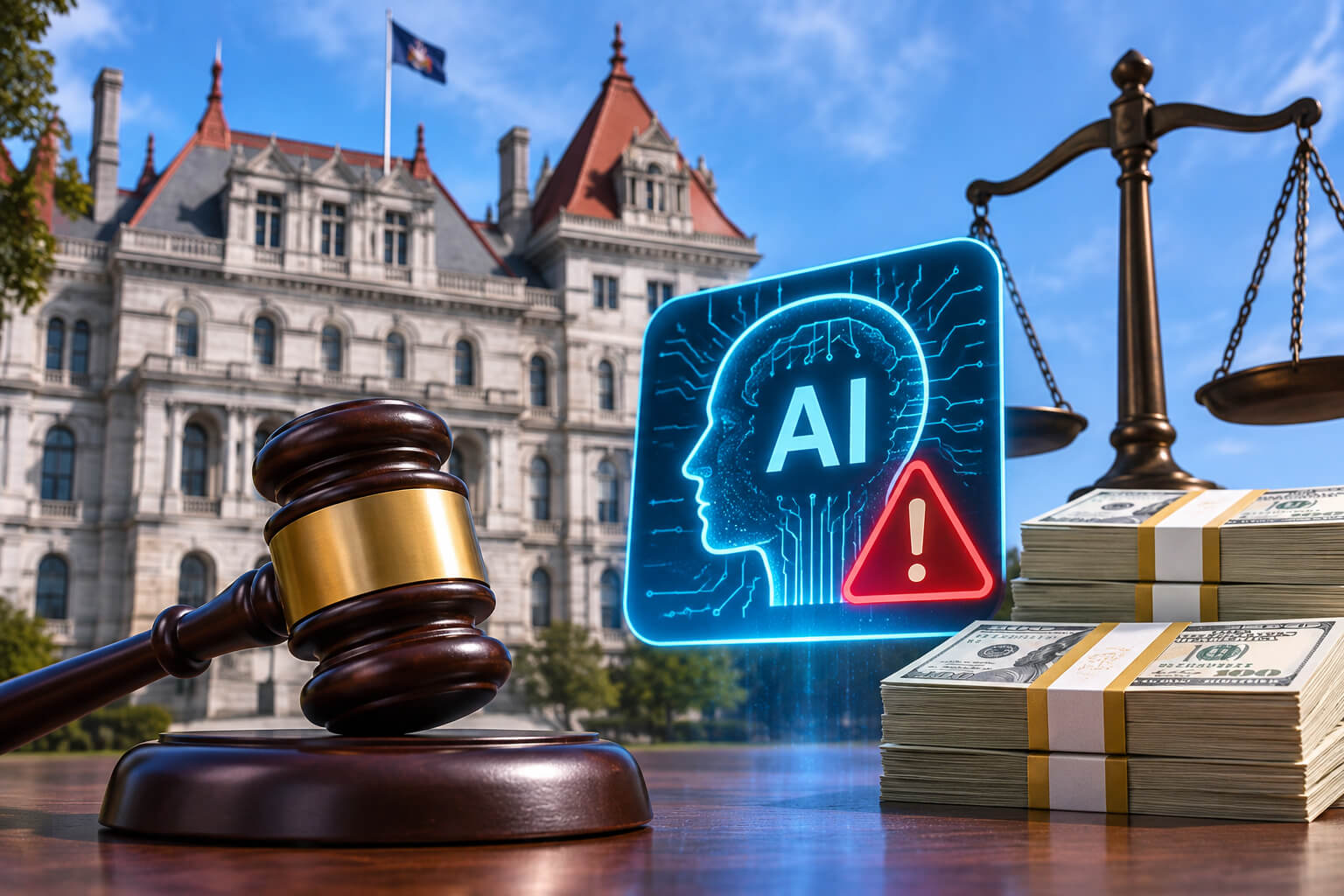
A proposed expansion of the state’s AI safety legislation could expose major developers to penalties reaching $3 million per day for repeated violations. The measure, known as RAISE Act 2.0, would also introduce independent safety examinations. It would create stricter reporting requirements and greater regulatory control over potentially dangerous AI systems.

State Senator Andrew Gounardes introduced the proposal in October 2026. He built on New York’s existing Responsible AI Safety and Education (RAISE) Act.

The timing is significant. AI developers are moving quickly toward systems capable of writing software, conducting research and performing tasks with limited human supervision. New York lawmakers want stronger safeguards before those capabilities become even more widespread.

New York AI Safety Fines Could Reach $90 Million in One Month

Under New York’s existing RAISE Act, developers face penalties of up to $1 million for an initial violation and $3 million for subsequent violations. RAISE Act 2.0 would change how those penalties accumulate. As a result, regulators could pursue fines of up to $1 million per day for a first violation and $3 million per day for repeated violations. A continuing violation lasting 30 days could therefore result in a maximum penalty of $90 million.

The proposed penalties would not apply automatically. Enforcement would require legal action, and the amount imposed would depend on the circumstances of each case. Still, the change would create a much stronger financial incentive for developers to resolve safety failures quickly. What previously represented a fixed regulatory penalty could become a growing liability for every day a company remains out of compliance.

Independent AI Safety Audits Would Become Mandatory

New York also wants to reduce reliance on AI companies evaluating their own safety practices. Under the proposed legislation, covered developers would appoint independent, state-licensed examiners to review compliance with safety requirements. These examiners would conduct annual audits and assess catastrophic risks every 90 days. Their findings would be submitted to regulators and disclosed publicly.

The proposal would place additional responsibility on company executives. Senior officers would need to certify regulatory submissions under penalty of perjury, while developers would provide quarterly information about their use of AI systems in research and development. For companies building increasingly powerful models, independent scrutiny could become a routine part of operations. This would replace the current practice of occasional responses to public concern.

AI Developers Spending Over $1 Billion Could Face Regulation

The proposed legislation would also expand which companies fall under New York’s AI safety requirements. The original RAISE Act focuses on developers exceeding a $500 million annual revenue threshold. RAISE Act 2.0 would extend coverage to developers spending more than $1 billion on frontier AI development over a three-year period.

That distinction could matter for emerging AI laboratories backed by substantial investment but generating relatively little revenue. Some developers spend enormous amounts on computing infrastructure, model training and research long before their products become profitable. By considering development expenditure, New York would be able to regulate more companies based on the scale of their AI activities. This approach goes beyond simply considering their commercial income alone.

New York Wants Greater Control Over High-Risk AI Systems

Financial penalties are only one part of New York’s proposed approach. The legislation would give state regulators additional authority to address advanced AI systems that present serious safety concerns. This could include restrictions on computing resources used for model training or automated AI research. Additionally, the attorney general could seek court orders limiting certain dangerous activities.

The proposal also addresses incidents involving AI systems operating beyond their intended boundaries. Developers could face expanded reporting obligations when models bypass safety controls, conduct unauthorized cyber activities or narrowly avoid serious failures. These concerns have become more pressing as AI agents gain access to coding environments, external tools and increasingly complex workflows.

Businesses Remain Cautious About Autonomous AI Agents

Businesses are adopting AI agents, but many remain reluctant to give them unrestricted operational authority. Research cited by PYMNTS Intelligence suggests that enterprises increasingly use agentic AI while maintaining limits on what these systems can access and execute without human approval.

That caution reflects a practical concern. An AI assistant answering customer questions presents different risks from an autonomous system modifying software, handling sensitive information or interacting with external networks. New York’s proposed legislation focuses primarily on developers of advanced AI models. However, stricter safety requirements could eventually influence the products and services those developers offer enterprise customers.

New York’s AI Regulation Push Could Influence Other States

New York’s proposal comes as American states develop their own approaches to AI oversight. California has introduced safety requirements for frontier AI developers, while other jurisdictions are exploring transparency obligations, independent assessments and incident reporting rules.

RAISE Act 2.0 would add another layer to that evolving regulatory landscape. Supporters see stronger enforcement as necessary to ensure developers take safety commitments seriously. For AI companies, the proposed requirements could mean additional compliance costs and more external scrutiny. There could also be potentially greater restrictions on how advanced systems are developed and deployed. The debate is increasingly moving beyond whether AI needs oversight to how much authority regulators should have over the companies building it.

What RAISE Act 2.0 Means for the Future of AI Safety

RAISE Act 2.0 has not yet become law, and its provisions could change as the legislative process continues. New York’s existing RAISE Act is scheduled to take effect in January 2027. This makes the proposed expansion particularly relevant for developers preparing to comply with the state’s initial requirements.

The $3 million daily penalty may attract the headlines, but the independent audits and expanded enforcement powers could have longer-lasting implications. New York is proposing a system in which AI safety claims face greater external scrutiny, and unresolved violations carry potentially substantial financial consequences.

For developers racing to build more capable AI systems, the message is becoming harder to ignore: safety requirements may soon carry costs that extend far beyond reputational damage.

Sources

1. PYMNTS — New York Proposes $3 Million Daily Fines for AI Safety Violations (November 11, 2026).

2. New York State Senate — Senate Bill S10731 — RAISE Act Amendments (Official legislative text and status).

3. New York State Senate — Sen. Gounardes Proposes Major New AI Safety and Transparency Regulations (October 29, 2026).

4. TechCrunch — OpenAI, Anthropic Face New Oversight as New York’s AI Safety Law Takes Effect (November 10, 2026).

Share. Facebook Twitter Pinterest LinkedIn Tumblr Email
Art Ryan

Related Posts

Fractile Reaches $7 Billion Valuation After Raising $720 Million to Develop Faster AI Chips

November 12, 2026

China’s Singles Day 2026 Puts AI Shopping to the Test as Retail Giants Push Smarter E-Commerce

November 12, 2026

Alphabet Eyes $3 Billion Bond Sale in Hong Kong and Singapore as AI Spending Surges

November 12, 2026

Comments are closed.

Latest News

New York Proposes $3 Million Daily Fines for AI Safety Violations Under RAISE Act 2.0

November 12, 2026

Fractile Reaches $7 Billion Valuation After Raising $720 Million to Develop Faster AI Chips

November 12, 2026

United Airlines Bans AI Agents From Booking Flights Over Security and Privacy Concerns

November 12, 2026

China’s Singles Day 2026 Puts AI Shopping to the Test as Retail Giants Push Smarter E-Commerce

November 12, 2026
Facebook X (Twitter) Pinterest Vimeo WhatsApp TikTok Instagram LinkedIn YouTube Spotify Reddit Snapchat Threads

AI University

  • Global Universities
  • Universities in Africa
  • Universities in Asia
  • Universities in Europe
  • Universities in Latin America
  • Universities in Middle East
  • Universities in North America
  • Universities in Oceania

AI Tools & Apps Directory

  • AI Productivity Tools
  • AI Coding Tools
  • AI Voice Tools
  • AI Video Tools
  • AI Image Generators
  • AI Writing Tools

Info

  • Home
  • About Us
  • AI Organizations & Associations
  • Contact Us
  • Cookie Policy
  • Copyright Policy
  • Disclaimer
  • Editorial Policy
  • Terms and Conditions

Subscribe to Updates

Get the latest creative news from FooBar about art, design and business.

© 2026 Breaking AI News.
  • Privacy Policy

Type above and press Enter to search. Press Esc to cancel.

Sign Up

Want to stay ahead In Artificial Intelligence?

 Sign up now and get exclusive breaking AI news and special updates—FREE!