


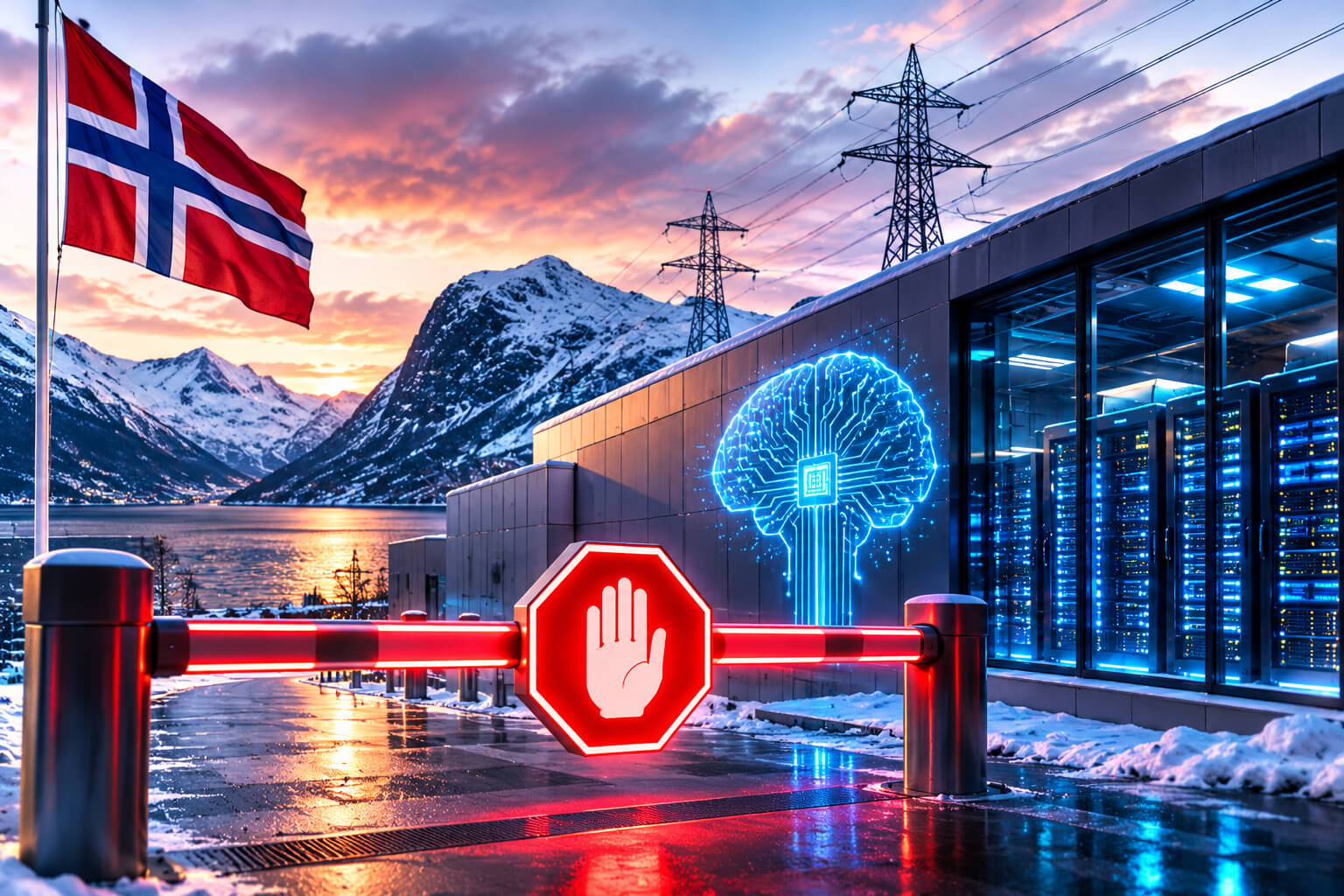
Norway is tightening access to its electricity grid as the rapid expansion of artificial intelligence infrastructure raises concerns about the country’s ability to accommodate growing power demand.
National grid operator Statnett announced on November 9, 2026, that it would temporarily suspend new grid capacity reservations for data centers. The move is intended to protect electricity system stability while authorities develop stronger technical requirements for energy-intensive facilities.
The restrictions are expected to remain in place until August 1, 2027, although projects with existing approvals may continue under certain conditions.
For AI companies looking to expand computing infrastructure, the decision highlights a growing problem. Building powerful data centers is one challenge. Finding electricity networks capable of supporting them is becoming another.
Norway’s Electricity Grid Faces Rising Demand From AI Data Centers
Norway has become an attractive destination for data center investment thanks to its renewable electricity resources, relatively cool climate and established energy infrastructure. These advantages have drawn interest from companies developing cloud computing facilities and AI processing centers.
The volume of proposed developments, however, is beginning to challenge the country’s existing electricity network.
Statnett reports that approximately 800 megawatts of data center capacity are already connected to Norway’s grid. Another 4,200 MW have secured capacity reservations, while projects requiring approximately 9,100 MW are waiting in the connection queue.
Additional inquiries represent roughly 18,000 MW of potential electricity demand. Although many of these proposals may never materialize, the figures illustrate the scale of interest in Norway’s data center market.
The country’s national peak electricity consumption stands at just over 25,000 MW. Against that backdrop, the growing number of large-scale data center proposals presents a difficult planning challenge for grid operators.
Statnett Suspends New Grid Reservations to Protect Power System Stability
Statnett’s decision goes beyond concerns about electricity availability. The operator is also examining how large data centers behave when connected to the national power network.
Modern AI facilities can place unusual demands on electricity systems. Their computing workloads may change rapidly, while the equipment supporting those operations can be sensitive to fluctuations in voltage and frequency.
These characteristics create additional challenges for grid operators responsible for maintaining a stable electricity supply.
Statnett wants clearer technical standards governing how data centers respond to disturbances, manage changes in electricity consumption and interact with the wider network.
The temporary suspension gives the operator time to establish those requirements in coordination with Norwegian authorities and energy regulators.
Existing facilities will not automatically lose their grid connections. Some previously approved developments may also proceed, depending on their technical status and the conditions attached to their reservations.
AI Infrastructure Expansion Is Reshaping Norway’s Energy Priorities
Norway’s restrictions arrive as technology companies continue investing heavily in artificial intelligence infrastructure. Demand for advanced processors, cloud computing services and large-scale AI training systems has encouraged developers to pursue increasingly powerful data centers.
Electricity infrastructure has not expanded at the same speed everywhere.
Norwegian authorities are now examining whether all proposed data center developments should receive the same priority when competing for limited grid capacity.
The government has been considering a licensing framework that would give greater consideration to facilities supporting essential national services. These include healthcare, telecommunications, emergency response, defense and financial infrastructure.
Projects primarily serving international cloud markets or cryptocurrency operations could face closer scrutiny under the proposed approach.
The broader policy discussion reflects a shift in how Norway views data center investment. Attracting digital infrastructure remains important, but authorities also want to ensure that large electricity consumers deliver meaningful economic and strategic benefits.
New Regulations Could Force Data Center Developers to Cover More Energy Costs
Norway is also considering changes that would require major electricity consumers to take greater responsibility for the infrastructure needed to support their operations.
Under the government’s proposals, new data center projects could be required to contribute more toward electricity grid expansion and additional operating costs. Authorities are also exploring whether developers should help finance new power generation facilities rather than relying entirely on the existing national supply.
Possible arrangements include offshore wind projects and gas-fired power plants equipped with carbon capture and storage technology. These options remain under consideration, with no final requirements announced.
For AI infrastructure investors, such measures could significantly affect project economics. Electricity prices, grid connection fees and the cost of securing dedicated power generation may become increasingly important when deciding where to build new facilities. Regjeringen.no+1
Norway Wants Data Centers That Deliver Greater National Benefits
The Norwegian government is making a distinction between digital infrastructure that supports essential services and facilities primarily serving commercial computing demand.
Digitalisation Minister Torgeir Micaelsen has emphasized the need to ensure that data center development contributes to Norway’s national interests. The proposed licensing system would consider digital security, emergency preparedness and the availability of computing resources needed for AI development.
Authorities also intend to examine the role of cryptocurrency-related data centers, which the government does not consider a priority for socially beneficial infrastructure.
This approach could influence how international technology companies plan future investments in Norway. Developers may need to demonstrate stronger connections to domestic economic development, critical infrastructure or strategic computing needs.
The government has not announced a complete ban on foreign cloud providers. Instead, it is seeking greater control over which projects receive access to scarce electricity and land resources. Regjeringen.no+1
Norway’s Grid Restrictions Signal a Wider Challenge for AI Expansion
The race to expand artificial intelligence infrastructure is increasingly running into the physical limitations of electricity networks.
AI data centers require substantial amounts of power to operate advanced computing equipment, maintain cooling systems and support continuous processing workloads. While technology companies can expand computing capacity through major investments, electricity transmission networks often require longer development timelines.
Norway’s situation illustrates that having abundant renewable electricity does not automatically guarantee sufficient grid capacity for every proposed development.
Statnett’s restrictions may delay some data center projects, but the operator has indicated that stronger technical requirements could eventually allow facilities to integrate more safely into the national electricity system.
The implications extend beyond Norway. Countries competing to attract AI investment must also consider electricity reliability, infrastructure costs and the effects of large computing facilities on other energy consumers.
For the AI industry, the message is becoming difficult to ignore. Access to advanced chips and investment capital matters, but the availability of dependable electricity could increasingly determine where the next generation of data centers gets built.
Sources
- Reuters — Norway’s Statnett Pauses New Grid Capacity for Data Centres to Protect Power System
- Statnett — Temporary Measures to Ensure Safe Power System Operations
- Norwegian Government — Government Plans Controlled Growth of Socially Beneficial Data Centers
- Data Center Dynamics — Norway Halts Grid Connection Applications for New Data Centers
