


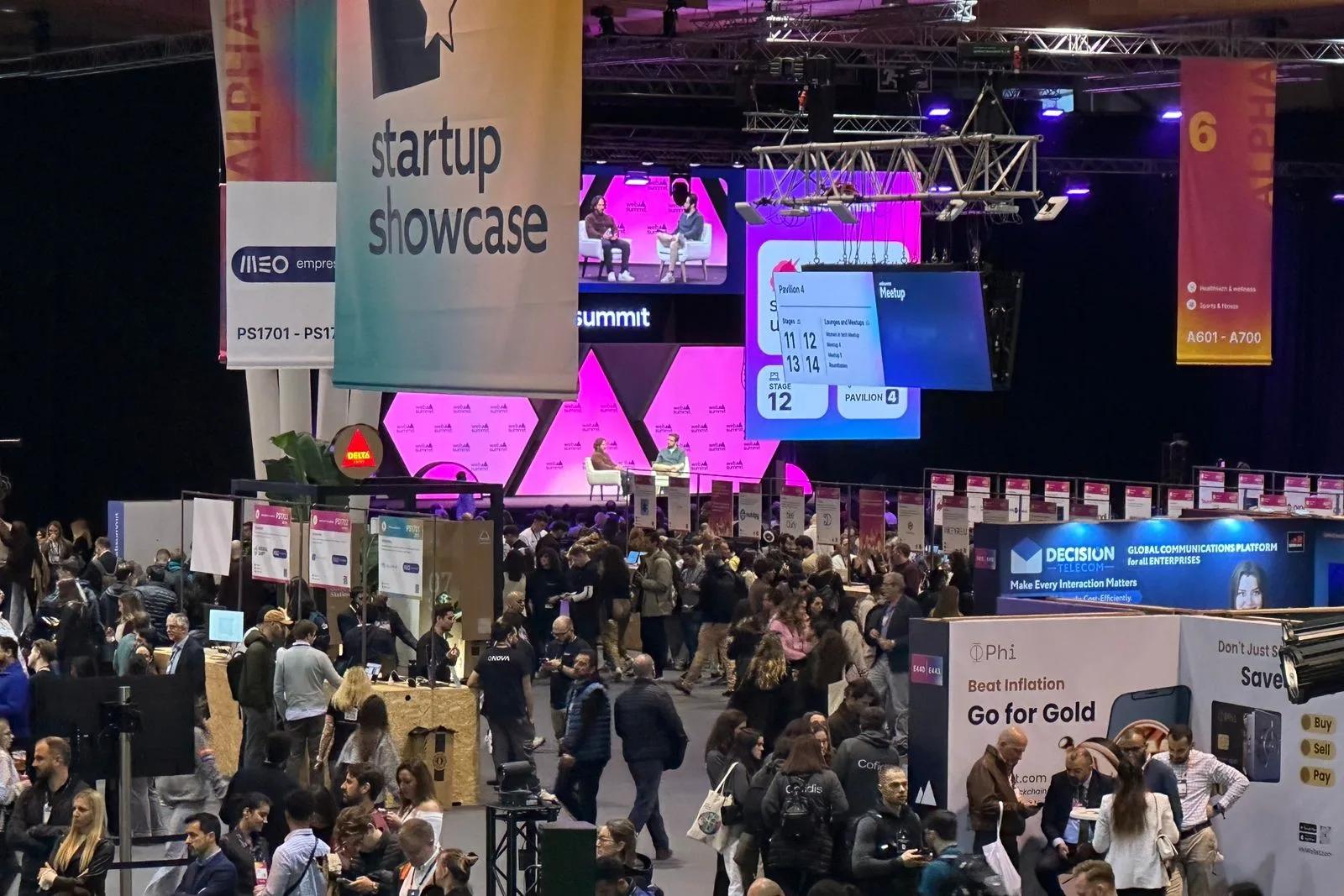
Lisbon is preparing to welcome some of the biggest names in technology as Web Summit 2026 opens on November 9, bringing humanoid robots, artificial intelligence developers and international investors together for four days of discussions, demonstrations and business opportunities.
The event, running until November 12, will take place at the MEO Arena and Feira Internacional de Lisboa (FIL) in Parque das Nações. Thousands of entrepreneurs, technology executives, policymakers and startup founders are expected to attend.
Artificial intelligence remains a major focus, although the conversation is moving beyond chatbots and generative AI. This year’s gathering will highlight intelligent machines, autonomous software and emerging technologies designed to operate in real-world environments.
Unitree and AgiBot are among the participants drawing attention as the industry explores how AI-powered machines could reshape manufacturing, logistics and everyday business operations.
Humanoid Robots Take the Spotlight at Web Summit 2026
Humanoid robots are expected to be among the most talked-about technologies at Web Summit 2026, with developers presenting their latest advances in machines designed to interact with physical environments. Companies such as Unitree, AgiBot and Galbot are helping push robotics into a new phase, where artificial intelligence plays a larger role in movement, decision-making and task execution.
Unlike traditional industrial robots built for repetitive tasks, humanoid machines are being developed to work in environments originally designed for people. Their potential applications range from warehouse operations and factory assistance to customer service and other physically demanding activities.
Unitree co-founder Li Chen is among the announced speakers, while AgiBot is scheduled to present its vision for the future of robotic labour during a session titled Introducing: The Next Billion Workers. The discussion reflects growing interest in whether humanoid robots can eventually become practical tools for businesses rather than expensive experimental machines.
For robotics developers, the challenge is no longer limited to producing impressive demonstrations. Companies must also prove that their machines can operate safely, perform consistently and deliver enough value to justify the investment.
AI Agents and Enterprise Automation Gain Momentum
Artificial intelligence is also becoming more deeply integrated into business operations, and Web Summit 2026 will explore how autonomous AI agents are changing the way organisations manage everyday tasks. These systems are designed to move beyond answering questions by carrying out defined activities, coordinating workflows and assisting with complex business processes.
Interest in agentic AI has grown as companies look for ways to improve productivity without constantly expanding their workforce. Software development, cybersecurity, customer support and enterprise management are among the areas where businesses are testing systems capable of completing multistep tasks with limited human intervention.
Intel is expected to showcase developments involving edge AI, agentic AI and physical AI, highlighting how intelligent technologies can operate closer to the environments where data is generated. Such applications could prove valuable in manufacturing facilities, healthcare environments, retail operations and smart infrastructure.
The commercial appeal is clear, but adoption comes with challenges. Businesses need reliable systems, effective oversight and stronger safeguards before allowing AI agents to handle sensitive information or make consequential decisions.
Global Technology Leaders Gather in Lisbon
Web Summit 2026 will bring together executives from established technology companies, emerging startups and public institutions to discuss the direction of the digital economy. Among the announced speakers are Cloudflare co-founder and CEO Matthew Prince, Atlassian co-founder and CEO Mike Cannon-Brookes, and AI entrepreneur Richard Socher.
Their participation reflects the range of issues facing the technology industry, from artificial intelligence and cybersecurity to digital infrastructure and the growing demand for computing resources. As AI systems become more capable, businesses are confronting new questions about security, operational costs and the long-term sustainability of large-scale technology investments.
European policymakers are also expected to play a visible role in the discussions. Henna Virkkunen, the European Commission’s Executive Vice-President responsible for Technological Sovereignty, Security and Democracy, is among the announced participants.
Her involvement comes as Europe continues working to balance technological innovation with regulation, digital sovereignty and public trust. The debate is particularly relevant for AI developers seeking to expand across international markets while complying with different legal and regulatory requirements.
Startups and Investors Seek New Opportunities at Web Summit 2026
Beyond the main conference stages, Web Summit 2026 will provide a major networking opportunity for startups looking to secure investment, establish partnerships and reach international customers. The event has become an important meeting point for entrepreneurs and venture capital firms interested in emerging technologies.
According to figures reported by ai.pt, the previous edition attracted 71,386 participants from 157 countries, including 2,725 startups representing 108 countries and 1,857 investors from 86 countries. Around 40% of participating startups were founded by women, reflecting the event’s broad international reach.
This year’s programme will again feature networking sessions, investor meetings and startup-focused activities designed to connect promising businesses with potential financial backers. For AI companies in particular, these opportunities arrive at a time when investors are paying closer attention to commercial viability, customer demand and the cost of developing advanced technologies.
Securing funding remains difficult for many early-stage businesses, especially those working in robotics and other capital-intensive fields. Events such as Web Summit give founders an opportunity to demonstrate their products, explain their business models and establish relationships that could support future expansion.
Physical AI Opens a New Conversation About the Future of Work
The growing attention surrounding humanoid robots has also brought the future of employment into sharper focus. While generative AI has already influenced writing, programming and administrative work, physical AI introduces the possibility of intelligent machines taking on tasks that require movement, coordination and interaction with real-world objects.
Manufacturers and logistics operators are among the businesses exploring these possibilities. Robots capable of navigating warehouses, handling materials or assisting employees could eventually change how certain industries organise their operations.
However, widespread adoption is unlikely to happen overnight. Humanoid machines remain expensive to develop, and businesses must consider maintenance requirements, safety standards and the reliability of robotic systems before deploying them at scale.
There is also the question of how human workers will adapt. Rather than focusing solely on whether robots will replace existing jobs, companies will need to examine how employees and intelligent machines can work together effectively.
These issues are likely to become more important as robotics companies move from research and development toward commercial deployment.
Lisbon Strengthens Its Position as a Global Technology Hub
Hosting Web Summit has helped establish Lisbon as a prominent destination for international technology events, attracting entrepreneurs, investors and companies interested in Europe’s growing innovation ecosystem.
The conference provides Portuguese startups with access to international audiences while giving foreign businesses an opportunity to explore partnerships and investment prospects in the region. Its influence extends beyond the event itself, supporting conversations about entrepreneurship, digital transformation and technology-driven economic development.
Web Summit 2026 arrives during a period of rapid change in artificial intelligence. Developers are moving beyond experimental tools toward systems capable of supporting business operations, interacting with physical environments and performing increasingly complex tasks.
Humanoid robots may attract much of the attention in Lisbon, but the broader story is about what happens when AI moves from demonstrations into everyday commercial use.
For investors, entrepreneurs and technology leaders attending the conference, that transition could become one of the defining discussions of Web Summit 2026.
Source: Web Summit Lisbon
