


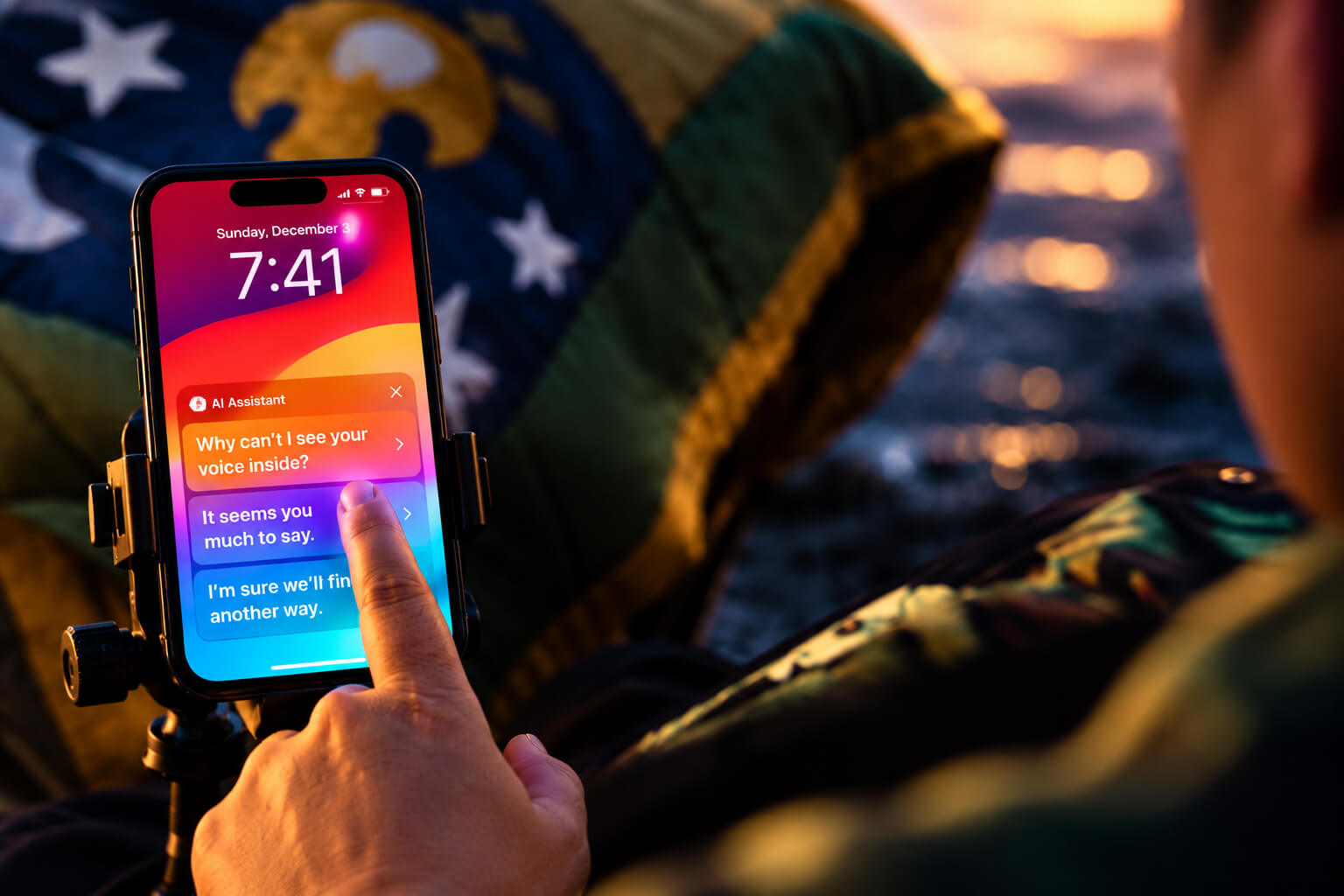
Apple Accessibility has been nominated for the 2026 World AI Awards in the Accessibility category, recognising Apple’s work on technology designed to help people with vision, hearing, speech, mobility and cognitive disabilities interact with its devices.
Apple has spent years building accessibility tools directly into iPhone, iPad, Mac, Apple Watch and other products. Now artificial intelligence is becoming a more visible part of that work. Apple Intelligence is being integrated into features including VoiceOver, Magnifier, Voice Control and Accessibility Reader, with several new capabilities announced in May 2026 for release later in the year.
The World AI Awards recognises organisations, individuals, products and technologies contributing to the development and application of artificial intelligence across industries.
Apple’s nomination is particularly relevant because accessibility presents a practical test for AI. A useful system has to do more than generate content. It may need to interpret an image for someone who cannot see it, understand a spoken command from someone navigating without touch, or make dense information easier to read.
AI gives VoiceOver more context about what users cannot see
VoiceOver is Apple’s built-in screen reader for people who are blind or have low vision. It can describe what appears on a device and provide information audibly, through braille, or both. Apple has also developed recognition features capable of describing images and interface elements that do not contain sufficient accessibility information.
Apple’s 2026 update pushes that further with Image Explorer, which uses Apple Intelligence to generate richer descriptions of onscreen images. Apple says this can include photographs, scanned bills, personal records and other visual material.
Live Recognition is also becoming more conversational. On supported iPhones, a user can point the camera at something, ask what is visible and then ask follow-up questions in natural language.
That changes the interaction in a useful way. Instead of receiving only a predefined description, a user can ask for the specific information they actually need. Apple cautions that VoiceOver and Magnifier should not be relied on for high-risk situations, navigation, or medical diagnosis and treatment.
Magnifier becomes more than a digital magnifying glass
Magnifier has traditionally helped people with low vision enlarge objects and text using the cameras built into Apple devices. Its role is becoming broader.
Apple says upcoming Apple Intelligence integration will allow Magnifier to provide detailed descriptions and answer questions about what the camera sees. A user looking at a bill, for example, could ask for information contained in the document instead of simply enlarging the text.
Spoken controls add another layer. Commands such as asking Magnifier to zoom or activate the flashlight can reduce the need to locate small onscreen controls.
This builds on existing Magnifier capabilities including Text Detection, which recognises text on physical objects, and Point and Speak, which can read text associated with controls such as appliance buttons and keypads.
Voice Control gets rid of some memorisation
Voice interfaces can become an accessibility barrier themselves when users must remember rigid command structures.
Apple is addressing that problem with a natural-language update to Voice Control. The 2026 feature is designed to let people with physical disabilities describe interface elements in ordinary language instead of memorising exact labels or numbered commands.
Someone navigating an app could describe the button, folder or other element they want to select. Apple says the feature can also help when developers have not labelled interface elements correctly for accessibility. The Apple Intelligence-powered version of Voice Control was announced initially for English in the United States, Canada, United Kingdom and Australia.
Accessibility Reader tackles complicated documents
AI is also being used to change how information itself is presented.
Apple introduced Accessibility Reader as a systemwide reading environment for users with disabilities including dyslexia and low vision. The feature can adjust elements such as font, colour and spacing while supporting spoken content.
The 2026 update adds support for more complicated source material, including scientific articles containing multiple columns, images and tables. Apple Intelligence can generate an on-demand summary before a user begins reading, while built-in translation can present material in another language without discarding the user’s preferred formatting.
It is a relatively straightforward application of AI, but one with a clear purpose: taking information designed around a conventional visual layout and making it easier for an individual user to consume.
Generated subtitles move onto the device
Apple is also applying machine learning to accessibility for people who are deaf or hard of hearing.
Generated subtitles announced for 2026 can automatically transcribe spoken audio when a video does not already contain captions or subtitles. Apple says the feature can work with personal recordings, videos received from other people and online content.
The processing uses on-device speech recognition, allowing subtitles to be generated privately on supported Apple hardware rather than requiring every piece of video to be sent elsewhere for transcription.
Apple announced generated subtitles for iPhone, iPad, Mac, Apple TV and Apple Vision Pro, initially in English in the United States and Canada.
Accessibility goes well beyond Apple Intelligence
Not everything important in Apple Accessibility is an AI feature.
Apple’s wider accessibility portfolio includes Braille Access, Live Speech, Personal Voice, Eye Tracking, AssistiveTouch, Switch Control, Sound Recognition, Music Haptics and Assistive Access, among many other tools.
Braille Access, introduced with Apple’s 2025 software generation, turns compatible Apple devices into integrated braille notetakers when connected to braille displays. Live Speech allows users to type words that the device then speaks during FaceTime and phone calls, supported communication apps or face-to-face conversations.
The distinction matters. Apple’s accessibility strategy is broader than Apple Intelligence. AI is increasingly being layered onto an existing collection of assistive technologies rather than replacing them.
Apple Accessibility brings AI closer to everyday problems
Accessibility offers a different measure of whether artificial intelligence is useful.
The question is less about model size or benchmark performance and more immediate: can the technology help somebody understand an image, navigate an interface, communicate, read a difficult document or access a video that was published without subtitles?
Apple’s latest work places AI directly inside those interactions. Some capabilities are already part of its accessibility ecosystem, while the Apple Intelligence enhancements announced in May 2026 were presented as features coming later in the year. Availability also varies by device, language and region.
Graham Cooke, President of the World AI Awards, said:
“Apple Accessibility’s nomination highlights an important opportunity for artificial intelligence: making everyday technology easier for more people to use.
“From richer visual descriptions and natural-language Voice Control to accessible reading and on-device captioning, Apple is exploring how AI can reduce practical barriers across familiar digital experiences. We congratulate Apple Accessibility on its 2026 World AI Awards nomination and look forward to following how these technologies develop.”
The World AI Awards recognises organisations, individuals and technologies contributing to the development and practical application of artificial intelligence across industries.
Apple Accessibility’s nomination in the Accessibility category puts the focus on an area where the impact of AI can be unusually tangible. The technology does not have to exist as a separate chatbot or application. Sometimes it sits quietly inside a screen reader, camera, captioning system or voice interface and makes an existing device more usable.
Learn more about Apple Accessibility and its assistive technologies at apple.com/accessibility.
Discover the World AI Awards 2026, explore the nominees and learn more about the awards at worldawards.ai.
