


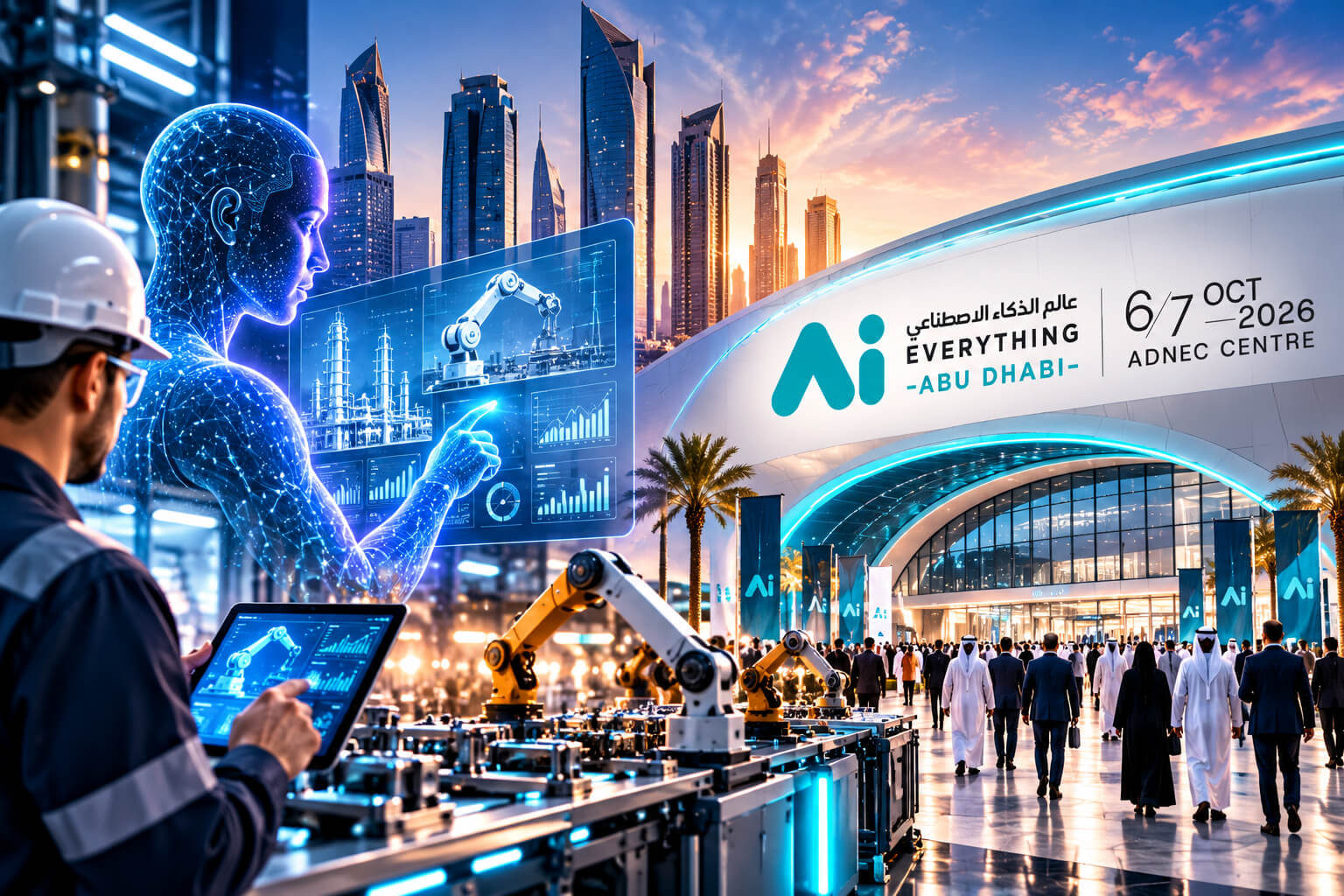
IFS is bringing its Industrial AI technology to AI Everything Abu Dhabi 2026, with a focus on moving artificial intelligence beyond demos and into real industrial operations.
The enterprise software company will exhibit at the ADNEC Centre Abu Dhabi on October 6–7, 2026. At this event, it plans to demonstrate AI tools designed for asset-heavy industries including energy, utilities, transportation, aviation, manufacturing, defence, logistics and data centres.
Rather than positioning AI as a standalone assistant, IFS is pushing a broader idea. It promotes artificial intelligence embedded directly into the systems that manage assets, maintenance, field work and operational decisions.
Industrial AI Moves Closer to the Physical Economy
Much of the generative AI boom has centred on office work, from writing and coding to research and customer support. However, IFS is aiming at a different part of the market. Its Industrial AI strategy focuses on organisations that operate physical assets, large workforces and complicated service networks. That includes power infrastructure, factories, aircraft maintenance operations, ports and transportation systems. At AI Everything Abu Dhabi, the company plans to show how AI can connect intelligence with actual operational action. This goes beyond simply generating recommendations that still need to be manually carried out.
The approach is particularly relevant in the Middle East, where governments and businesses continue to invest heavily in infrastructure, energy, aviation, logistics and other asset-intensive sectors. IFS sees that environment as a natural fit for industrial AI. This is because organisations in these sectors are dealing with large volumes of equipment data, maintenance requirements and operational decisions every day.
IFS Loops Brings Digital Workers Into Business Processes
One of the main technologies appearing at the event will be IFS Loops Digital Workers, an agentic AI platform designed to execute defined workflows across enterprise systems. Instead of behaving like a chatbot that simply returns an answer, these digital workers can be configured to perform operational tasks. They do so while still working within governance rules, approvals and audit trails.
The idea is to allow AI agents to take on repeatable parts of industrial and enterprise processes without removing oversight entirely. IFS says these digital workers can be applied across areas such as supply chain operations, field service and other multi-system workflows. That distinction is important in industrial environments. In these cases, an AI system may eventually do more than suggest what should happen next. It may be allowed to trigger processes, update systems or initiate work.
Images and Voice Become Part of Equipment Diagnostics
IFS will also demonstrate Nexus Black Resolve, which takes a more direct approach to industrial troubleshooting. Workers can use images and voice to capture information about an equipment fault. This allows the system to assist with diagnosis and provide guided repair steps.
For technicians in the field, that could reduce the need to stop work and manually search through technical documentation or navigate multiple enterprise systems. Instead, information can be captured close to the equipment itself. This gives the AI system more immediate context about what the worker is seeing and describing.
IFS Operational Intelligence will add another layer to the demonstration. The technology is designed to detect signs of degrading equipment and connect those signals with operational processes. This includes the creation of work requests. The important part is not simply identifying that something may be going wrong. It is linking that detection with the maintenance workflow that follows.
Agentic AI Raises Questions Around Governance
The shift toward digital workers also brings a less flashy issue into focus: governance. Once AI agents begin acting inside live business systems, organisations have to define which actions can be automated. They must also decide where human approval is required and how those decisions can be reviewed later.
IFS is positioning governance as part of the architecture rather than an afterthought. Its Loops platform includes controls around approvals, traceability and auditing. The goal is to give organisations more confidence when AI starts carrying out operational work instead of just generating recommendations.
That matters even more in sectors involving critical infrastructure, expensive assets or tightly regulated processes. A maintenance recommendation is one thing. An autonomous action that affects a live industrial workflow carries a different level of responsibility.
IFS Targets the Workforce That Does Not Sit Behind a Desk
The physical workforce will also feature prominently in IFS’s presence at the event. On October 7, Suliman Gaouda, Regional Vice President for AI across APJMEA at IFS, is scheduled to present a session titled “70% of the workforce doesn’t sit at a desk.”
The session will focus on a part of the economy that has received less attention during the first wave of generative AI adoption. Factory operators, engineers, field technicians and maintenance crews do not necessarily benefit from traditional AI assistants in the same way as office-based knowledge workers. Therefore, industrial AI platforms are being designed around different needs. This includes asset management, field service, equipment maintenance and operational scheduling.
IFS’s broader strategy follows that same direction. Its AI capabilities stretch across enterprise resource planning, enterprise asset management and field service management. Artificial intelligence is being positioned as an embedded layer across operational systems rather than a separate interface sitting on top.
Abu Dhabi Becomes a Showcase for Industrial AI
IFS executives will be available at stand H2-D10 during AI Everything Abu Dhabi. There, the company will target organisations operating across energy and resources, ports and logistics, rail, transportation, utilities, power generation, nuclear energy, data centres, aviation maintenance and defence sustainment.
The message is heavily operational. Industrial companies already generate huge amounts of data from equipment, maintenance records, enterprise software and workforce activity. The next challenge is turning that data into useful decisions quickly enough to affect real operations.
IFS wants to show that AI can sit directly inside that process. AI should not just analyse what happened, but help organisations decide what should happen next. In some cases, it may carry out part of that work automatically.
That is likely to be one of the more practical conversations around AI at this year’s Abu Dhabi event.
Sources
IFS Agentic AI:
https://www.ifs.com/en/products/ai/agentic-ai
CXO Insight Middle East:
https://www.cxoinsightme.com/future/tech/ai-everything-abu-dhabi-2026-ifs-to-showcase-ai-powered-industrial-transformation/
