


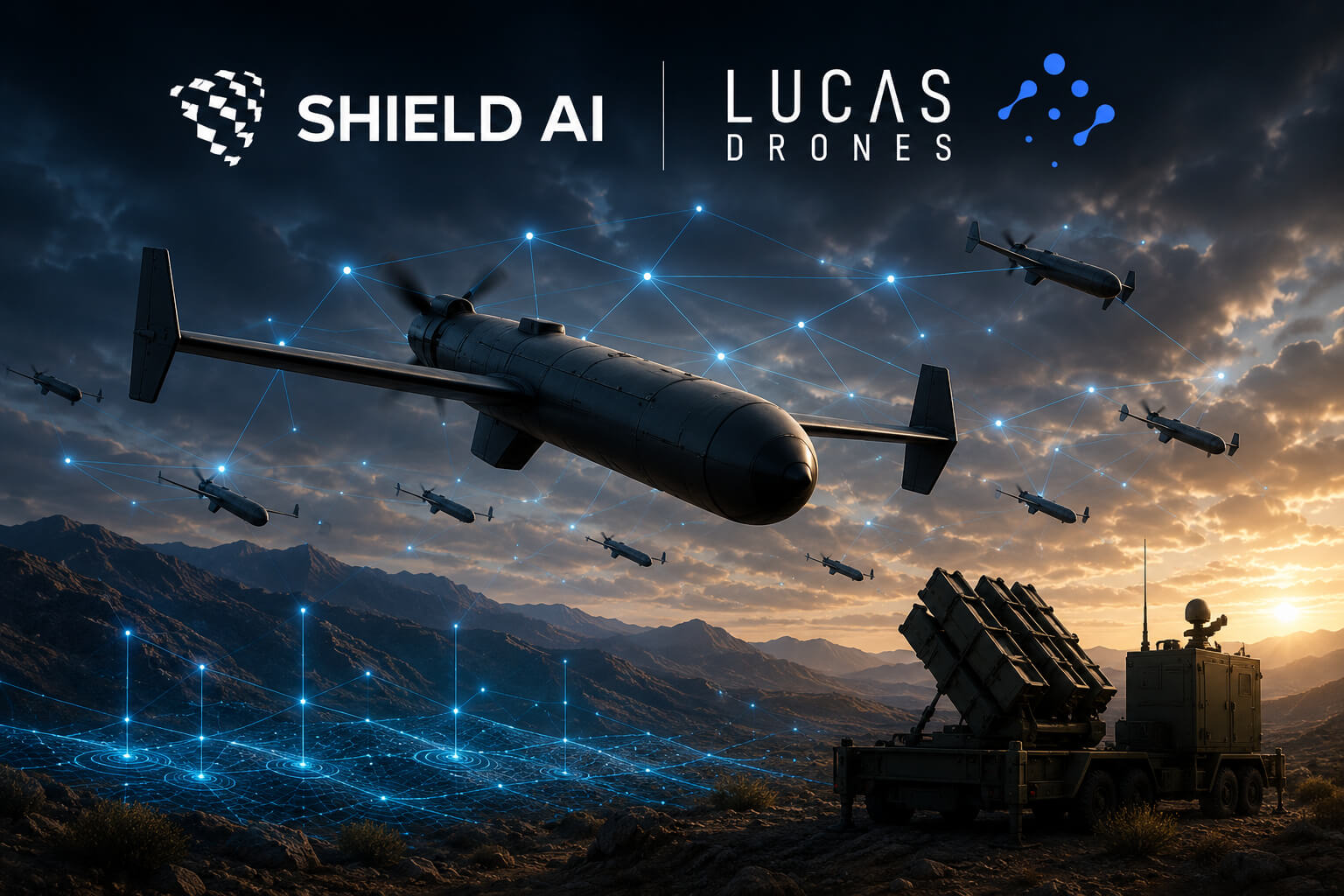
Shield AI has been selected to supply its latest Hivemind autonomy software to the U.S. military’s LUCAS kamikaze drone program, a significant step forward for AI-enabled autonomous warfare. The partnership aims to enable low-cost attack drones with intelligent swarming capabilities to be used in modern combat scenarios.
The announcement highlights the rapidity of change in artificial intelligence for military drones, especially as nations rush to develop autonomous systems that can launch coordinated strikes, conduct surveillance and adapt to battlefield conditions.
What Is the LUCAS Kamikaze Drone Program?
LUCAS, short for Low-Cost Uncrewed Combat Attack System, is a next-generation loitering munition program developed to provide the U.S. military with affordable, expendable attack drones. The system has often been compared to Iran’s Shahed-136 drone because of its low-cost and swarm-focused operational design.
The drone is designed for:
- Autonomous strike missions
- Swarm attacks
- Long-range battlefield operations
- Flexible launch capabilities from land or sea platforms
Defense analysts believe LUCAS could become a key asset in future high-intensity conflicts where mass drone deployments overwhelm traditional defense systems.
Shield AI’s Hivemind Will Bring Autonomous Swarming
At the center of the integration is Shield AI’s Hivemind software, an advanced AI autonomy platform capable of piloting drones without GPS or continuous human control. Hivemind enables drones to make decisions in real time, adjust to conditions on the battlefield and coordinate missions without human input.
Integrated with LUCAS drones, Hivemind could support:
- Autonomous swarm coordination
- Adaptive target selection
- Electronic warfare resilience
- Communication-denied operations
- Multi-drone collaborative attacks
Shield AI has already demonstrated Hivemind in several autonomous aircraft programs, including AI-controlled fighter drone projects and autonomous flight tests with military aircraft.
Why AI Drone Swarming is Disruptive
One of the most disruptive military technologies emerging today is AI-powered swarming. Swarms use many low-cost drones that work together autonomously, instead of one expensive aircraft.
Such swarms can:
- Overwhelm enemy defenses
- Persist despite the loss of some drones
- Cooperate on targets in real time
- Operate in contested environments without direct human control
Military experts are increasingly looking at autonomous drone swarms as a key part of future warfare strategies, especially following the lessons from Ukraine and the Middle East.
The Pentagon’s push for faster AI weapon development
The rapid development of LUCAS is part of a broader shift within the Pentagon to move to faster military innovation cycles. Unlike traditional defense programs that can take years to deploy, LUCAS moved from development to operational testing at unprecedented speed.
The U.S. military’s emphasis on scalable autonomous systems has grown to include:
- Cost-effective systems
- Quickly manufacturable platforms
- AI-enabled technologies
- Attritable systems designed for combat environments
This approach is consistent with the worldwide expansion of autonomous warfare investments by China, Russia, Iran, and others.
Shield AI Continues Expanding Military AI Partnerships
Shield AI has rapidly become one of the leading AI defense technology companies in the world. Beyond LUCAS, the company has recently expanded partnerships across autonomous aircraft, naval systems, and collaborative combat aircraft programs.
The company’s Hivemind autonomy stack is increasingly being viewed as a foundational AI operating system for future autonomous military systems.
The Future of Autonomous Warfare
The LUCAS drone program is spearheading AI swarming and signaling a change in military strategy. As a result, autonomous drones are moving beyond simple surveillance roles and becoming more advanced combat systems. In addition, AI enables autonomous navigation, target recognition, and mission execution.
With the ongoing development of AI capabilities, autonomous swarm warfare could soon be a hallmark of modern battlefields across the globe.
For the AI industry, the LUCAS program is also a further example of how artificial intelligence is scaling well beyond commercial applications and into critical defense infrastructure and national security operations as well.
For more Breaking AI news visit: https://breakingai.news
