


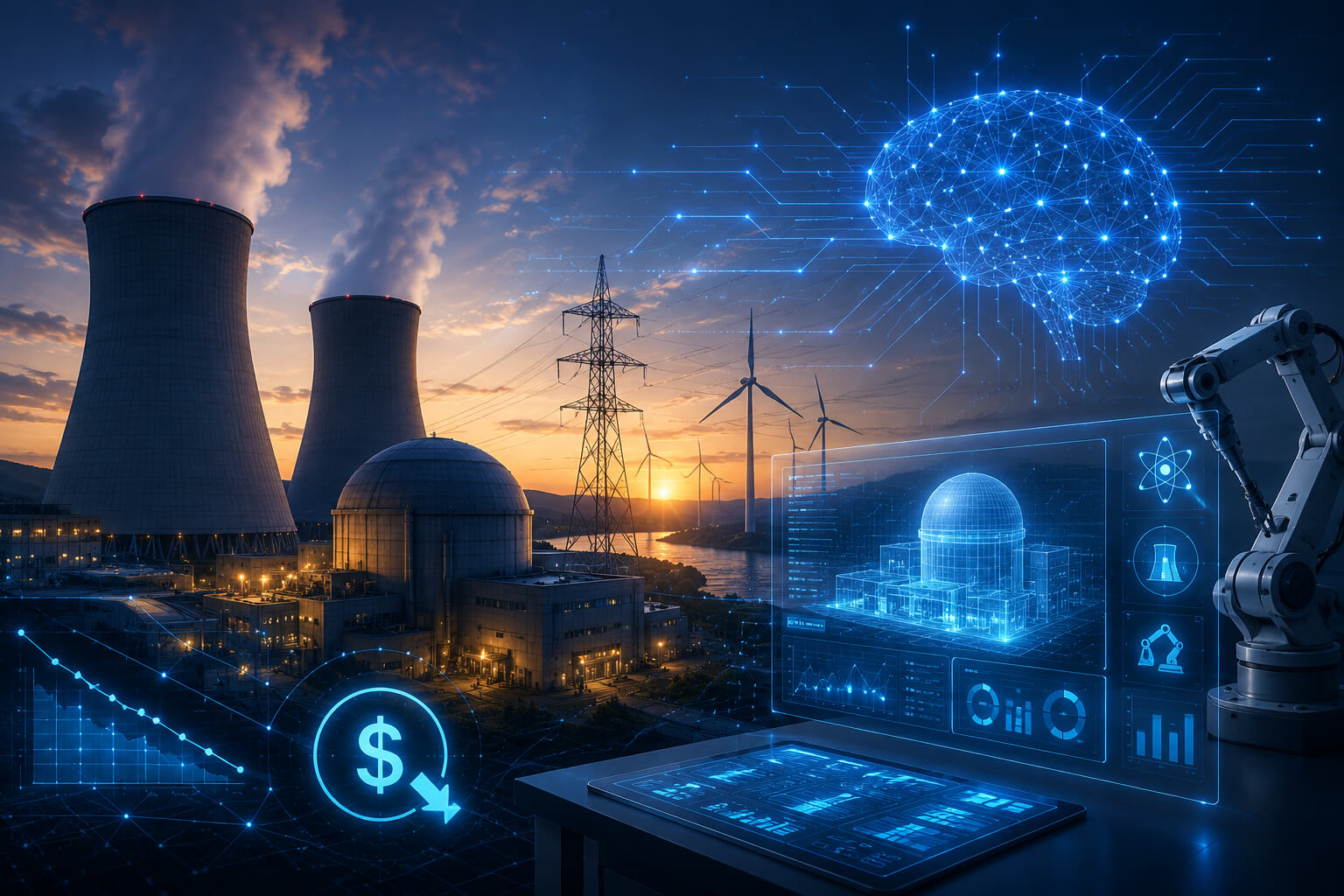
Artificial intelligence is rapidly transforming the global nuclear energy sector, helping governments and energy companies to cut costs, improve safety and speed up reactor deployment times. A recent initiative led by the OECD Nuclear Energy Agency (NEA) shows how AI-driven technologies can become a major driver for the next wave of clean energy infrastructure.
The explosive growth of AI data centres, cloud computing and industrial electrification is driving global electricity demand up and nuclear energy is increasingly being considered as a firm low-carbon option for future energy needs. At the same time, AI is being used to enhance nuclear plant design, optimise operations and transform regulatory processes.
OECD NEA Promotes AI Use in Nuclear Industry
The OECD Nuclear Energy Agency and the Korea Atomic Energy Research Institute (KAERI) recently organized an international workshop on artificial intelligence for nuclear energy. The workshop brought together policymakers, nuclear engineers, AI specialists and technology leaders to discuss how AI can transform the future of nuclear energy.
The NEA workshop showed that AI could greatly improve:
- Speed of nuclear reactor deployment
- Efficiency of project planning and construction
- Predictive maintenance systems
- Safety monitoring and simulations
- Regulatory compliance processes
- Data analysis and decision-making
The NEA said the industry needs a common “AI playbook” to standardize tools, governance and best practices for AI application across the nuclear lifecycle.
Why AI and Nuclear Energy Are Getting So Close
AI and nuclear energy are getting more and more intertwined. AI systems use enormous amounts of electricity, especially when training and deploying large-scale systems. This growing demand is driving hyperscalers and tech firms to look for stable and low-carbon sources of energy, such as nuclear.
At the same time, AI can also help nuclear energy systems by automating complex engineering tasks, optimizing plant performance and improving operational efficiency, experts say, noting this “mutually reinforcing” relationship is a potential driver of a new industrial transformation.
AI Could Help Reduce Nuclear Construction Costs
One of the biggest challenges the nuclear industry faces is the cost and time associated with building reactors. AI could help both.
The OECD NEA said AI-enabled industrial systems could improve project predictability, reduce risks and optimise supply chains along the full lifecycle of projects in nuclear energy.
Potential AI applications include:
- Automated design simulations
- Digital twin technologies
- Construction scheduling optimization
- Real-time engineering analytics
- Supply chain forecasting
- Predictive maintenance systems
AI could dramatically reduce the cost of building next-generation reactors, including small modular reactors (SMRs), by increasing efficiency and reducing delays.
Safety and regulation remain key issues
Despite the enthusiasm for using AI, experts say safety and regulation are still important.
The nuclear industry is a heavily regulated, safety-critical environment, and AI systems must therefore meet high standards for reliability, transparency and explainability. Industry experts are adamant that AI should augment – not replace – human decision-making in critical operations.
Participants at the OECD discussions identified key priorities which include:
- Strong validation and benchmarking systems
- Transparent AI decision-making models
- Human oversight in critical operations
- Hybrid AI systems combined with physics-based models
- Regulatory frameworks for AI governance
The NEA also noted that for high-risk nuclear applications, explainability may not be sufficient and layered safety mechanisms and defence-in-depth approaches are needed.
The Launch of AIxpertise
The OECD NEA has launched a new international initiative, AIxpertise, to support long-term AI integration in the nuclear sector. The project aims to create a collaborative platform for AI research, benchmarking, education and nuclear engineering applications.
The initiative is based on three pillars:
1. Data Infrastructure
Developing and curating datasets for AI applications in nuclear engineering.
2. AI Model Benchmarking
Assessing and verifying the robustness and safety of AI algorithms.
3. Education and Training
Developing specialized training programs for nuclear engineers and AI developers.
Governments, researchers, universities, technology companies and nuclear operators from around the world will be brought together by the platform.
AI Could Shape the Future of Clean Energy
As countries race to achieve net-zero emissions, nuclear power is emerging as a crucial component of the clean energy transition. AI has the potential to expedite this transition by streamlining nuclear projects, enhancing their safety, and improving their economic feasibility.
“Combining AI systems with next-generation nuclear technologies could change the game for energy reliability, industrial decarbonization and grid stability,” industry leaders say.
But experts also caution that successful adoption will depend on international collaboration, strong governance and thoughtfully designed regulatory frameworks.
The message from the OECD NEA is clear for now: artificial intelligence could become one of the most important technologies to power the future of nuclear energy.
For more Breaking AI news visit: https://breakingai.news
