

Close Menu
    What's Hot
    Business & Marketing

    Verdane and ETERNO Scale AI Healthcare Operations in Germany

    By Art RyanMay 20, 20260

    European investment firm Verdane has teamed up with ETERNO to bring the company’s AI-native operating…

    FANUC and Google Partner to Advance Physical AI in Robotics

    May 20, 2026

    How AI is speeding up nuclear energy deployment and cutting costs

    May 20, 2026

    Google AI Studio Gets Major AI Upgrade at Google I/O 2026

    May 20, 2026
    Facebook X (Twitter) Instagram
    Facebook X (Twitter) Instagram
    Breaking AI News
    Wednesday, May 20
    • Home
    • Events
    • Videos
      • Machine Can Think Summit 2026
      • Step Dubai Conference 2026
    • Technology & Innovation

      Verdane and ETERNO Scale AI Healthcare Operations in Germany

      May 20, 2026

      FANUC and Google Partner to Advance Physical AI in Robotics

      May 20, 2026

      How AI is speeding up nuclear energy deployment and cutting costs

      May 20, 2026

      Google AI Studio Gets Major AI Upgrade at Google I/O 2026

      May 20, 2026

      Google I/O 2026: Sundar Pichai Announces Agentic Gemini Era

      May 20, 2026
    • Business & Marketing

      Verdane and ETERNO Scale AI Healthcare Operations in Germany

      May 20, 2026

      Google and Blackstone $5B AI Cloud Venture to Rival CoreWeave

      May 20, 2026

      Moment Raises $78M to Revolutionize Wealth Management

      May 20, 2026

      Dubai Holding Partners With Microsoft to Accelerate AI Adoption

      May 19, 2026

      Dust Raises $40M Series B to Scale AI Enterprise Workspaces

      May 19, 2026
    • Industry Applications

      Verdane and ETERNO Scale AI Healthcare Operations in Germany

      May 20, 2026

      FANUC and Google Partner to Advance Physical AI in Robotics

      May 20, 2026

      How AI is speeding up nuclear energy deployment and cutting costs

      May 20, 2026

      Moment Raises $78M to Revolutionize Wealth Management

      May 20, 2026

      Dubai Holding Partners With Microsoft to Accelerate AI Adoption

      May 19, 2026
    • Trends & Insights

      Google AI Studio Gets Major AI Upgrade at Google I/O 2026

      May 20, 2026

      Google I/O 2026: Sundar Pichai Announces Agentic Gemini Era

      May 20, 2026

      NextEra Dominion $67B Merger Shows AI Power Demand

      May 19, 2026

      Baidu Beats Estimates on Agentic AI Strategy

      May 19, 2026

      Ghana AI Healthcare Programme for Quality Healthcare Access

      May 18, 2026
    • AI Travel Technology News

      New EU AI Border System May Bring Travel Delays for US Tourists

      May 18, 2026

      AI-Powered Apps Drive Colombia’s Birdwatching Tourism Growth

      May 18, 2026

      Japan Expands e-Gates to Ease Travel for Foreign Visitors

      May 15, 2026

      Vietnam’s $300B Digital Tech Push May Boost AI Travel by 2030

      May 15, 2026

      Sabre IQ AI Travel Platform: Redefining Travel Management

      May 14, 2026
    Breaking AI News
    Home » Google AI Model Uses Virtual Satellite to Map Earth
    Technology & Innovation

    Google AI Model Uses Virtual Satellite to Map Earth

    Art RyanBy Art RyanSeptember 7, 2025No Comments4 Mins Read
    Facebook Twitter Pinterest LinkedIn Tumblr Email
    Share
    Facebook Twitter LinkedIn Pinterest Email

    Google DeepMind introduced a new artificial intelligence model that captures the vivid details of the Earth’s surface, which helps scientists and governments make better decisions about the land and sea.

    Called AlphaEarth Foundations, the geospatial AI model pulls together satellite images and other environmental data to create a single picture of the planet, according to a blog post.

    Satellites orbiting Earth collect large amounts of information every day. While this data is valuable, it’s often stored in many different formats and comes from different times and sensors, making it hard to combine.

    AlphaEarth Foundations acts like a “virtual satellite” that can merge all this information into one consistent view, the post said.
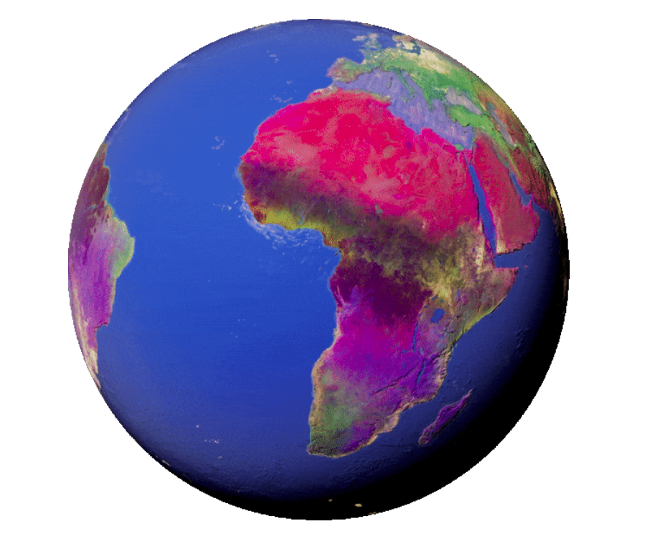
    AlphaEarth Foundations

    For example, the model can see through persistent clouds in Ecuador to map agricultural plots in various stages of development, according to the post. It can also map the surface of Antarctica, normally a tough place to image.

    The AI model can spot changes in land use, such as new construction, deforestation or crop growth, in 10-meter squares, per the post. It also stores the information much more efficiently, using 16 times less space than comparable AI systems.

    To make it available to the public, Google is releasing yearly snapshots from 2017 through 2024 in a new Satellite Embedding dataset within Google Earth Engine. This dataset contains more than 1.4 trillion data points each year and is ready to use without extra processing work, the post said.

    Over 50 organizations have already tested the system, including the United Nations’ Food and Agriculture Organization, Stanford University, Oregon State University and others, according to the post.

    For example, the Global Ecosystems Atlas, an initiative that aims to comprehensively map and monitor the world’s ecosystems, is using AlphaEarth Foundations to help countries classify unmapped ecosystems into categories such as coastal shrublands, per the post. In Brazil, environmental mapping group MapBiomas is using the tool to track farmland and forest changes.

    However, even though the model is a “cutting-edge technological breakthrough” in Earth mapping, it is dependent on high-quality satellite data, according to a GoGeomatics Canada blog post.

    “While it is known for effectively filling gaps in missing or incomplete data, interpreting poor-quality inputs in critical situations can lead to misdirection,” the post said.

    Read also: T-Mobile and SpaceX to Test Satellite-to-Cell Service

    How AlphaEarth Foundations Works

    AlphaEarth Foundations combines information from many different satellite and environmental sources into one clear, consistent picture of Earth. It works a bit like stitching together thousands of puzzle pieces into a single image, except the puzzle pieces come from different satellites, sensors and even time periods.

    The system takes in a variety of public data, including the following:

    • Optical satellite photos, like those available on Google Earth
    • Radar scans that can penetrate cloud cover
    • 3D laser mapping
    • Climate and environmental readings, such as temperature and rainfall
    • Elevation maps and gravity measurements
    • Descriptive information linked to locations

    It treats the images from the same location over time like frames in a video. This lets it “understand” changes through the seasons or from one year to the next, like crops being planted and harvested, forests being cleared or cities expanding, the Deepmind blog post said.

    AlphaEarth Foundations then condenses all this into what Google called a “64-dimensional representation” for each 10-meter square, whether land or coastal water.

    Consider that 3D only provides latitude, longitude and elevation; 64 dimensions provide richer detail, not just location but also appearance, environment and behavior over time.

    “What is interesting is that they’re able to get down to 10-by-10 meter squares, which is phenomenal,” Christopher Seeger, professor and extension specialist of landscape architecture and geospatial technology at Iowa State University, told The Register. “It’s going to be great for decision makers.”

    “This breakthrough enables scientists to do something that was impossible until now: create detailed, consistent maps of our world, on demand,” the DeepMind blog post said. “…[T]hey no longer have to rely on a single satellite passing overhead. They now have a new kind of foundation for geospatial data.”

    The system can be used for many purposes, including monitoring wildfires, tracking water levels in reservoirs and spotting urban growth. It can also help create detailed maps with fewer samples, saving time and resources.

    Google plans to explore combining AlphaEarth Foundations with its Gemini multimodal model to expand the system’s capabilities further.

    Source: https://www.pymnts.com/
    Share. Facebook Twitter Pinterest LinkedIn Tumblr Email
    Art Ryan

    Related Posts

    Verdane and ETERNO Scale AI Healthcare Operations in Germany

    May 20, 2026

    FANUC and Google Partner to Advance Physical AI in Robotics

    May 20, 2026

    How AI is speeding up nuclear energy deployment and cutting costs

    May 20, 2026

    Comments are closed.

    Latest News

    Verdane and ETERNO Scale AI Healthcare Operations in Germany

    May 20, 2026

    FANUC and Google Partner to Advance Physical AI in Robotics

    May 20, 2026

    How AI is speeding up nuclear energy deployment and cutting costs

    May 20, 2026

    Google AI Studio Gets Major AI Upgrade at Google I/O 2026

    May 20, 2026
    Facebook X (Twitter) Pinterest Vimeo WhatsApp TikTok Instagram LinkedIn YouTube Spotify Reddit Snapchat Threads

    AI University

    • Global Universities
    • Universities in Africa
    • Universities in Asia
    • Universities in Europe
    • Universities in Latin America
    • Universities in Middle East
    • Universities in North America
    • Universities in Oceania

    AI Tools & Apps Directory

    • AI Productivity Tools
    • AI Coding Tools
    • AI Voice Tools
    • AI Video Tools
    • AI Image Generators
    • AI Writing Tools

    Info

    • Home
    • About Us
    • AI Organizations & Associations
    • Contact Us
    • Cookie Policy
    • Copyright Policy
    • Disclaimer
    • Editorial Policy
    • Terms and Conditions

    Subscribe to Updates

    Get the latest creative news from FooBar about art, design and business.

    © 2026 Breaking AI News.
    • Privacy Policy

    Type above and press Enter to search. Press Esc to cancel.

    Sign Up

    Want to stay ahead In Artificial Intelligence?

     Sign up now and get exclusive breaking AI news and special updates—FREE!