

Key Takeaways
- AI transcription tools convert audio into text using speech recognition technology, helping reduce manual transcription tasks.
- Popular tools include Otter.ai, Rev, Descript, Sonix, Fireflies.ai, and Trint, each offering unique features for users.
- These tools analyze audio patterns, provide speaker recognition, and may include editing and collaboration features.
- AI transcription tools serve various industries, aiding businesses, journalists, educators, and content creators in organizing spoken content.
- Integration with platforms like Zoom and Teams enhances their functionality for real-time transcription needs.
AI transcription tools convert spoken language from audio or video recordings into written text. These systems rely on artificial intelligence and speech recognition technology. The software processes audio signals and detects words, speakers, and timing. Many organizations use AI transcription tools to reduce manual transcription work. The tools help transform conversations, meetings, and interviews into searchable documents. Businesses, educators, journalists, and content creators often rely on these systems. AI transcription tools can process large amounts of audio quickly. Many platforms also support several languages and offer editing features. These tools allow users to store, review, and share transcripts easily.
Popular AI Transcription Tools in the Market
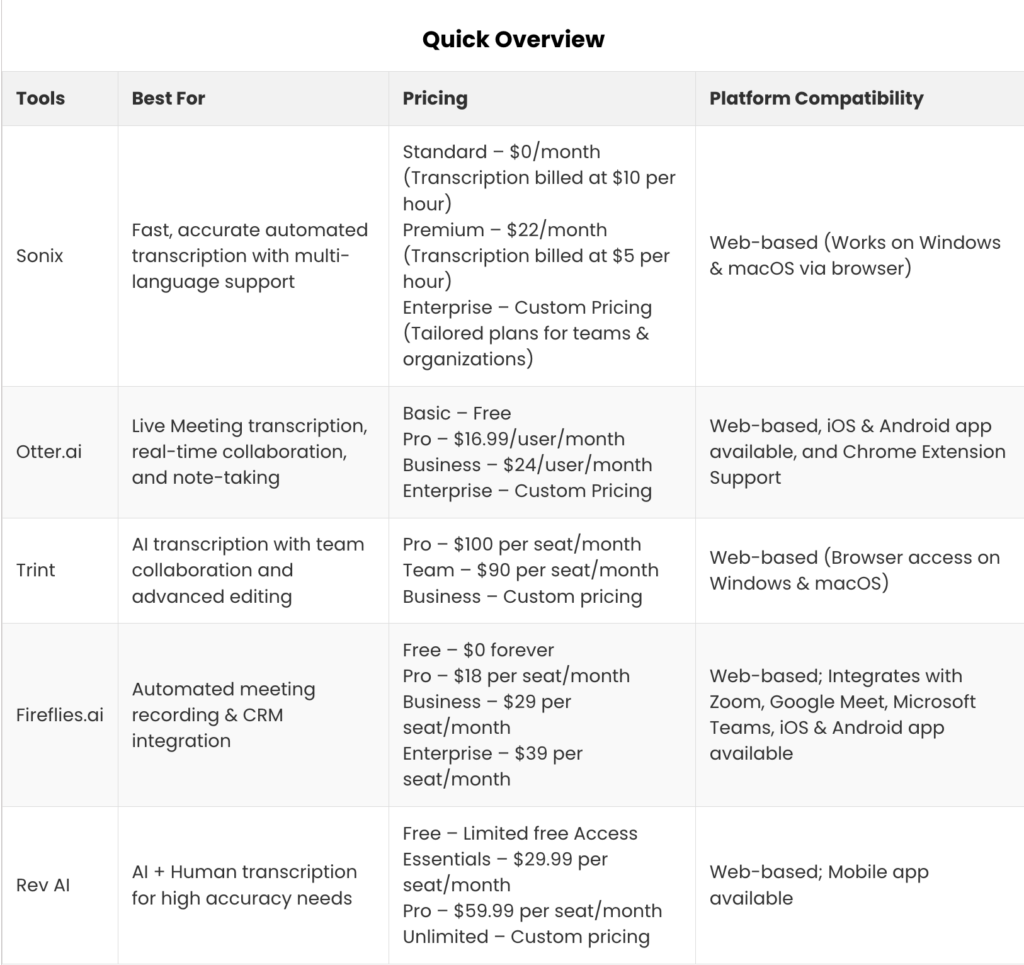
Several platforms are widely recognized as leading AI transcription tools. Otter.ai records conversations and converts speech into text in real time. The system also identifies speakers and organizes meeting notes. Rev provides automated transcription services and also offers optional human review. This platform is commonly used for media production and research recordings.
Descript is designed for podcast and video creators. It generates transcripts and allows users to edit audio or video through text editing. Sonix is another AI transcription tool that supports multiple languages. The platform includes features such as timestamps, speaker detection, and searchable transcripts.
Fireflies.ai focuses on meeting documentation. The system can automatically join virtual meetings and produce transcripts. Trint is widely used by journalists and media teams. It converts recordings into text and allows multiple users to collaborate on editing transcripts.
Features and Capabilities of AI Transcription Tools
AI transcription tools rely on machine learning models trained on large speech datasets. These systems analyze audio patterns and convert them into written words. Many platforms include automatic speaker recognition. Some tools also add timestamps to help users locate sections of audio quickly.
Editing and collaboration features are common in AI transcription tools. Users can search transcripts for keywords or highlight important information. Some platforms generate summaries of meetings or conversations. Integration with video conferencing services is also common. Many AI transcription tools connect with platforms such as Zoom, Microsoft Teams, and Google Meet.
Uses of AI Transcription Tools Across Industries
AI transcription tools are widely used in multiple industries. Businesses use them to document meetings and internal discussions. Journalists rely on them to convert interviews into written reports. Educators use AI transcription tools to create lecture transcripts and study materials.
Content creators also use these tools to produce subtitles and written content from videos. Researchers convert recorded discussions and focus groups into text for analysis. AI transcription tools help organizations store spoken information in structured digital formats.
Source: https://www.timesofai.com/top-ai-tools/best-ai-transcription-tools/