

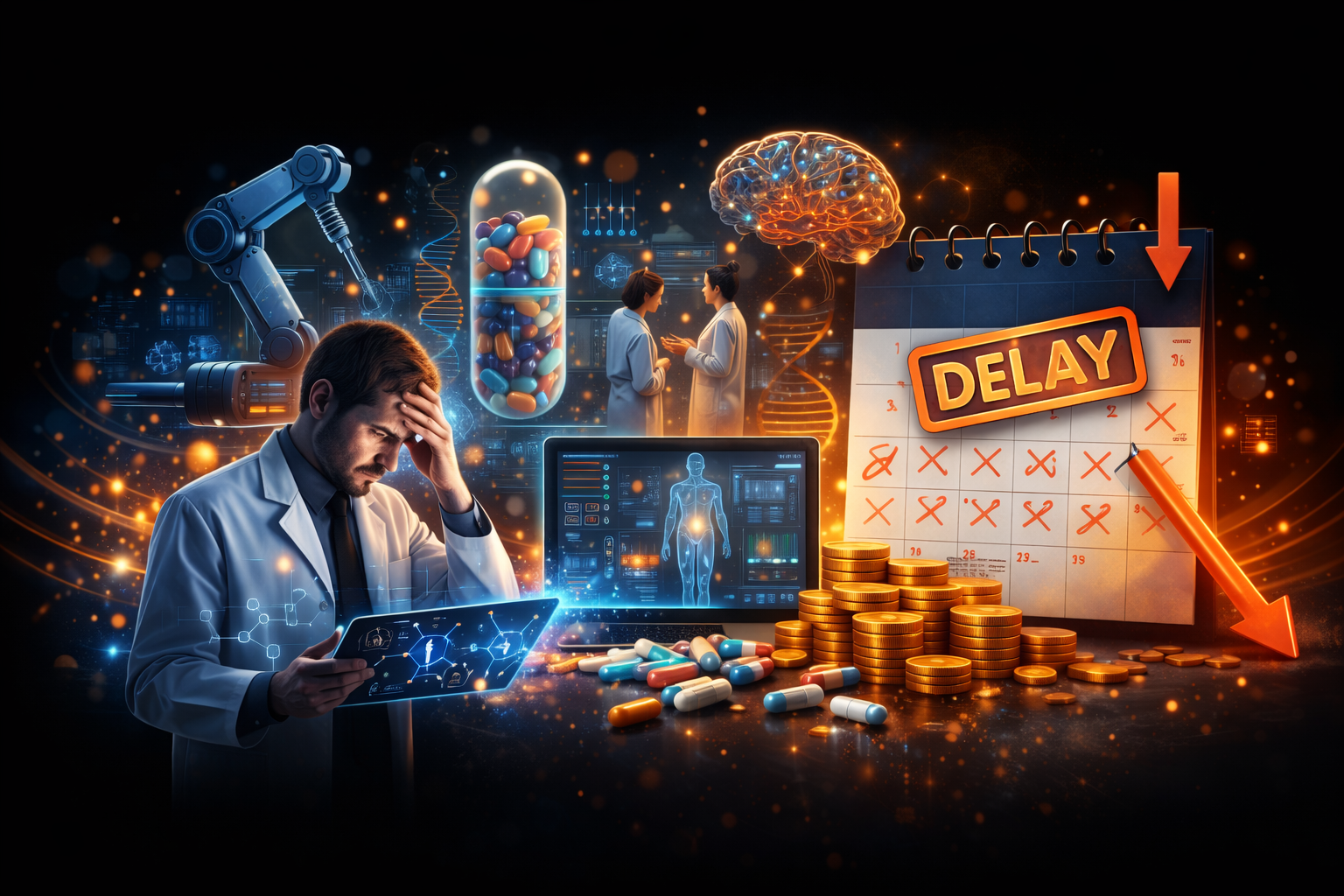
Google-backed AI drug discovery startup Isomorphic Labs has postponed the start of its first clinical trial for an AI-designed medicine. Isomorphic Labs is a biotechnology company that uses artificial intelligence to design drug candidates. It was founded as a spin-out from DeepMind (an Alphabet/Google affiliate).
The company had previously planned to begin human clinical testing of drugs designed with its AI models by late 2025. However, those plans have been delayed into 2026, according to sources familiar with the situation. The delay reflects the complex challenges in validating AI-generated molecules and navigating regulatory requirements before human testing can begin.
Isomorphic Labs employs advanced machine-learning tools — building on innovations like AlphaFold, a system that predicts molecular structure — to create potential new medicines. The startup has raised major external funding and set up collaborations with established pharmaceutical companies as part of its strategy to accelerate medical research and drug development.
Industry watchers see the delay as part of broader uncertainties in the application of AI to drug discovery. While AI can accelerate early stages of drug design and identify promising compounds, translating AI predictions into safe and effective treatments requires thorough laboratory validation and regulatory approval. The startup’s timeline shift underscores the difficulty of moving from computer-generated drug candidates to clinical testing in humans.
Isomorphic Labs’ work is closely watched because successful clinical results would mark a significant milestone in the use of artificial intelligence in medicine. Scientists have raised both optimism and caution about AI-designed therapies, noting that none of the AI-generated drugs so far have reached late-stage clinical trials or regulatory approval.
The company’s delay does not mean abandonment of trial plans, but rather a recalibration of its schedule as it continues to refine key drug candidates and prepare for the regulatory demands of human testing. Progress in this area remains a key indicator of how AI technology could transform the traditional drug discovery pipeline.