

Key Takeaways
- Corning expands its AI data center connectivity solutions through a licensing agreement with US Conec for PRIZM TMT optical ferrule technology.
- PRIZM TMT technology increases fiber density, allowing more connections in smaller spaces to meet AI demands.
- This technology improves signal quality, speeds installation, and lowers operational costs for data centers.
- The shift to optical connections reflects an industry trend as data centers require higher bandwidth for growing AI workloads.
- Corning plans to showcase this technology at the Optical Fiber Communication Conference in March 2026, emphasizing its future data center strategies.
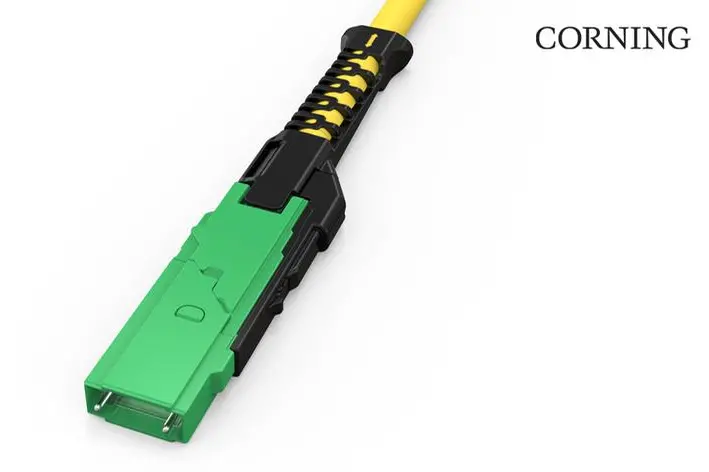
Corning is expanding its AI data center connectivity solutions to meet the growing demands of AI-driven infrastructure. As part of this move, the company has signed a licensing agreement with US Conec to use PRIZM TMT optical ferrule technology. The goal is to support faster, more efficient connectivity in modern data centers.
As AI systems become more powerful, they require a huge number of connections between processors and computing units. Data centers are scaling up to handle these workloads, which is driving the need for more advanced optical solutions.
Technology Behind Corning AI Data Center Connectivity
At the heart of this expansion is PRIZM TMT technology, which helps increase fiber density. In simple terms, it allows more fiber connections to fit into a smaller space—something that’s essential for high-capacity AI environments.
Instead of relying on direct fiber contact, the PRIZM TMT ferrule uses microlens technology. This improves signal quality and makes the system more reliable. It also reduces the risk of contamination and makes installation quicker and easier.
Another advantage is cost efficiency. Faster deployment and improved durability help lower overall operational costs, which is important for large-scale data center operations.
Impact of Corning AI Data Center Connectivity on AI Infrastructure
This expansion strengthens Corning’s portfolio of optical connectivity solutions. It gives data center operators the tools to build larger, more efficient systems that can handle increasing data demands.
The shift also reflects a broader industry trend. As AI workloads grow, data centers need higher bandwidth and faster communication. Optical connections are becoming more important, gradually replacing traditional copper-based systems.
Corning plans to showcase this technology at the Optical Fiber Communication Conference in March 2026, where it will highlight how it fits into future data center strategies.
Future Outlook for Corning AI Data Center Connectivity
Corning continues to invest in optical communication technologies to keep up with the evolving needs of AI infrastructure. Its focus is on delivering solutions that match the scale and speed required by modern data centers.
Overall, data center design is moving toward higher fiber density and better performance. Optical connectivity is becoming a critical part of supporting AI-driven operations as demand continues to grow.