


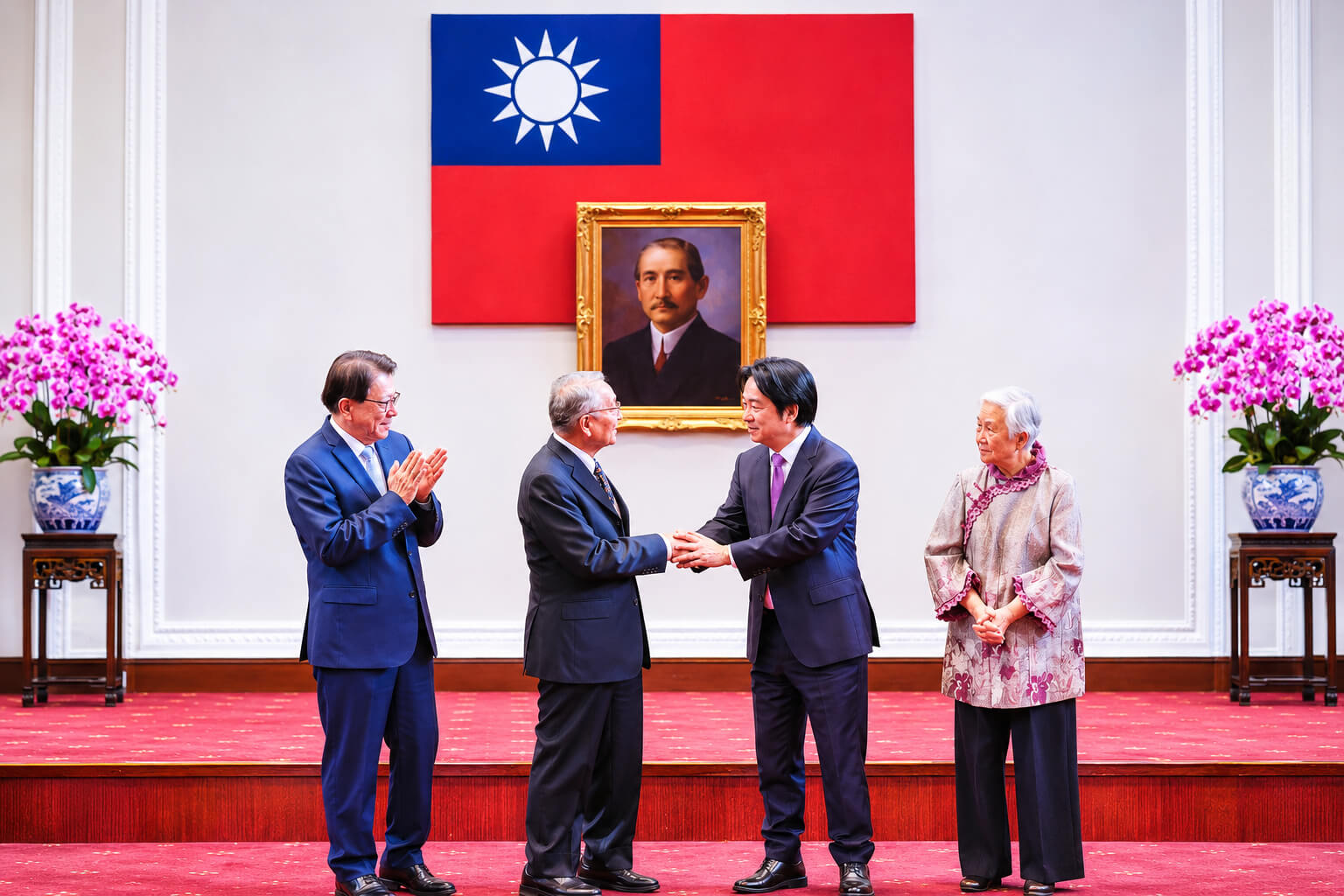
Taiwan is looking to strengthen its position in the global artificial intelligence industry, with President William Lai emphasizing international cooperation, semiconductor innovation and technology supply chain resilience ahead of the Asia-Pacific Economic Cooperation (APEC) Leaders’ Meeting in Shenzhen, China.
During a news conference in Taipei on November 12, Lai outlined Taiwan’s priorities for the upcoming summit, where Acer founder Stan Shih will represent the country. His message centered on expanding AI partnerships and reinforcing Taiwan’s importance to the global technology industry.
Taiwan already plays a major role in semiconductor manufacturing, an industry that has become increasingly important as technology companies invest heavily in AI infrastructure. Lai wants to build on that advantage by strengthening international relationships and supporting a more reliable technology ecosystem.
Taiwan Seeks Deeper International AI Cooperation
Taiwan wants to expand its involvement in global AI development through stronger partnerships with other economies. Lai emphasized the importance of international cooperation in advancing emerging technologies, encouraging innovation and supporting long-term economic growth across the Asia-Pacific region.
The country’s semiconductor expertise provides a strong foundation for these partnerships. Advanced chips remain essential to AI development, from training sophisticated models to operating large-scale computing infrastructure. Taiwan’s established manufacturing capabilities make it an important partner for technology companies seeking dependable access to these components.
Lai’s remarks also reflect a broader shift in how governments approach artificial intelligence. AI development increasingly involves economic cooperation, infrastructure investment and supply chain security. Taiwan wants to remain closely involved in those discussions while creating opportunities for its domestic technology industry.
Semiconductor Leadership Strengthens Taiwan’s AI Position
Taiwan’s semiconductor industry remains one of its biggest advantages as global demand for AI computing continues to grow. The country is home to major chip manufacturers that supply advanced processors used in data centers, consumer electronics and AI systems.
Lai highlighted Taiwan’s contribution to technological innovation, describing the country’s manufacturing capabilities as an important part of the global AI ecosystem. As companies expand their AI infrastructure, access to advanced semiconductor technology has become increasingly valuable.
The economic impact is already visible. Strong demand for AI-related products has supported Taiwan’s technology exports and encouraged further investment in manufacturing and research. The Taiwan Institute of Economic Research has projected substantial economic growth for 2026, with AI-related demand contributing to that outlook.
Still, the semiconductor industry’s importance creates new challenges. Manufacturers face pressure to expand production capacity, maintain reliable supply chains and respond to changing international trade conditions. Taiwan’s leadership in advanced chipmaking gives it influence, but maintaining that position requires continued investment and cooperation.
Acer Founder Stan Shih to Carry Taiwan’s Message at APEC
Acer founder Stan Shih will represent Taiwan at the APEC Leaders’ Meeting scheduled for November 18–19 in Shenzhen. His participation places an experienced technology industry figure at the center of Taiwan’s regional economic discussions.
Shih has spent decades helping develop Taiwan’s international technology presence. His experience building Acer into a globally recognized computer brand gives him a perspective on international trade, manufacturing and technological innovation.
During the Taipei news conference, Shih reflected on Taiwan’s transformation from a manufacturing-focused economy into a major semiconductor and information technology center. He credited international cooperation and technological development with helping the country establish its position in global markets.
His role at APEC will involve communicating Taiwan’s priorities, particularly its commitment to innovation, economic cooperation and stronger technology partnerships. The meeting also provides an opportunity to engage with regional leaders as AI becomes increasingly important to economic development.
AI Supply Chain Resilience Takes Center Stage
Supply chain resilience has become a major concern for the technology industry, particularly as demand for AI chips and computing infrastructure continues to increase. Taiwan wants to strengthen cooperation with regional partners to help ensure the stability of semiconductor production and technology supply networks.
The global AI industry depends on an interconnected system of chip designers, manufacturers, equipment suppliers and infrastructure providers. Disruptions involving any of these sectors can affect the availability of advanced computing technology.
Lai emphasized the importance of maintaining stable economic relationships and encouraging cooperation among APEC economies. Taiwan’s manufacturing capabilities give it a central role in these efforts, especially as companies seek to reduce supply chain risks while expanding AI investments.
The challenge extends beyond semiconductor production. Energy availability, infrastructure development and geopolitical uncertainty are also influencing how governments and businesses plan their technology investments. For Taiwan, maintaining dependable international partnerships could help protect its semiconductor industry while supporting the wider AI economy.
Taiwan Looks to Expand Its Influence in the Global AI Economy
Taiwan’s participation in APEC comes at a time when artificial intelligence is reshaping economic priorities across the Asia-Pacific region. Governments are investing in digital infrastructure, businesses are integrating AI into their operations, and semiconductor technology has become a critical component of economic competitiveness.
Lai’s emphasis on international cooperation suggests Taiwan wants to play a larger role in these developments rather than remain primarily a supplier of advanced chips. Strengthening partnerships could create opportunities for research, technology development and greater economic integration.
Shih’s representation at the summit also reflects Taiwan’s effort to connect its established technology expertise with emerging opportunities in artificial intelligence. His experience in international business could help communicate Taiwan’s strengths to other regional economies.
For now, Taiwan’s message is focused on cooperation rather than announcing specific new agreements. The upcoming APEC meeting offers a platform to reinforce its technology priorities and explore opportunities for future collaboration.
Taiwan’s semiconductor industry has already made the country indispensable to many parts of the global technology market. As AI investment continues to accelerate, its ability to maintain reliable partnerships and support advanced chip production could become even more important.
Sources
- Taipei Times — Taiwan committed to AI collaboration: Lai tells Shih, November 13, 2026.
- Asia-Pacific Economic Cooperation (APEC) — Official APEC Website.
- Taiwan Institute of Economic Research — Official Website.
