


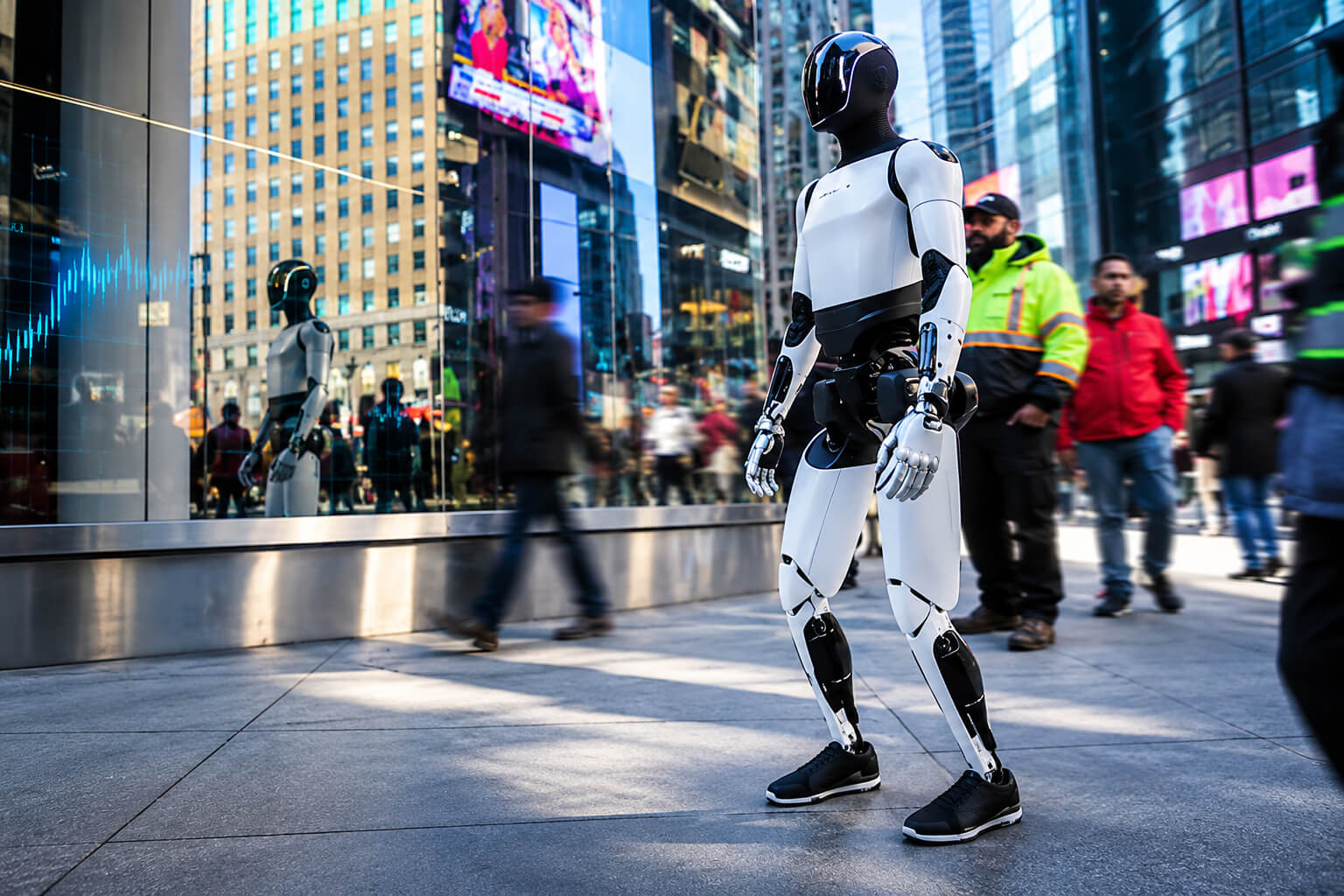
The United States could see humanoid robot production climb to as many as 400,000 units by 2030, according to a new forecast from J.P. Morgan. The investment bank expects growing industrial demand, improving robotics technology and advances in artificial intelligence to push humanoid machines closer to widespread commercial deployment.
The prediction signals a potentially significant shift for an industry that has spent years developing robots capable of walking, lifting objects and performing basic physical tasks. Manufacturers are now under pressure to prove these machines can do more than deliver impressive demonstrations.
Factories, warehouses and logistics centers are emerging as likely early adopters. Businesses want automation that can handle repetitive work, operate across multiple shifts and help address persistent labor shortages. Humanoid robots could eventually fill some of those gaps, although cost, reliability and technical limitations remain major concerns.
Humanoid Robots Are Moving Beyond Demonstrations
Humanoid robots have attracted considerable attention through videos showing machines walking, carrying boxes and navigating complex environments. Those demonstrations helped generate interest, but commercial customers are looking for something more practical. They need robots that can perform useful work consistently without constant human intervention. J.P. Morgan expects industrial settings to play a central role in early adoption because manufacturers and logistics operators already have experience integrating automation into their operations. The challenge is making humanoid machines reliable enough to work alongside existing equipment and employees.
Humanoid Robots Could Deliver Major Labor Cost Savings
The financial argument for humanoid robots is becoming harder for businesses to ignore. J.P. Morgan estimates that operating costs are moving closer to those associated with human labor, particularly when robots can work across multiple shifts. In some scenarios, businesses could potentially save around $100,000 annually by deploying humanoid systems. Those figures depend heavily on utilization, maintenance requirements and the type of work performed. A robot operating continuously in a warehouse may offer different economic benefits from one assigned to occasional tasks. Companies will need evidence of sustained productivity before committing to large-scale deployments.
Tesla, Figure AI and Boston Dynamics Are Competing for the Market
American robotics companies are racing to turn humanoid machines into commercially viable products. Tesla is developing Optimus, while Figure AI, Agility Robotics, Boston Dynamics and Apptronik are pursuing their own approaches to physical automation. Their machines differ in design and intended applications, but the broader objective remains similar: create robots capable of working in environments built for humans. Tesla’s manufacturing experience could provide an advantage as production expands, while specialized robotics companies are focusing on industrial deployments and partnerships. J.P. Morgan’s outlook suggests that achieving meaningful production volumes will require more than technological progress. Manufacturers must also build efficient assembly operations, secure components and convince customers that their robots can deliver measurable returns.
AI Training and Hardware Limitations Remain Major Obstacles
Despite rapid advances in artificial intelligence, humanoid robots still struggle with tasks that humans perform almost automatically. Handling unfamiliar objects, adjusting grip strength and responding to unpredictable surroundings require sophisticated perception and movement systems. Robotic hands, actuators and specialized computing hardware remain expensive and technically demanding to manufacture. AI training presents another challenge because robots need extensive experience with physical environments rather than relying solely on digital information. These limitations could slow commercial adoption even as demand grows. Manufacturers must improve both the intelligence and mechanical capabilities of their machines before humanoid robots can operate reliably across a wide range of workplaces.
Robotics Component Suppliers Could Benefit From Growing Demand
The humanoid robotics boom could create opportunities well beyond companies producing complete machines. J.P. Morgan projects that the market for essential robotics components, including motors, actuators and vision systems, could approach $30 billion by 2035. Suppliers such as Timken, Robotis, Leader Drive, Orbbec and Cognex are positioned within different parts of the robotics supply chain. Their technologies help robots move, detect objects and interact with physical environments. As manufacturers increase production, demand for these components could rise substantially. Component makers may benefit from industry expansion even before humanoid robots achieve widespread adoption, although actual revenue growth will depend on manufacturing volumes and purchasing decisions.
US Trade Policy Could Shape Domestic Humanoid Robot Manufacturing
Government policy may influence how quickly American robotics manufacturers expand their operations. J.P. Morgan highlighted potential trade measures affecting imported robotics equipment and industrial machinery as a factor that could encourage domestic production. Policies supporting US manufacturing might help companies establish local supply chains and reduce dependence on overseas production. However, tariffs could also increase costs for manufacturers that rely on imported sensors, motors and other specialized components. The impact will depend on how trade restrictions are implemented and whether domestic suppliers can meet growing demand. For companies trying to manufacture humanoid robots at competitive prices, supply chain stability will remain an important consideration.
What the 2030 Humanoid Robot Forecast Means for the AI Industry
J.P. Morgan’s projection of up to 400,000 US-produced humanoid robots by 2030 suggests that physical AI could become a much larger part of the technology industry over the coming years. The forecast is ambitious, particularly given the engineering challenges and relatively limited commercial deployments today. Still, manufacturers are investing heavily in robots that can operate inside factories, warehouses and other industrial environments. The companies that succeed will need to demonstrate consistent performance, manageable operating costs and clear economic benefits. Humanoid robots may be approaching an important commercial turning point, but the real test will come when businesses begin evaluating these machines as everyday equipment rather than experimental technology.
Sources
- Reuters — November 12, 2026: US Humanoid Robot Production Could Hit 400,000 by 2030 as Deployment Ramps, J.P. Morgan Says
- MarketScreener / Reuters: J.P. Morgan’s US Humanoid Robot Production Forecast
- Humanoids Daily: J.P. Morgan Forecasts 300,000 to 400,000 US-Made Humanoids by 2030
