


AI at the Winter Olympic Games is becoming a core technology during the 2026 Milano-Cortina Winter Olympics in Italy. The Games run through February 22, 2026. Artificial intelligence is being deployed across athlete preparation, competition analysis, broadcasting, and fan services. Multiple technology partners are supporting these systems under the oversight of the International Olympic Committee.
The IOC has confirmed that AI tools are being used both on the field of play and across digital platforms connected to the Games.
AI at the Winter Olympic Games Improves Athlete Training
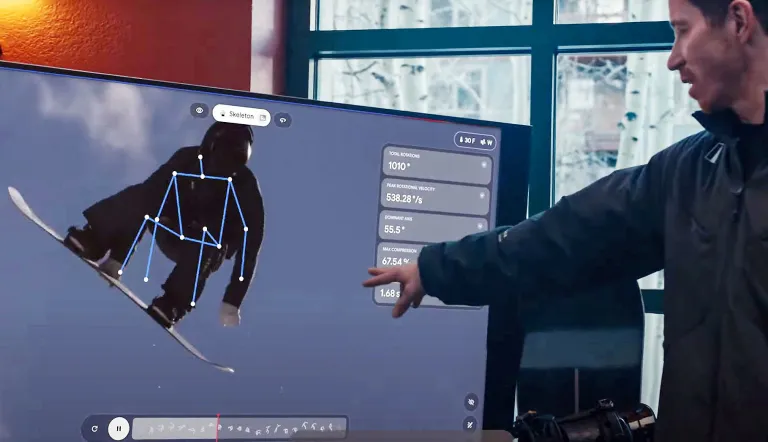
AI at the Winter Olympic Games is playing a significant role in athlete training and performance analysis. Google Cloud, working with U.S. Ski & Snowboard, developed a system that converts standard video footage into biomechanical data. The system uses computer vision and large language models.
The technology measures variables such as body position, rotation speed, takeoff angles, airtime, and landing accuracy. Coaches and athletes use this data to analyze movements frame by frame. Snowboarders and skiers tested the system during training prior to competition. The data provides insights that are not visible through traditional video review alone.
AI at the Winter Olympic Games Enhances Fan and Operational Tools
AI at the Winter Olympic Games is also improving digital services for fans and organizers. Alibaba Cloud introduced AI tools built on its Qwen large language model. These tools are integrated into official Olympic platforms as Olympic AI Assistants.
The assistants provide multilingual support, real-time schedules, results, and venue information. AI systems are also used internally by Olympic officials. National Olympic Committees can search secure IOC portals using natural language queries to locate rules, documents, and operational guidance.
AI at the Winter Olympic Games Supports Broadcasting and Judging
Broadcasters at the Games are using AI to generate near-live replays. These systems merge footage from multiple cameras to isolate athletes from snow and ice backgrounds. The result is faster and clearer replay production.
The IOC is also evaluating AI for judging support. In events with subjective scoring, AI systems can track body movements, rotation metrics, and airtime. This data is provided as a reference tool to assist officials during evaluations.
