


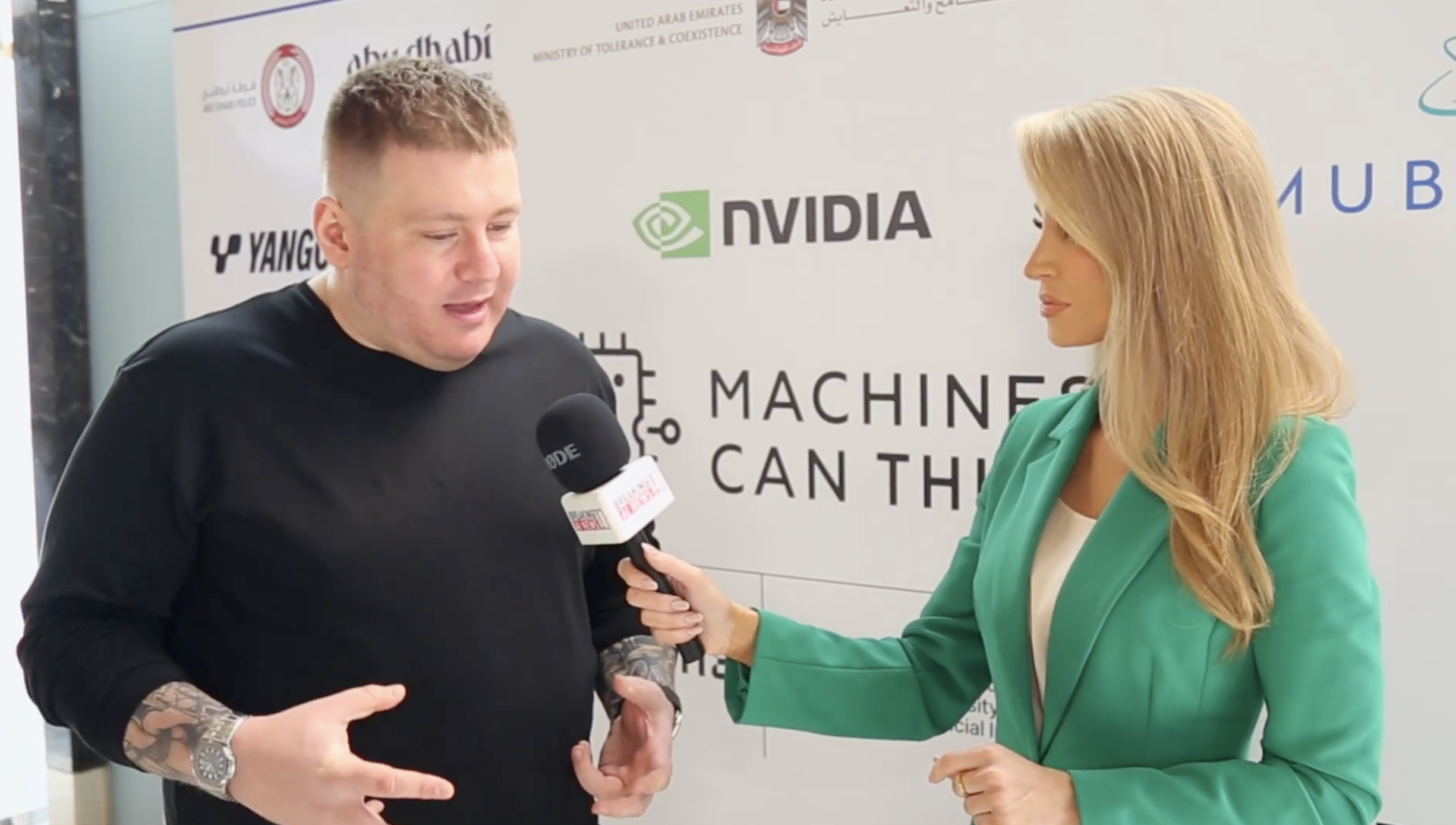
Dubai, UAE – Roman Axelrod, Co-Founder of XPANCEO, shared major progress updates on the company’s AI powered augmented reality smart contact lenses during the Machines Can Think Summit 2026. Axelrod discussed the vision, technology, and commercialization strategy in an on stage interview with Katie Jensen.
XPANCEO is developing smart contact lenses designed to function as a primary interface between humans and digital systems. The lenses display visual content directly to the eye while collecting real time biological data. Current capabilities include visual output, intraocular pressure monitoring for glaucoma patients, and glucose level measurement for people with diabetes.
Axelrod described the product as a next generation computing interface built around algorithms rather than traditional hardware.
“The next generation of computing is not a computer,” Axelrod said. “The core value sits in algorithms. Our contact lens serves as the native environment where AI operates closest to human perception.”
Unlike other wearable technology efforts focused on glasses or headsets, XPANCEO targets existing contact lens users. Around 250 million people wear contact lenses daily and prefer solutions that avoid glasses or surgical procedures.
“We focused on people who already accept contact lenses as part of daily life,” Axelrod said. “This group values comfort, discretion, and direct interaction.”
Axelrod explained that XPANCEO does not aim to replace existing devices through competition. Instead, the company expects usage patterns to shift naturally as people recognize advantages in specific contexts such as navigation, translation, and continuous health monitoring.
“Technology adoption follows use cases,” he said. “People switch once they experience clear benefits.”
Health monitoring remains a core differentiator. Axelrod described development as a major engineering challenge driven by extreme miniaturization requirements. Existing silicon based components proved too large and unsuitable for direct eye use.
“All required components existed, but not in usable form,” Axelrod said. “We developed new materials, some at atomic scale, fully biocompatible, transparent, and functional.”
XPANCEO created proprietary materials and components for displays, sensors, and energy systems, then integrated them into standard contact lens form factors. Axelrod identified miniaturization as the main technical barrier the team overcame.
The company reached unicorn status in the UAE after raising approximately US$290 million, becoming the country’s 12th unicorn. Axelrod outlined a phased deployment strategy focused on safety and reliability.
XPANCEO plans several internal hardware generations deployed first through narrow B2B partnerships. One active collaboration involves the Mohammed bin Rashid Space Center, with long term goals to support space missions.
“You do not get second chances with eye worn technology,” Axelrod said. “We refine through controlled use before consumer release.”
Consumer availability is targeted between 2028 and 2030. Pricing aligns with existing contact lens spending habits. Average contact lens users spend close to US$2,000 per year, and XPANCEO plans a subscription model at or below that level. Multiple product tiers will offer varying functionality at different price points.
Axelrod emphasized accessibility rather than exclusivity as the long term objective.
“We want this to fit into existing spending behavior,” he said. “Different users need different capabilities.”
The interview highlighted themes central to the Machines Can Think Summit 2026, human centered AI interfaces, health driven innovation, and responsible deployment of emerging technology.
Media Contact
Breaking AI News – https://breakingai.news/
contact@breakingai.news
Interview conducted by Katie Jensen at Machines Can Think Summit 2026
