


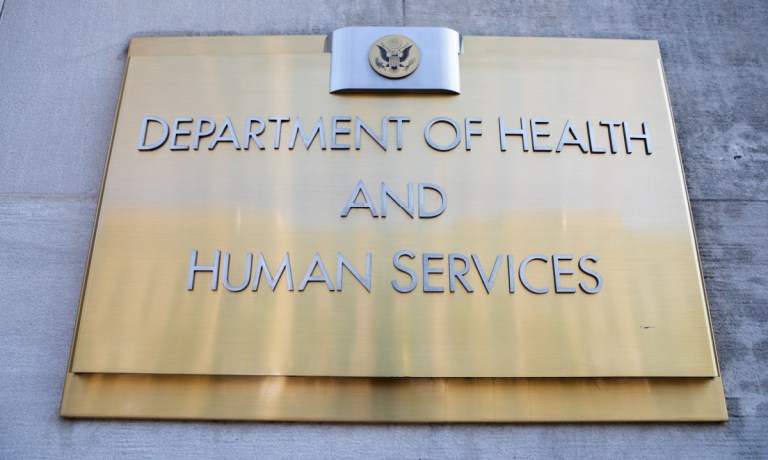
The Department of Health and Human Services has released its artificial intelligence strategy.
The new strategy, announced Monday (Dec. 8), is part of a broader plan to make artificial intelligence (AI) available to federal workers by integrating it into internal operations, research, and public health.
“AI has the potential to revolutionize health care and human services, and HHS is leading that paradigm shift,” Jim O’Neill, the department’s deputy secretary, said in a news release.
“By guiding innovation toward patient-focused outcomes, this Administration has the potential to deliver historic wins for the public—wins that lead to longer, healthier lives.”
According to the release, the department’s AI strategy follows the AI Action Plan from the Trump White House as well as the president’s AI-related executive orders and guidance from the Office of Management and Budget (OMB).
The release notes that the new project will see all of the department’s divisions — including the Centers for Disease Control and Prevention (CDC), the Centers for Medicare & Medicaid Services (CMS), the Food and Drug Administration (FDA) and the National Institutes of Health (NIH) — invited to collaborate on a department-wide AI infrastructure.
It’s the first step of a larger plan, focused chiefly on bolstering internal operations, efficiency, and federal use as directed by the OMB, while also setting the stage for potential collaborations with the private sector.
The plan comes as artificial intelligence continues to be woven into the fabric of the healthcare world, as PYMNTS wrote last week.
“With rising patient loads, staffing shortages and a volume of imaging and documentation that has simply outpaced human capacity, health systems are actively embracing AI systems that tackle the ‘grunt work’ before a clinician even reviews a case,” that report said.
This was spotlighted by recent models showcased by Microsoft at its Ignite 2025 conference, showcasing a larger industry pivot to tools that can assist in groundwork tasks without touching core clinical decision-making.
The trend is in keeping with data highlighted by PYMNTS, which reported this year that almost half of healthcare and life-sciences organizations have generative AI in production use, in many cases for documentation, administrative work and early-stage clinical summaries.
Meanwhile, more than half of physicians surveyed by the American Medical Association said AI tools could meaningfully bolster core clinical functions. Of those respondents, “72% said AI could improve diagnostic ability, 62% said it could enhance clinical outcomes and 59% said it could strengthen care coordination,” PYMNTS wrote.
Source: https://www.pymnts.com/